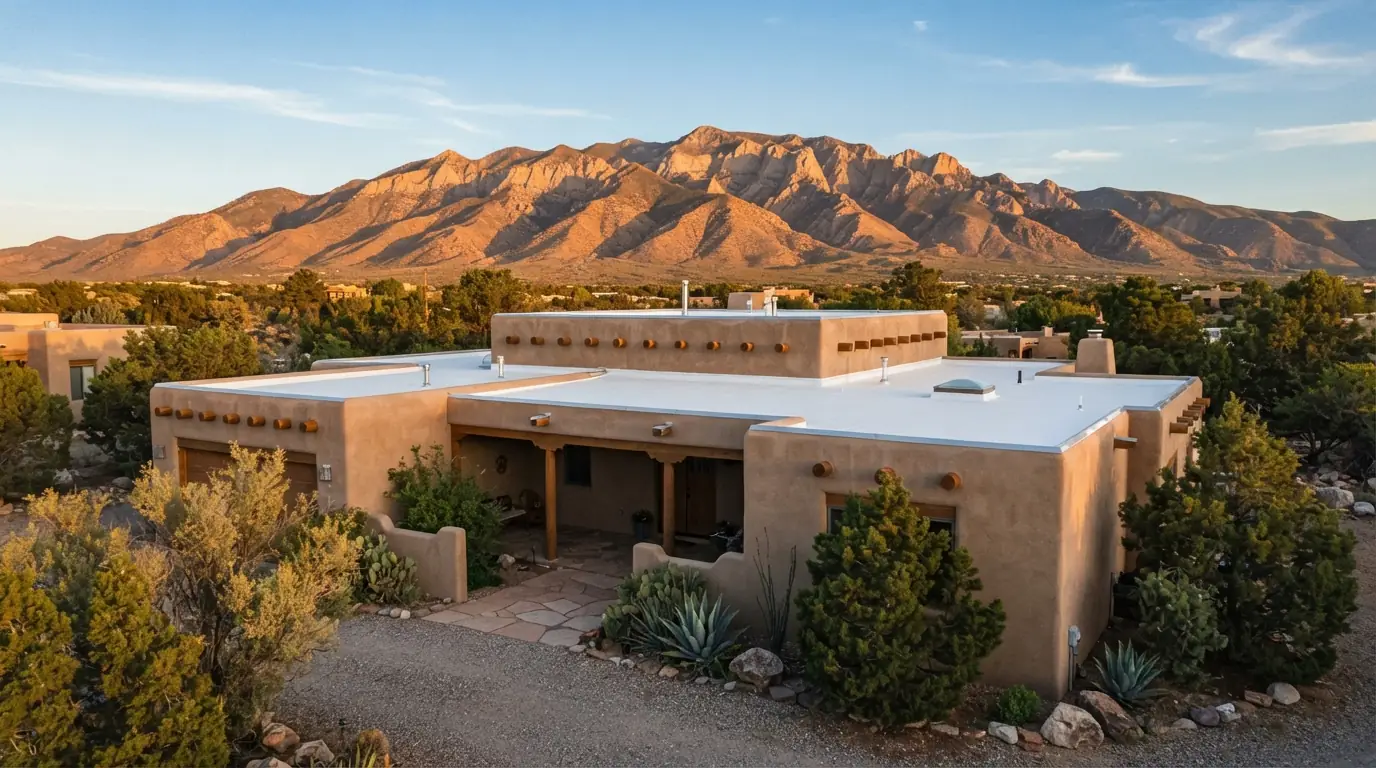
Quick answer: Asphalt shingle roofing in Albuquerque runs roughly $3.50 to $5.50 per sq ft installed, according to 2026 local cost data, and architectural shingles are the standard choice. Impact-rated Class 4 shingles cost more but resist hail better. Either way, attic ventilation and edge details decide how long the roof actually lasts.
Shingle roofing
Why the details matter more than the brand
Updated September 2026
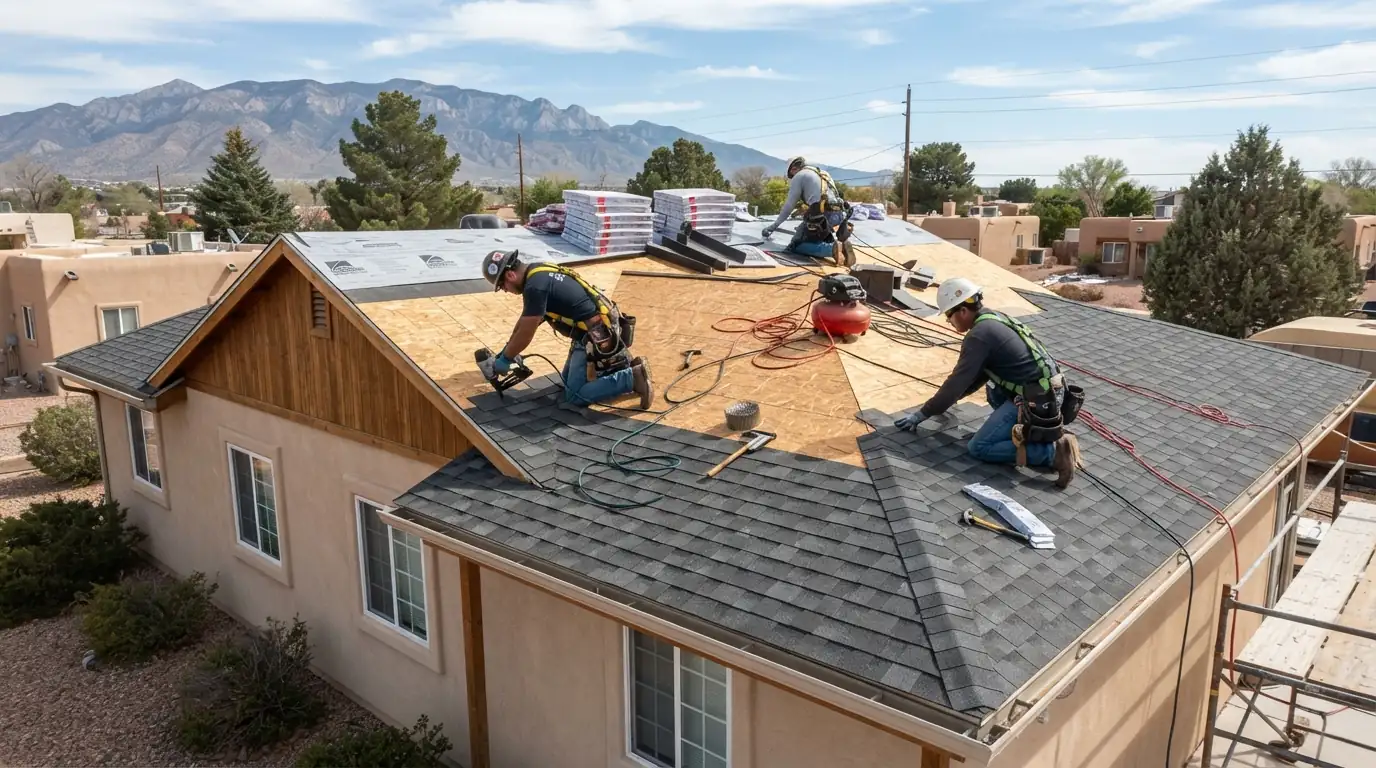
Most shingle roofs that fail early here were not bad shingles. They were hot attics with no exhaust, missing starter strips, nails driven at the wrong height, or drip edge left off.
Installing to the manufacturer's instructions is also what the product warranty requires. If only one area of the roof has a problem, a shingle repair may be the smarter spend.
Cost factors
What changes the price of this job
Planning range: $6,500 to $18,000 complete; asphalt shingles $3.50 to $5.50 per sq ft installed (published cost data, 2026-08). That is a planning range, not our price; the factors below move it in both directions.
- Roof size and pitch Steeper and more complex roofs take more time and material.
- Shingle line Class 4 impact-rated shingles cost more than standard architectural.
- Tear-off Each existing layer adds labor and disposal.
- Decking Soft or damaged sheathing is replaced by the sheet.
- Ventilation Adding ridge vent or intake vents is its own line.
What's included
What a shingle roof installation includes
- Full tear-off to the deck
- Deck inspection and repair
- Drip edge at eaves and rakes
- Synthetic underlayment over the whole deck
- Self-adhered membrane in valleys
- Starter strip on every edge
- New step flashing and pipe boots
- Ridge vent or matching exhaust
- Magnet sweep and photo walk
The work, piece by piece
Architectural Shingles
Architectural shingles, also called laminated or dimensional shingles, are two layers bonded together, which gives them a thicker profile, more texture and better wind resistance than the flat three-tab shingles they replaced. They are the standard choice on Albuquerque homes today and come in a wide range of colors, including lighter tones that reflect more sun. We help you pick a color that suits both the house and the heat, since darker shingles run noticeably hotter on a south-facing slope in July.
Impact-Rated Class 4 Shingles
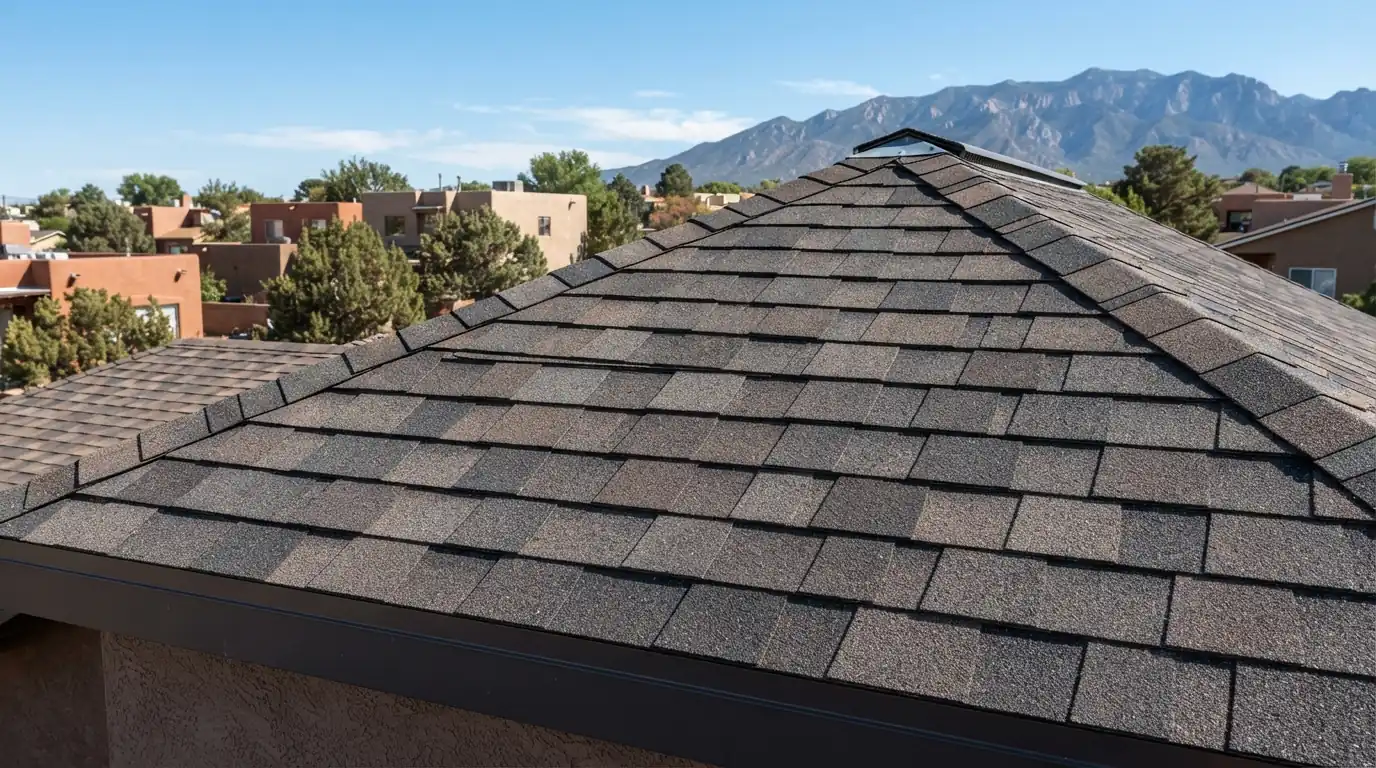
Class 4 is the highest rating in the UL 2218 impact test, in which steel balls are dropped onto the shingle to simulate hail. Shingles that pass resist cracking and bruising far better than standard architectural shingles. They cost more, and some insurance carriers offer a premium discount for them, so it is worth asking your insurer before you choose. On homes that have already been through a hail claim, Class 4 is often the upgrade that makes the most sense for the next twenty years.
Ridge Vents and Attic Ventilation
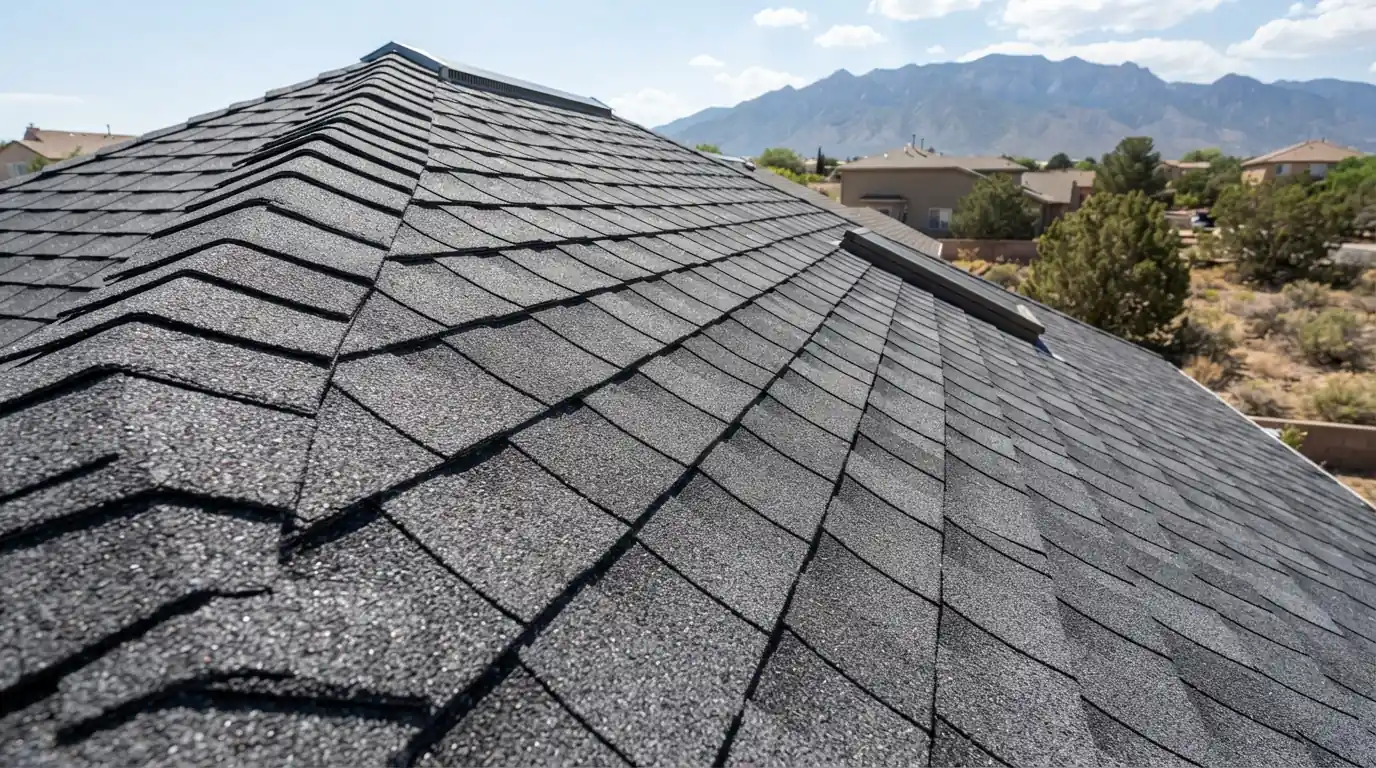
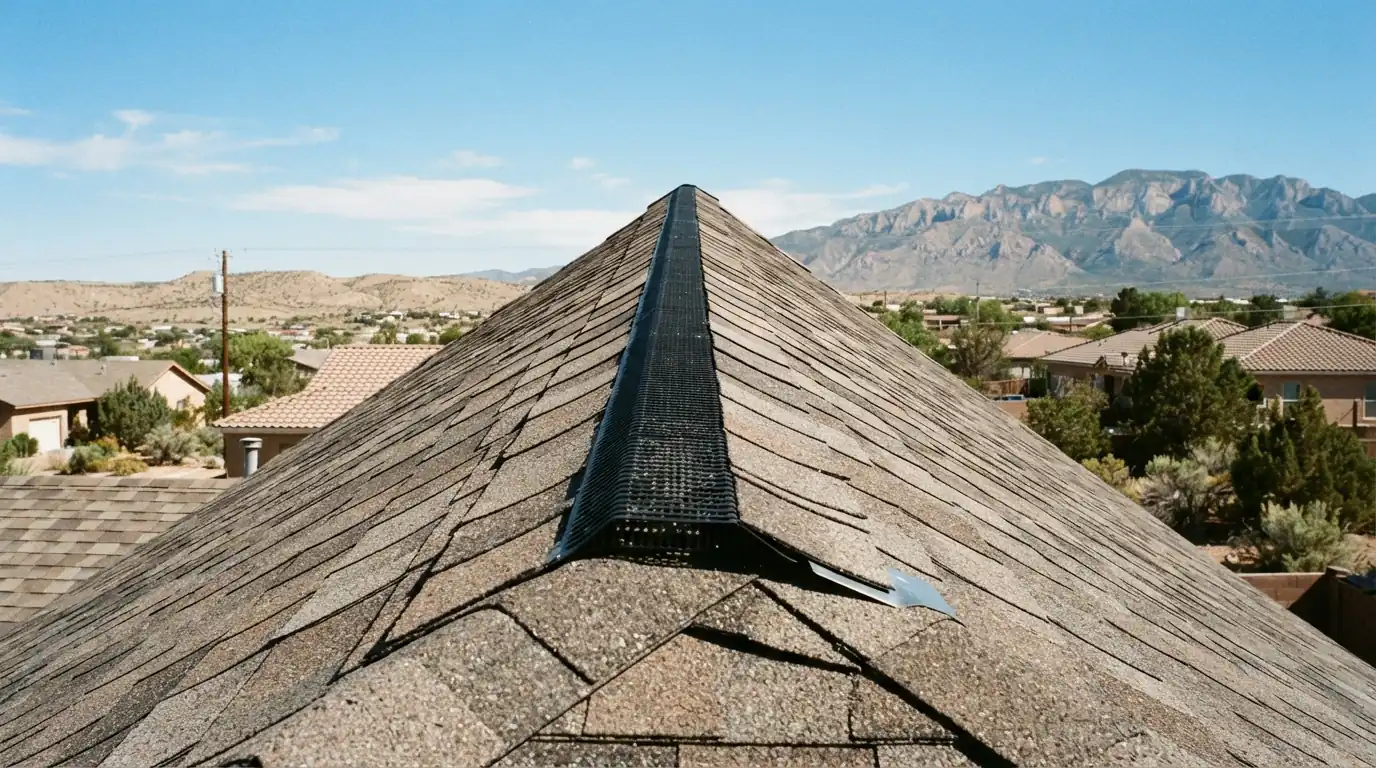
A shingle roof ages from underneath as well as from the sun. A hot, poorly vented attic bakes the shingles from below, shortens their life and pushes cooling bills up. Balanced ventilation pairs intake at the eaves with exhaust at the ridge, so air moves through the whole attic. We check the existing vents, clear blocked soffits where we can reach them, and install a continuous ridge vent or matching exhaust so the attic is not trapping heat under the new roof.
Starter Strips and Drip Edge
The edges are where wind gets its first grip and where water leaves the roof. A proper starter strip under the first course seals the shingle edges down so wind cannot lift them. Drip edge metal at the eaves and rakes carries water past the fascia instead of letting it wick back into the wood. Both are inexpensive, both are skipped surprisingly often, and both appear in our scope as their own lines so you can confirm they are included on the roof you are paying for.
Albuquerque conditions
What this job looks like on Albuquerque roofs
Shingles in Albuquerque take a beating from two directions. At about 5,300 feet the UV is stronger than at sea level, which dries the asphalt and loosens the granules that protect it, so bare patches show up first on the sunniest slopes. Then the monsoon adds wind. The June 29, 2024 storm brought flash flooding and damaging winds across much of the city, exactly the kind of event that lifts tabs whose seal strips have already baked brittle. Keeping the attic cool and the edges sealed is how a shingle roof survives both.
How the job runs
How a shingle roof is installed
- 1
Tear off to the deck
Old shingles and underlayment removed; deck inspected.
- 2
Repair the deck
Soft sheathing replaced, loose boards re-nailed.
- 3
Edges and underlayment
Drip edge, synthetic underlayment and valley membrane.
- 4
Starter and field
Starter strip, then shingles nailed to the manufacturer's pattern.
- 5
Flashing and vents
Step flashing, pipe boots and ridge vent installed.
- 6
Cap and clean up
Ridge cap, magnet sweep and a photo walk.
FAQ
Shingle roofing questions
Strong sun shortens their life compared with milder climates. Ventilation, color and each slope's exposure make the biggest difference.
In a hail-prone market, often yes. Ask your insurer about a premium discount before deciding.
Code allows it in limited cases, but we tear off so the deck can be inspected and repaired.
Yes. Lighter colors run cooler; darker shingles absorb more heat on sunny slopes.
Yes, across the whole deck, with self-adhered membrane in valleys and around penetrations.
GAF, Owens Corning, CertainTeed and Malarkey are common on our roofs. The scope names the line and color.