
Quick answer: After a hail or wind storm in Albuquerque, the first step is keeping water out: we tarp or temporarily seal any opening the same day. Then comes documentation, with dated photos and measurements of every damaged area for your insurance adjuster, and finally the permanent repair to shingles, tile, flat roofs or flashing.
Warning signs
Signs of storm damage you can see from the ground
A sudden pile of shingle granules at the downspouts.
Round dings in soft metal show hail size.
Shingles out of line or flapping in the wind.
Broken pieces on the roof or on the ground.
Water showing after the storm or the next rain.
How the job runs
From the storm to a sound roof
- 1
Tarp and secure
Openings covered and debris removed, the same day where possible.
- 2
Inspect every slope
Hail hits, lifted tabs, cracked tile and punctures recorded.
- 3
Document
Dated photos, measurements and a written scope.
- 4
Meet the adjuster
On request, we walk the roof with your insurance adjuster.
- 5
Repair or replace
Damaged areas repaired, or the roof replaced where warranted.
- 6
Final photos
Completed work photographed for your records.
Storm damage
What a monsoon storm does to a roof
Updated September 2026
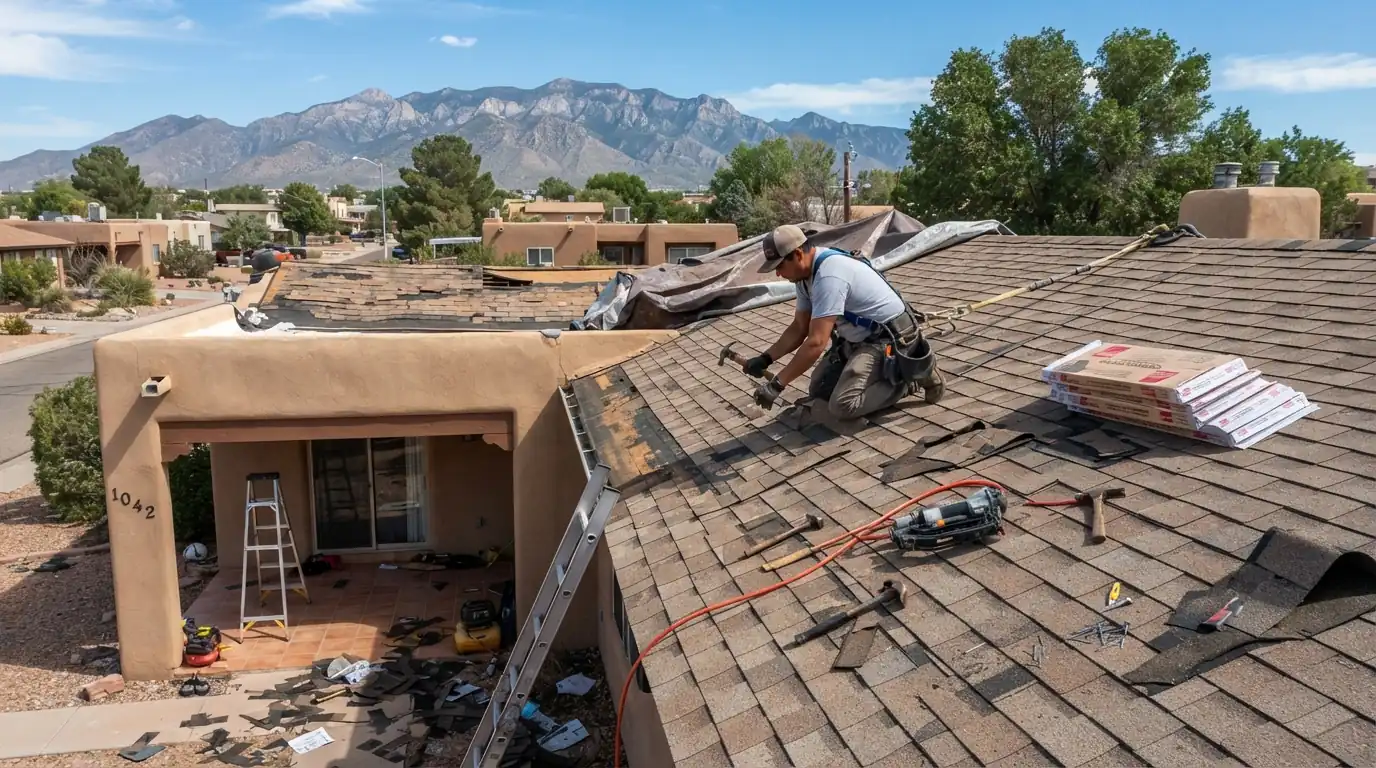
Hail bruises and cracks shingles, knocks granules loose, chips tile and punctures the coating on foam and TPO roofs. Wind lifts tabs and ridge caps, peels flashing and drives rain under edges. Often both happen in the same ten minutes.
Some of that damage is obvious from the yard, and much of it is not. If water is already coming in, start with emergency roof repair.
The work, piece by piece
Hail Impact Assessment
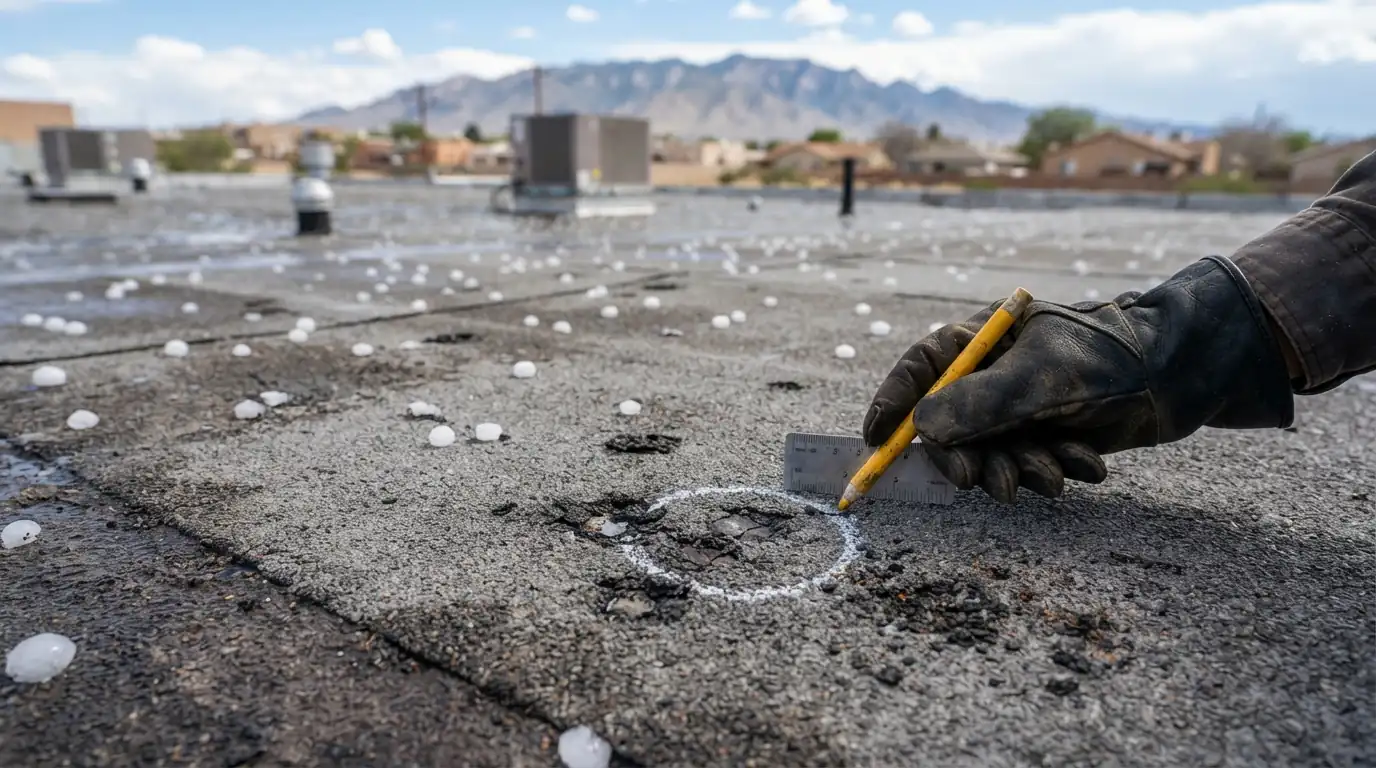
Hail damage is easy to miss and easy to exaggerate, so we assess it carefully. On shingles we look for bruises that give under a thumb, fractured mats and missing granules, and we compare them with marks on soft metals like vents and gutters, which show the size and direction of the hail. On tile we look for cracks and chips, and on flat roofs for punctures in the coating or membrane. Each hit area is marked, photographed and measured, so the report reflects what actually happened.
Wind-Lifted Shingles and Ridge Caps
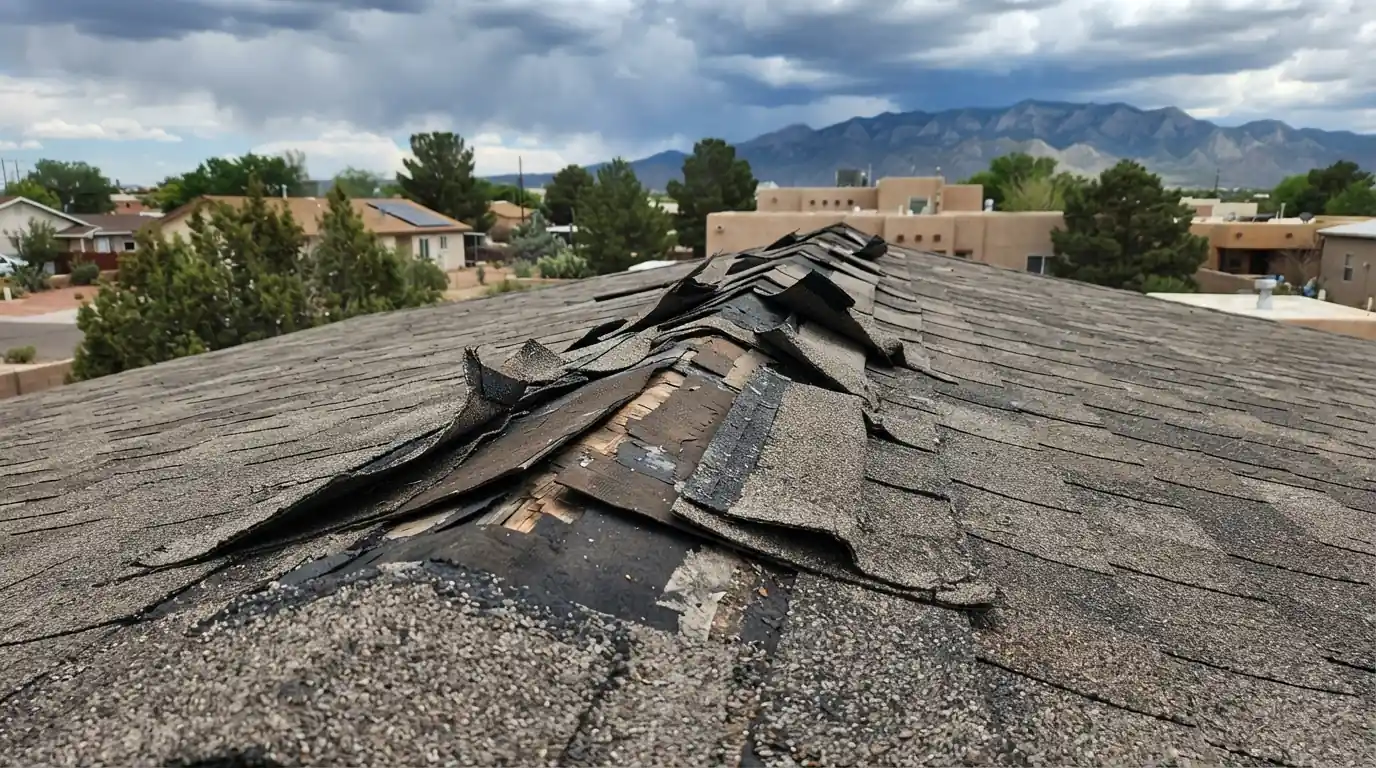
Wind damage starts at the edges and the ridge, where gusts get under the shingles. Tabs that have lifted once often lose their seal strip, even if they settle back down and look normal from the ground. We check the seal on shingles near the edges and ridges, reset or replace lifted tabs and caps, and re-seal them. Creased shingles, where a tab has been bent back hard, are replaced, because the crease is a crack that will open in the next storm.
Insurance Claim Documentation
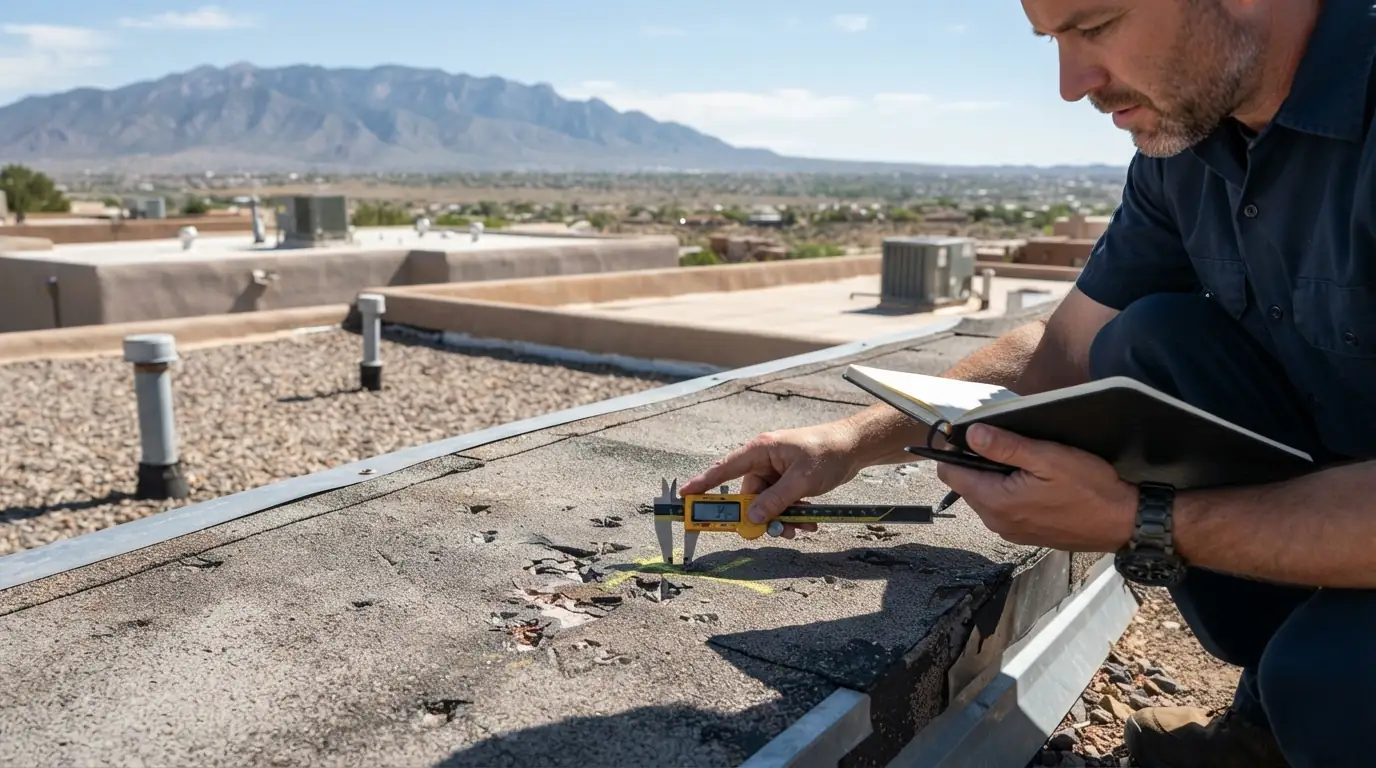
A clear record helps any claim move faster. We provide dated photos of each slope and each damaged area, measurements, the roofing material and its approximate age, and a written scope of the repair or replacement the damage calls for. If your adjuster wants to see the roof, we can meet them there. We document what we find, including when the damage is minor, because an honest report is the one that holds up. The claim decision itself stays between you and your insurer.
Debris and Branch Damage
Wind throws branches, patio furniture, cooler panels and loose debris onto roofs, and a heavy limb can crack decking or punch through a flat roof. We remove what is on the roof safely, tarp any openings, and inspect the deck and framing under the impact point before repairing the surface. Punctured flat roofs get a patch of the matching system once the area is dry. Cracked rafters or decking are replaced before any roofing goes back over them, so the repair never hides structural damage.
Albuquerque conditions
What this job looks like on Albuquerque roofs
Storm damage in this metro is patchy, which is exactly why a quick check after each storm matters. The monsoon rarely hits every neighborhood evenly: in 2025 much of Rio Rancho and the west side missed the heavier cells, while Placitas took more than two inches in August. When a big storm does land, it lands hard. The June 29, 2024 storm dropped 1.48 inches at the Sunport with damaging winds across much of the city. Two houses a mile apart can come out of the same afternoon very differently.
What's included
What our storm damage report includes
- Date of the inspection
- Photos of every slope
- Close-ups of each damaged area
- Hail marks on soft metals
- Roof material and approximate age
- Roof measurements
- Tarping or temporary repairs done
- A written repair or replacement scope
- Copies ready to share with your adjuster
Cost factors
What changes the price of this job
- Extent of damage One slope of lifted shingles versus hail across every slope.
- Roof material Tile and flat roofs need different repair materials than shingle.
- Emergency tarping Tarping during or after the storm is its own step.
- Hidden damage Cracked decking or framing under an impact adds work.
- Matching Discontinued shingle or tile colors can widen the repair area.
Storm repairs are priced from the damage report, and the same written scope goes to you and, if you choose, to your adjuster.
FAQ
Storm damage questions
Within days, before the next storm. Hidden damage like broken seal strips leaks later, and claims usually have reporting deadlines.
An inspection tells you whether there is damage worth claiming, so you can file with photos in hand.
Yes. An honest report protects you as much as the insurer.
In most cases, yes. We answer 24/7, and open roofs and active leaks come first.
No. Plenty of storm repairs are small enough to pay directly, and we price those the same way.
We can walk the roof with them and point it out in the photos. The decision remains theirs.