
Quick answer: Roof maintenance in Albuquerque works best once a year in spring, before the July and August monsoon peak, with an extra look after any hail or high-wind storm. A tune-up clears canales and drains, checks every seam and flashing, replaces failed sealant, and records the coating condition, with photos of everything we find.
Preventive care
Small fixes in spring instead of a wet ceiling in August
Updated September 2026
Most flat roof leaks start as something small nobody saw: a dried-out sealant joint at a vent, a split at a canale, a clogged drain, or a coating worn thin over a seam. Each is a quick fix in spring and a ceiling repair in August.
A maintenance visit is not a written inspection report for a sale or a claim. It is hands-on upkeep, with small repairs done the same day where we can.
What's included
What a tune-up covers
- Every canale, scupper and drain cleared
- Drain strainers checked and replaced
- Seams walked and probed
- Failed sealant cut out and replaced
- Pipe boots and vents checked
- Cooler and HVAC curbs checked
- Parapet caps and coping inspected
- Coating wear and thinning checked
- Photo report of every finding
The work, piece by piece
The Annual Flat Roof Tune-Up
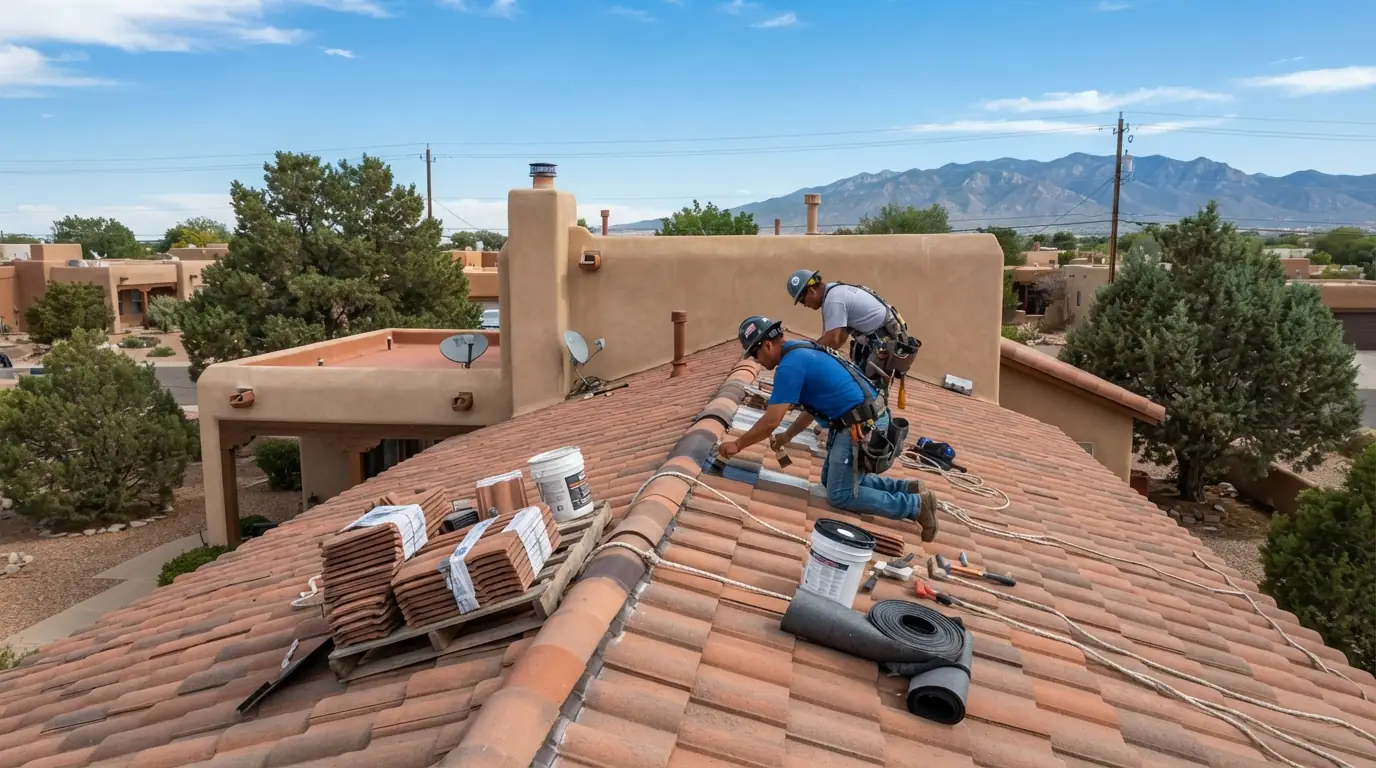
The yearly visit follows the same route every time so nothing gets skipped: every canale, scupper and drain, every curb and pipe, every seam and parapet cap, and the field of the roof in between. We clear debris, reseal failed joints, and mark anything that needs more than a touch-up so you can decide on it with photos in hand. Keeping the same checklist year to year also shows what changed since last spring, which is often the most useful part of the visit.
Drain and Canale Clearing
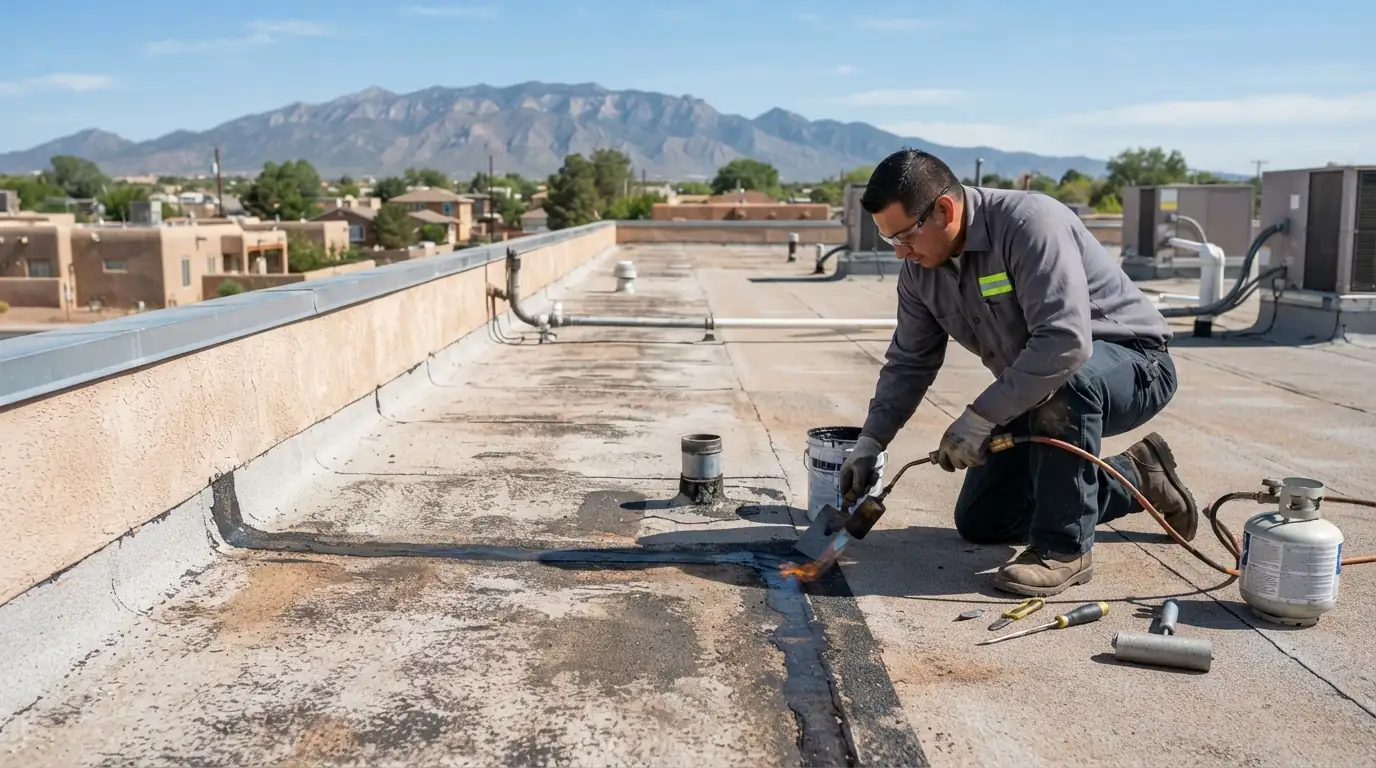
Wind carries dust, leaves and debris onto flat roofs all year, and it collects exactly where the water needs to leave. A canale half full of debris copes with a light shower and overflows in a monsoon burst. We clear every outlet by hand, check strainers on internal drains, flush downspouts where they are reachable, and look for the stains that show an outlet has been overflowing. Roofs under trees or next to open lots usually need a second clearing in the fall.
Sealant and Flashing Touch-Ups
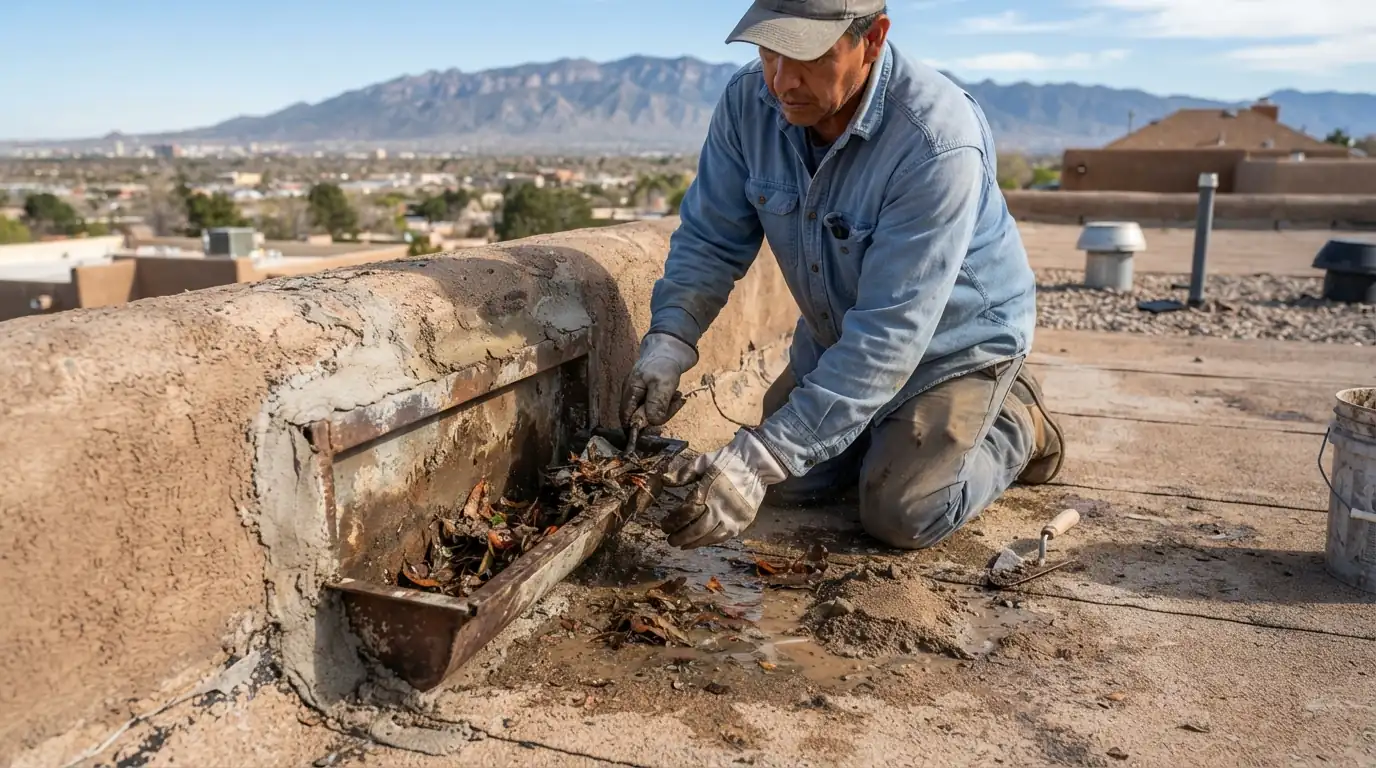
Sealant is the part of a roof that wears out first. Around vents, pipes, cooler curbs and parapet caps, it shrinks and cracks after a few summers of heat and cold. We cut out failed sealant rather than smearing new material over the old, clean the joint, and reseal it with a product that matches the roof system. Loose flashing gets refastened. Anything beyond a touch-up, such as a rusted curb or a split parapet cap, is written up separately with photos.
Coating Check and Wear Points
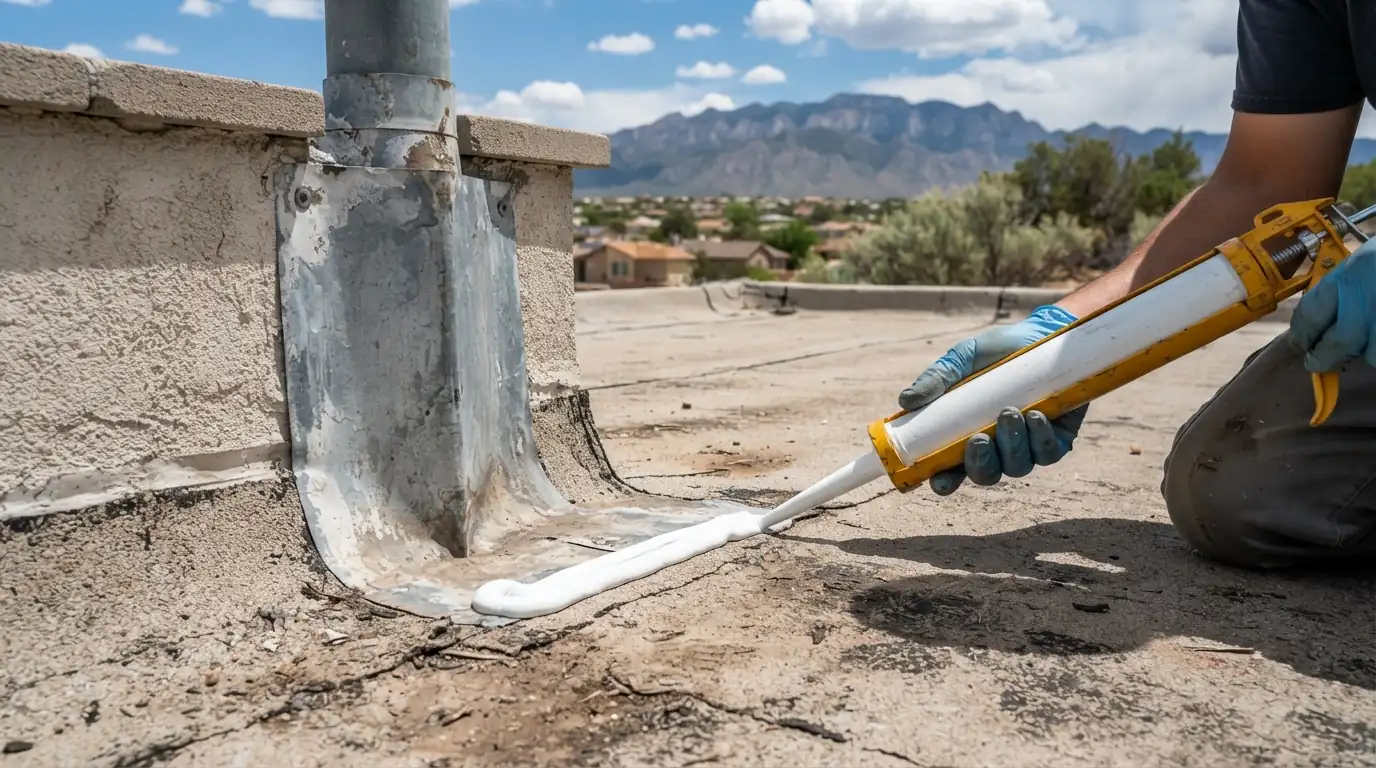
Coatings wear thinner every summer, and the only way to know how much is left is to look closely at the high-wear areas and the seams. We check for chalking, cracking, bare spots over reinforcing fabric, and places where foam is starting to show through. When a coating is getting thin, you hear about it before it fails, because a recoat on a dry roof costs far less than repairs after water gets in. The yearly photos let you compare.
Albuquerque conditions
What this job looks like on Albuquerque roofs
Normal monsoon rainfall at the Sunport between mid June and the end of September is about 4.48 inches, but it never falls evenly. In 2025 much of Rio Rancho and the west side missed the heavier storms, while Placitas took well over two inches in August alone. That unevenness is why a spring tune-up still matters after a dry year. A roof that saw little rain last summer can still have clogged outlets and dried-out sealant, and the next storm may land squarely on it.
How the job runs
What happens on a maintenance visit
- 1
Book in spring
Scheduled ahead of the monsoon, or right after a big storm.
- 2
Walk the same route
Outlets, penetrations, seams, parapets and field, in order.
- 3
Clear and clean
Debris out of every canale, scupper and drain.
- 4
Reseal and refasten
Failed sealant cut out and replaced; loose flashing secured.
- 5
Check the coating
High-wear areas and seams checked for thinning and cracks.
- 6
Send the photo report
What we did, what we saw, and anything to plan for.
Cost factors
What changes the price of this job
- Roof size Larger roofs take longer to walk and clear.
- Outlets Each canale, scupper and drain adds clearing time.
- Penetrations Cooler curbs, vents and skylights each get checked and resealed.
- Access Two-story roofs and awkward access add setup time.
- Repairs found Anything beyond a touch-up is priced on its own.
Maintenance is priced per visit by roof size and the number of outlets and penetrations; anything found that needs more than a touch-up is quoted separately.
DIY or call
What you can do between visits
Watch after storms
Check for water sitting on the roof from a window or ladder the day after rain.
Keep trees trimmed
Branches over the roof drop debris and scrape coatings in the wind.
Leave the roof itself to us
Walking a flat roof in summer heat can mark soft coatings, and it is a fall risk.
FAQ
Roof maintenance questions
Once a year in spring for most homes, plus a look after hail or high wind. Roofs under trees benefit from a fall visit.
Yes. Outlets clog and sealant dries out on new roofs too, and a record of regular upkeep helps if a warranty question comes up.
Touch-ups like resealing and clearing, yes. Bigger items are photographed and quoted so you can decide.
Yes. On shingle and tile we focus on flashing, valleys, ridges and gutters rather than coatings.
No. Maintenance is hands-on upkeep; an inspection is a written condition report, usually for a sale, a claim or a big decision.
Yes. Cooler curbs and water lines are common leak points, so we check the curb flashing and look for overflow staining around the unit.