Quick answer: Mobile home roofs in Albuquerque are usually low-slope metal or membrane over light framing, and most leaks start at seams, vents and the edges. Sound roofs can be sealed and coated; worn ones are often covered with a roof-over system that adds a slight pitch and insulation. Any option has to stay within the weight the home's structure was built to carry.
Manufactured homes
Why a mobile home roof is its own kind of job
Updated September 2026
A manufactured home's roof is built to travel and to be light. The trusses are lighter, the deck is often thin, and many older homes have a bowed metal roof that flexes in wind and rumbles when it does. The seams, vent stacks and edges are where water gets in.
The rules can differ from site-built homes too, so we confirm the permit path for your home before work starts. For site-built flat roofs, see repairing the flat roof instead.
Cost factors
What changes the price of this job
- Home size Single-wide and double-wide homes differ in area and seams.
- System A coating costs far less than a full roof-over.
- Existing layers Old tar and patch layers may need removal first.
- Insulation Roof-overs with added insulation cost more but cool the home.
- Penetrations Vents, skylights and coolers each need flashing.
Mobile home roofing is priced by the home's size, the chosen system and the condition of the existing roof, and we check the structure before quoting a roof-over.
Your options
Repair, coating or roof-over
| Option | Best for | Adds weight | Relative cost |
|---|---|---|---|
| Seam and vent repair | A few defined leaks | Negligible | Lowest |
| Coating system | Sound metal with many small leaks | Very little | Middle |
| Roof-over | Worn roof on a sound structure | Some, within limits | Highest |
The work, piece by piece
Mobile Home Roof-Overs
A roof-over adds a new roof on top of the existing one instead of tearing it off. Typically, a light framework of furring strips or low-profile trusses is fastened over the old roof to create a slight pitch, insulation goes into the space, and new metal panels or a membrane system goes on top. The pitch sheds monsoon rain instead of letting it sit, the insulation takes heat off the rooms below, and the old roof stays in place as an extra layer. The system is chosen to keep the added weight within what the home can carry.
Metal Roof Coating
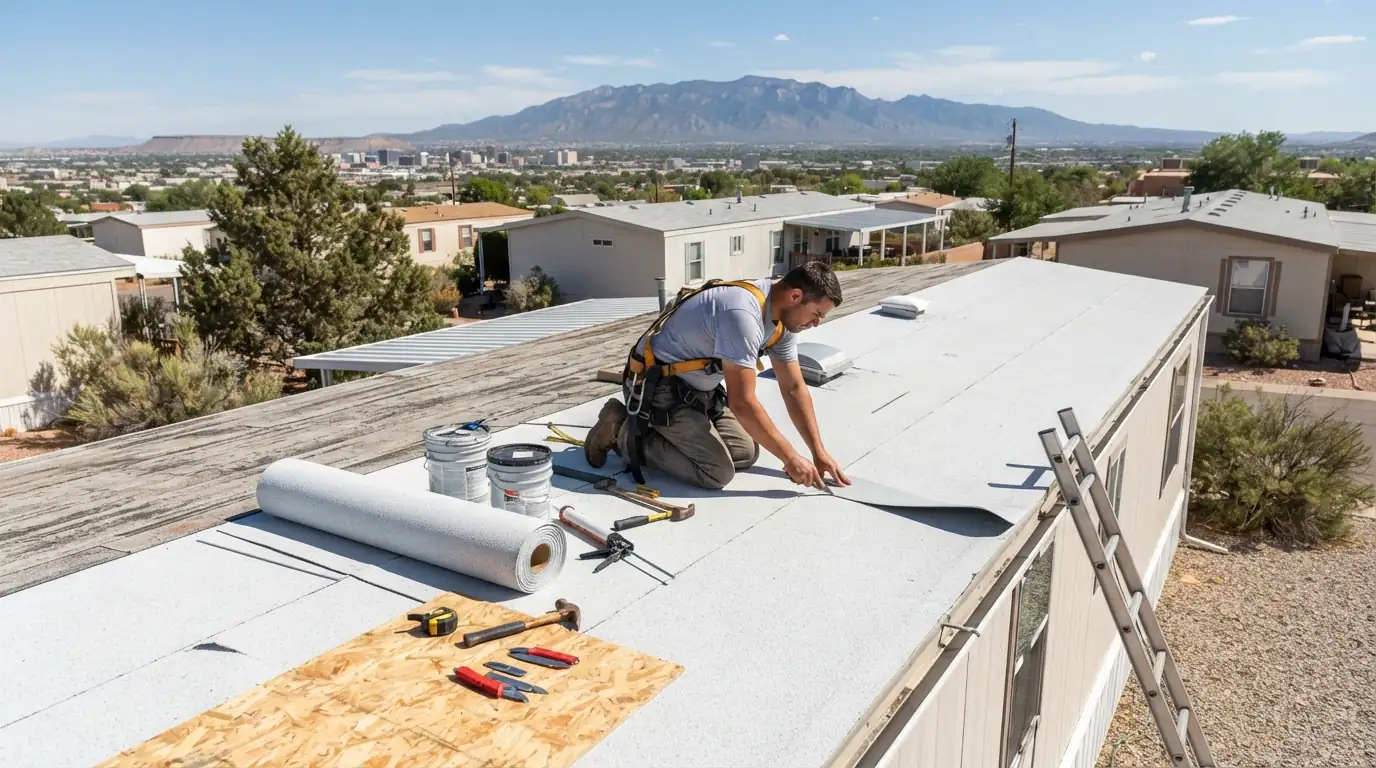
Many older manufactured homes have a metal roof that is still structurally sound but leaks at seams and fasteners and bakes in the summer sun. A coating system can seal the whole surface in one pass. The roof is cleaned, rust is treated, loose fasteners and seams are secured and detailed with sealant and fabric, and a white elastomeric or silicone coating goes on at the specified thickness. It is far lighter and cheaper than a roof-over, but it only makes sense while the metal underneath is sound.
Seam and Vent Repair
The most common mobile home leaks come from the long seams where roof sections meet, the plumbing and furnace vent stacks, and the joints around skylights and roof-mounted coolers. We clean and reseal seams with compatible tape and sealant, replace cracked vent boots and flashings, and fasten loose sections so they stop flexing. On older homes that were patched with layers of roof tar, the old material is removed first, because new sealant will not hold on top of it.
Weight and Structure Limits
The most important question on a manufactured home roof is what the structure can carry. Heavy materials and repeated layers of roofing or tar add load that the original design never allowed for, and a sagging roof is often the result. Before recommending a roof-over, we look at the framing from inside where we can, at the condition of the existing roof, and at how many layers are already on it. The recommendation then keeps the finished roof within what the home was built to handle.
Albuquerque conditions
What this job looks like on Albuquerque roofs
Manufactured homes face this climate with less roof than most houses. Strong sun heats a thin metal roof quickly, so the rooms under it warm up fast on summer afternoons, and the same roof cools just as fast at night, which works fasteners and seams loose over time. When monsoon storms arrive, a nearly flat roof with tired seams has little margin. That combination is why a roof-over that adds pitch and insulation is so often the practical answer here once a mobile home roof reaches the end of its patching life.
DIY or call
What owners can safely handle
Reasonable
Keeping gutters and edges clear, and checking ceilings after storms.
Leave to us
Walking the roof. Thin decks and flexing metal are easy to damage and to fall through.
Avoid
Adding more layers of roof tar. It adds weight and makes proper repairs harder.
How the job runs
How a mobile home roof job runs
- 1
Inspect inside and out
Framing, existing roof, layers and every penetration checked.
- 2
Recommend a system
Repair, coating or roof-over, within the home's limits.
- 3
Confirm the permit path
Requirements checked for your home before work starts.
- 4
Prepare the roof
Old tar removed, seams secured, rust treated.
- 5
Install or coat
Roof-over framing and roofing, or the coating system.
- 6
Flash and finish
Vents, edges and penetrations flashed; photos taken.
FAQ
Mobile home roofing questions
Often, when the old roof is worn but the structure is sound. It adds pitch, insulation and a new surface in one job.
If the metal is sound and the leaks are at seams and fasteners, yes, once those are repaired first.
The metal flexes on its framing. A roof-over or proper fastening stops most of it.
No. Weight matters, so the system is chosen to suit the structure.
Rules for manufactured homes can differ from site-built homes; we confirm the requirements for yours before starting.
Usually noticeably, thanks to the added insulation and a reflective surface.