
Quick answer: Gutters in Albuquerque sit dry most of the year and then face a monsoon burst that can overwhelm an undersized system in minutes. A 5 inch K-style gutter suits most homes; larger or steeper roof sections often need 6 inch gutters and 3 by 4 inch downspouts. We size the system to the roof area and route every downspout away from the foundation.
Gutters and downspouts
Built for dry months and sudden downpours
Updated September 2026
Gutters in this climate spend most of the year dry, collecting dust, leaves and roof grit, then get tested all at once when an afternoon storm dumps water faster than a small system can carry it. That is when overflow soaks the soil at the foundation and stains the stucco.
On flat roofs the same job falls to canales and scuppers, and we often tie those into downspouts too.
Cost factors
What changes the price of this job
- Linear feet Longer runs and more roof edges mean more material.
- Size 6 inch gutters and 3 by 4 downspouts cost more than 5 inch and 2 by 3.
- Corners and outlets Each corner, end cap and downspout adds parts and labor.
- Fascia repair Rotted fascia must be replaced before new gutters can hold.
- Guards Guards are priced by the foot and vary by type.
Gutters are priced by the linear foot of each run plus downspouts and corners, so we measure before quoting.
What's included
What a new gutter installation includes
- Measurement of every roof edge
- Gutter and downspout sizing by roof area
- Removal and haul-away of old gutters
- Fascia check and repair where needed
- Runs formed to length on site
- Hidden screw hangers at close spacing
- Sealed and riveted corners and end caps
- Downspout extensions or splash blocks
- A water test of every run
The work, piece by piece
Seamless Aluminum Gutters
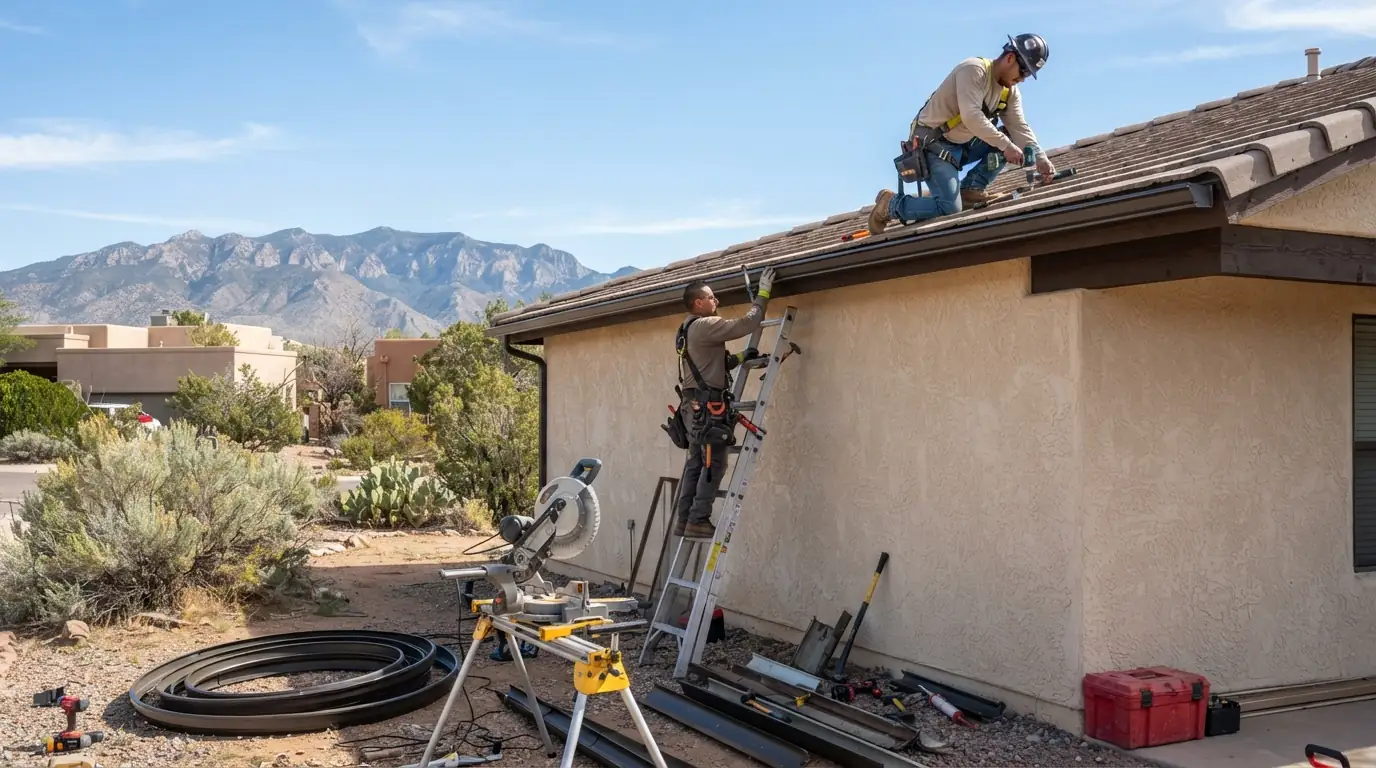
Seamless gutters are formed on site from a coil of aluminum, so each run is one piece from corner to corner with no joints along its length to leak. We measure every run, form it to exact length, and hang it on hidden hangers screwed into the fascia at close spacing so it holds its line under a load of water and debris. Corners and end caps are the only seams, and those are sealed and riveted. Colors can match the trim or the stucco.
Gutter Repair and Resealing
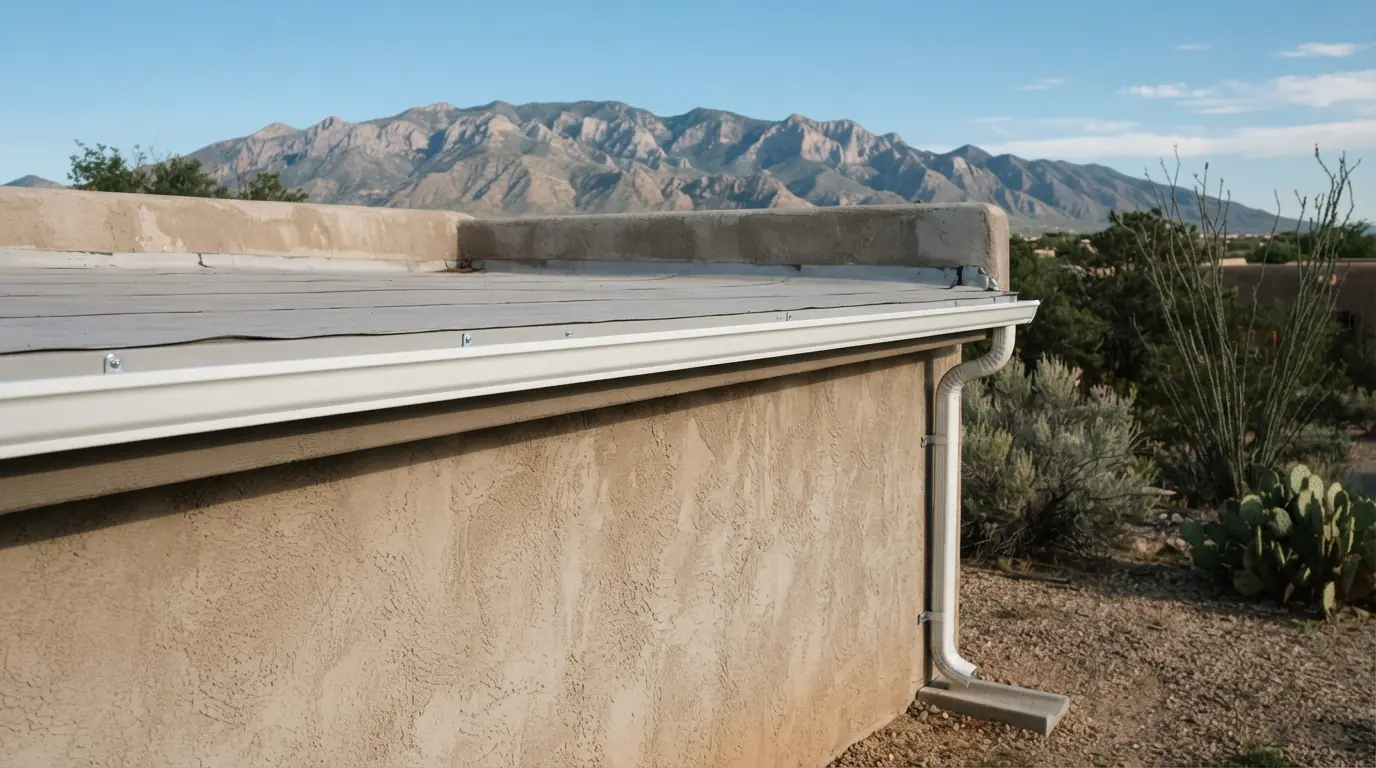
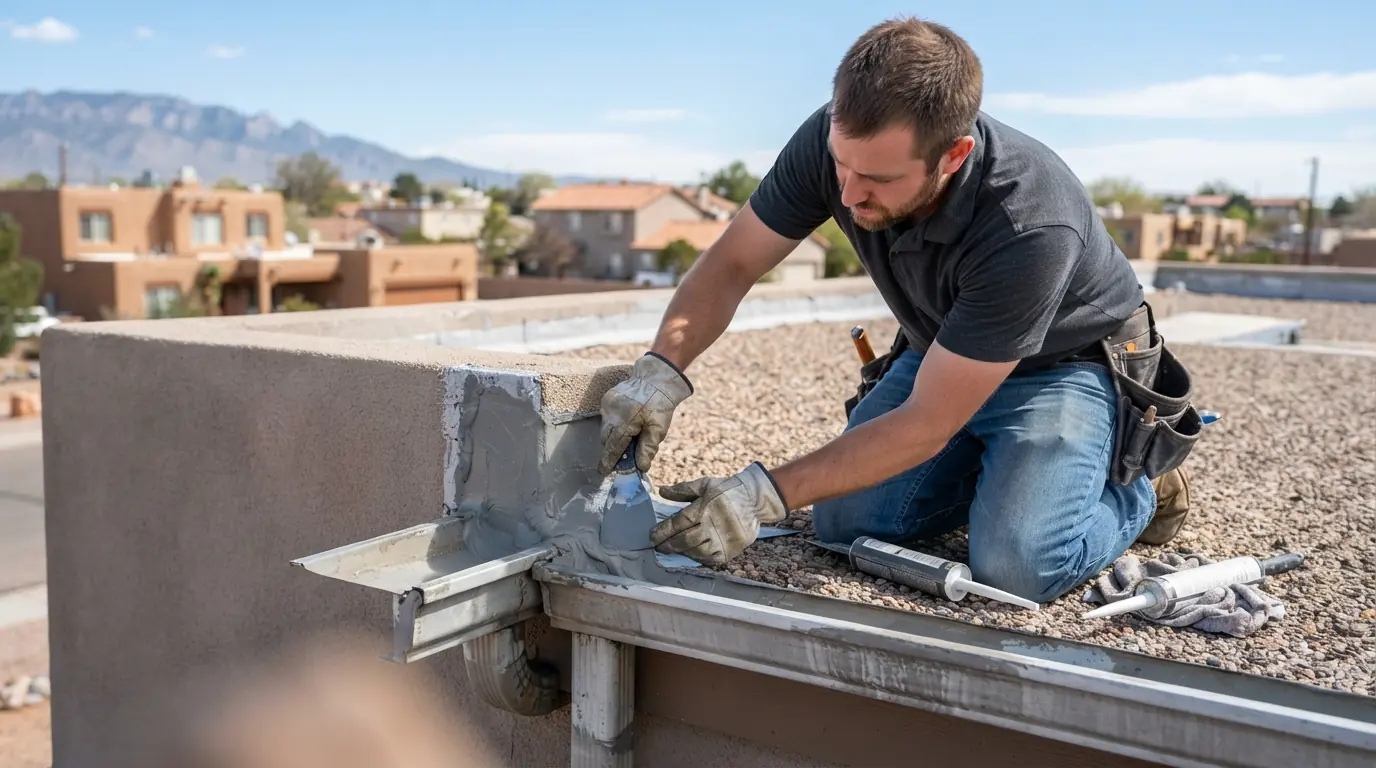
Most gutter leaks are at corners, end caps and old joints where the sealant has dried out and cracked in the sun. Those can be cleaned, resealed and riveted. Sagging runs usually mean failed hangers or spikes pulled out of soft fascia, so we refasten them with screw hangers and replace rotted fascia boards where the wood will not hold. We also correct the pitch where water sits in the middle of a run instead of flowing to the outlet.
Downspout Routing and Splash Blocks
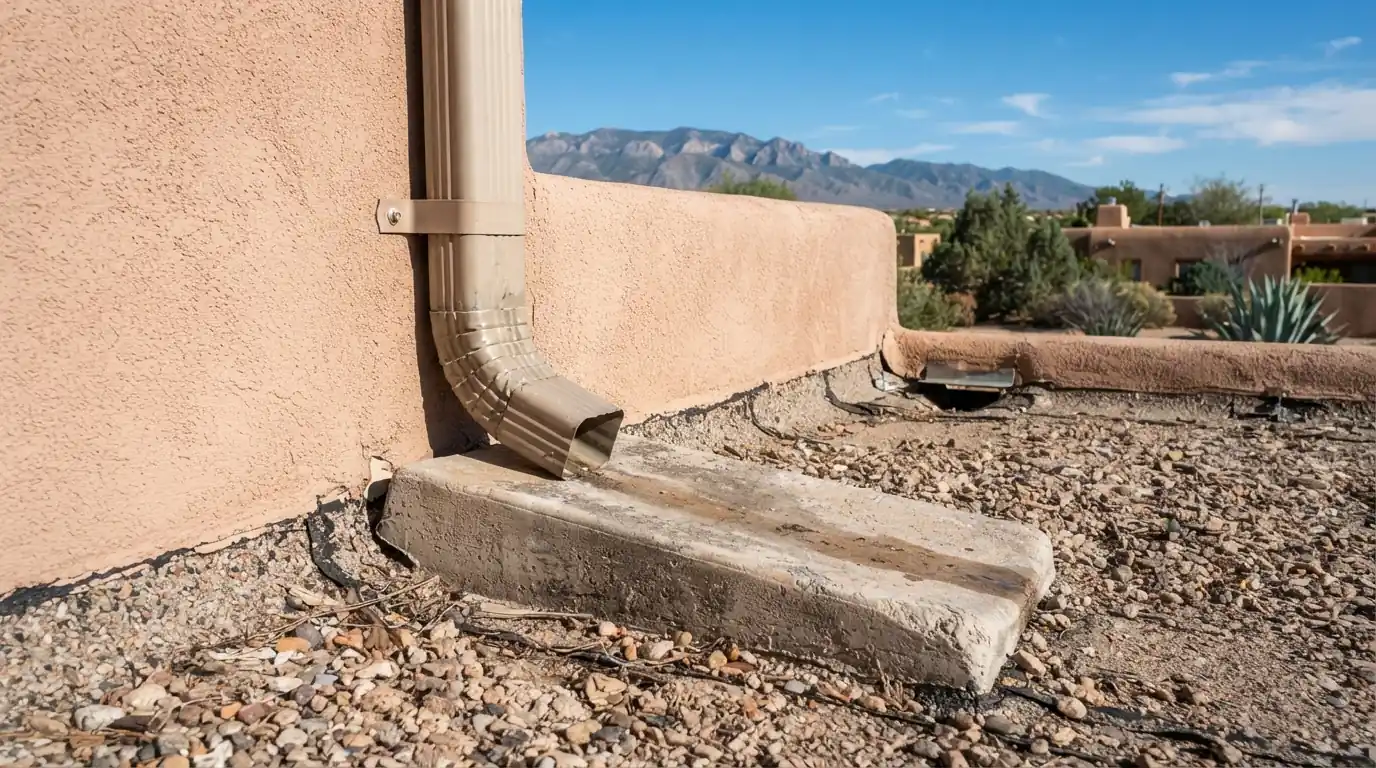
A gutter only moves the water to the downspout; where it goes after that decides whether the foundation stays dry. Downspouts that dump at the base of a stucco wall soak the soil and stain the finish. We add extensions, splash blocks or buried drain lines to carry water away from the house, and place downspouts so they empty onto ground that slopes away. Where one downspout serves too much roof, we add a second outlet to share the load.
Gutter Guards
Guards keep leaves and debris out of the gutter, which matters most on homes with trees nearby. The options range from simple screens to micro-mesh panels that block fine debris and pine needles. No guard is maintenance-free, since dust and fine grit still collect on top, but a good micro-mesh guard turns a messy cleaning job into an occasional rinse. We recommend guards where trees actually drop debris on the roof and skip them where they would add cost for little benefit.
Albuquerque conditions
What this job looks like on Albuquerque roofs
Close to half of Albuquerque's annual precipitation falls in July and August, much of it in short, heavy bursts, and gutters feel that more than any other part of a pitched roof. On June 29, 2024, a severe storm dropped 1.48 inches at the Sunport, with flash flooding and damaging winds across much of the city and more than two inches in some areas. A 5 inch gutter feeding a single downspout off a large roof section cannot carry a storm like that, which is why we size the outlets for the worst afternoon rather than a typical one.
DIY or call
Gutter jobs you can do, and the ones to hand off
Worth doing yourself
Scooping debris from single-story gutters from a stable ladder, and rinsing downspouts with a hose.
Best left to us
Two-story work, resealing corners, re-pitching runs and anything that needs fascia repair.
Skip this shortcut
Sealing a leaking joint from outside over dirt. The sealant will not hold, and the leak returns by the next storm.
How the job runs
How a new gutter system goes up
- 1
Measure the roof edges
Every run, corner and downspout location measured.
- 2
Size the system
Gutter width and outlet count matched to roof area.
- 3
Remove the old gutters
Old runs and hangers come off; the fascia is checked.
- 4
Form and hang
Runs formed to length and hung on screw hangers at a steady pitch.
- 5
Seal corners and outlets
Corners, end caps and outlets sealed and riveted.
- 6
Route the water
Downspouts, extensions and splash blocks carry water away.
FAQ
Gutter questions from Albuquerque homeowners
Pitched roofs over walkways, entries or stucco walls benefit most. Without them, monsoon runoff digs trenches and soaks the foundation soil.
5 inch suits most single-story homes. Large or steep roof sections draining onto one run do better with 6 inch and bigger downspouts.
Yes. Aluminum gutter coil comes in a wide range of factory colors, including common stucco and trim tones.
At least once before the monsoon, and again in fall where trees are nearby. Guards reduce that but do not end it.
Yes. Flat roofs drain through canales and scuppers, and we can add collector boxes and downspouts under them to control where water lands.
Both. Resealing, refastening and re-pitching save many systems; replacement makes sense when runs are split, dented or badly undersized.