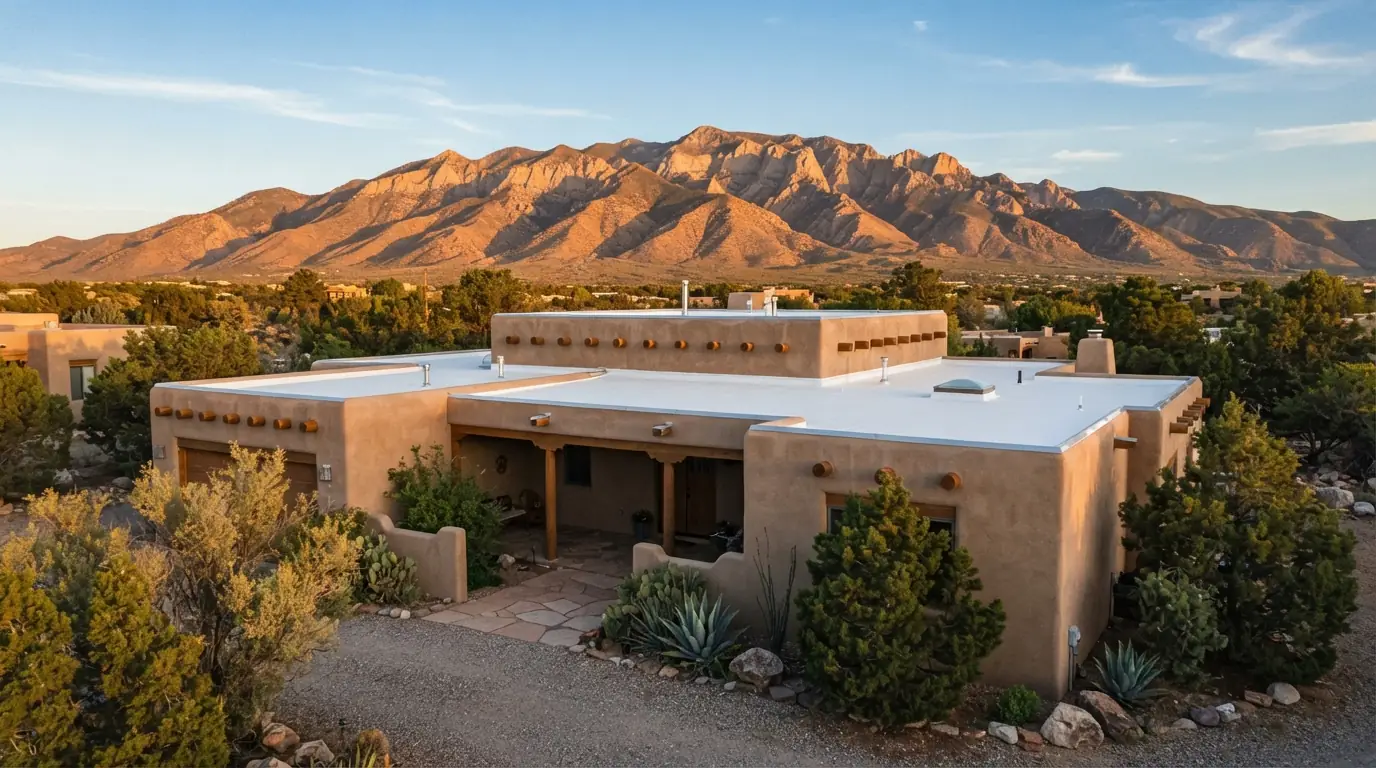
Quick answer: A spray foam roof in Albuquerque is a layer of polyurethane foam sprayed onto the deck, typically an inch or more thick, then sealed with a silicone or acrylic coating that blocks UV. The foam insulates and sheds water; the coating protects the foam. Kept coated, the same foam can serve for decades.
Sprayed polyurethane foam
Why foam is common on Albuquerque flat roofs
Updated September 2026
Foam adds insulation right where the heat is, sprays around swamp cooler curbs and pipes without separate flashing pieces, and can be built up thicker in low spots to improve drainage. On a roof crowded with penetrations, that is a real advantage.
The catch is the coating. Foam exposed to sun breaks down, so the coating has to be kept intact and renewed. A neglected foam roof is often still savable with a fresh coating, if the foam underneath is dry.
Cost factors
What changes the price of this job
- Existing roof Tear-off, or preparation of a dry roof as a base.
- Foam thickness Thicker foam means more material and more insulation.
- Slope work Extra passes to correct ponding add material.
- Coating type Silicone and acrylic top coats differ in cost.
- Penetrations Curbs and pipes take time to wrap and detail.
Foam is priced by area, thickness and the state of the existing roof, and a recoat costs a fraction of new foam, so we price both when the roof allows it.
What's included
What a new foam roof includes
- Moisture check of the existing roof
- Tear-off or preparation of a sound base
- Deck repair where needed
- Foam sprayed in even passes
- Extra passes to correct ponding
- Foam wrapped up parapets and curbs
- Base coat and top coat
- Thickness checks with a probe
- Photos and a written recoat interval
The work, piece by piece
New Foam Over the Deck
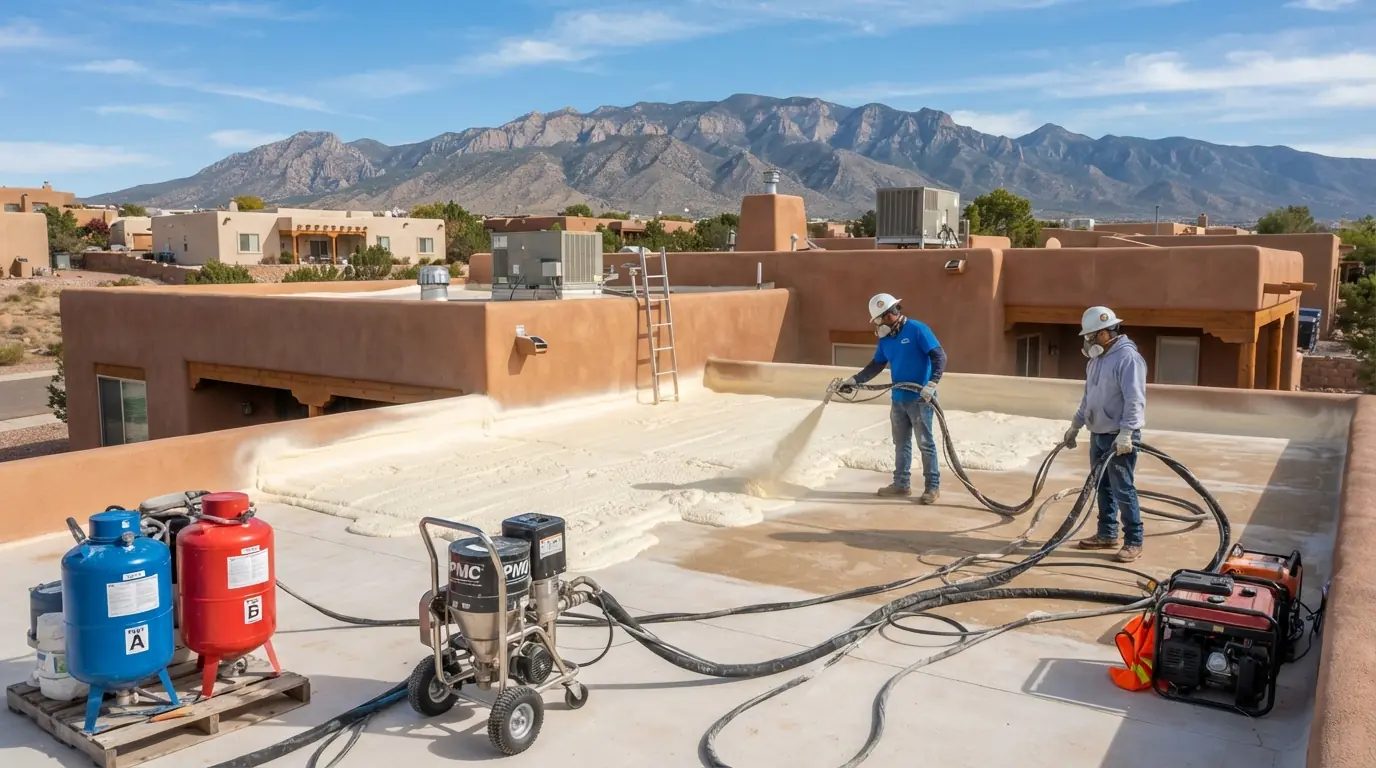
A new foam roof starts with a clean, dry deck. Old roofing is removed or, where the existing roof is dry and well attached, prepared as a base. Foam is sprayed in passes to build thickness evenly, with extra passes in low areas to create slope toward the canales and drains. It bonds to the deck and wraps up parapets and curbs as one continuous layer. As soon as the foam cures, the base coat of silicone or acrylic goes on to protect it.
Foam Recoat and Renewal
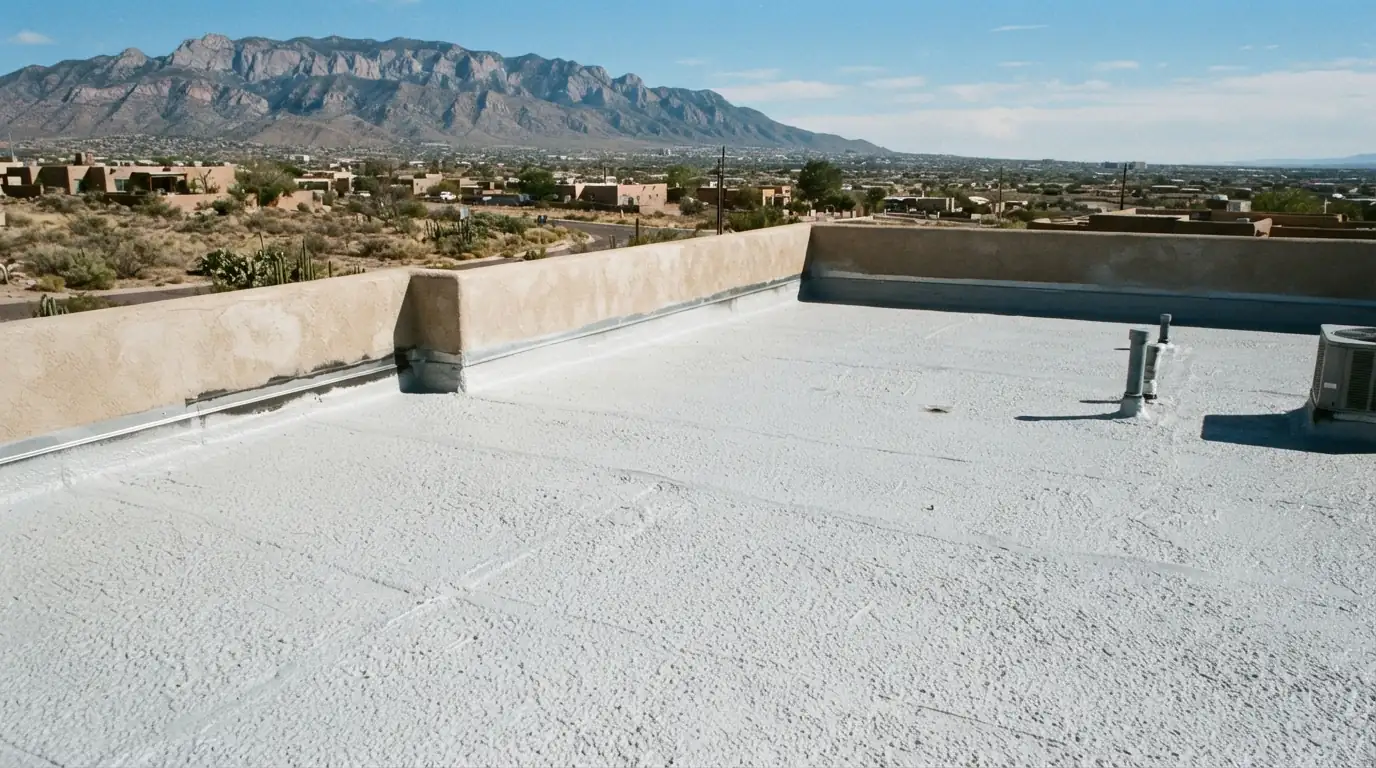
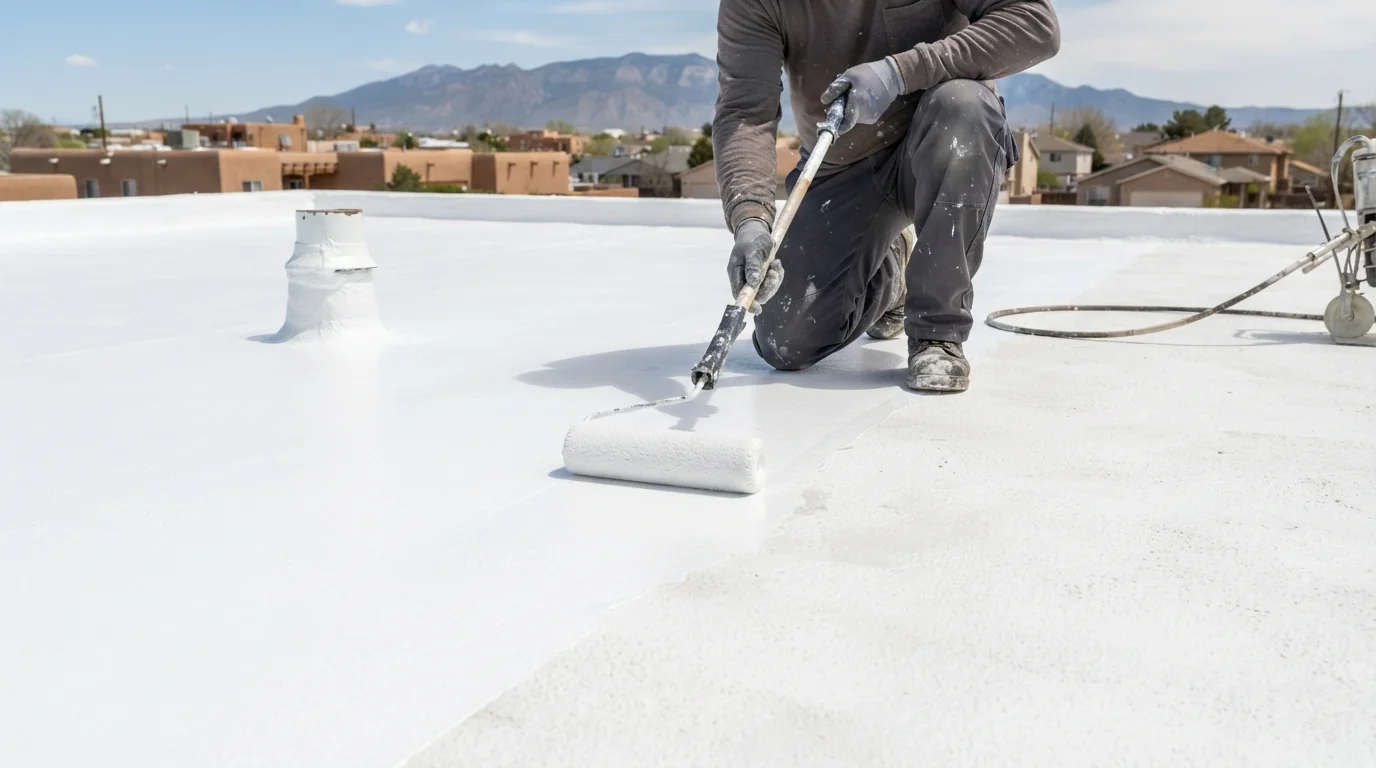
Recoating is what makes foam economical over the long run. When the coating wears thin, chalks or starts to show foam through it, the roof is cleaned, any damaged foam is repaired, and a fresh coating goes on at full thickness. Done on time, a recoat restores the protection without touching the foam. Left too long, UV degrades the exposed foam and it has to be ground back before recoating, which adds cost. That is why we note the coating condition on every visit.
Bird Peck and Hail Damage Repair
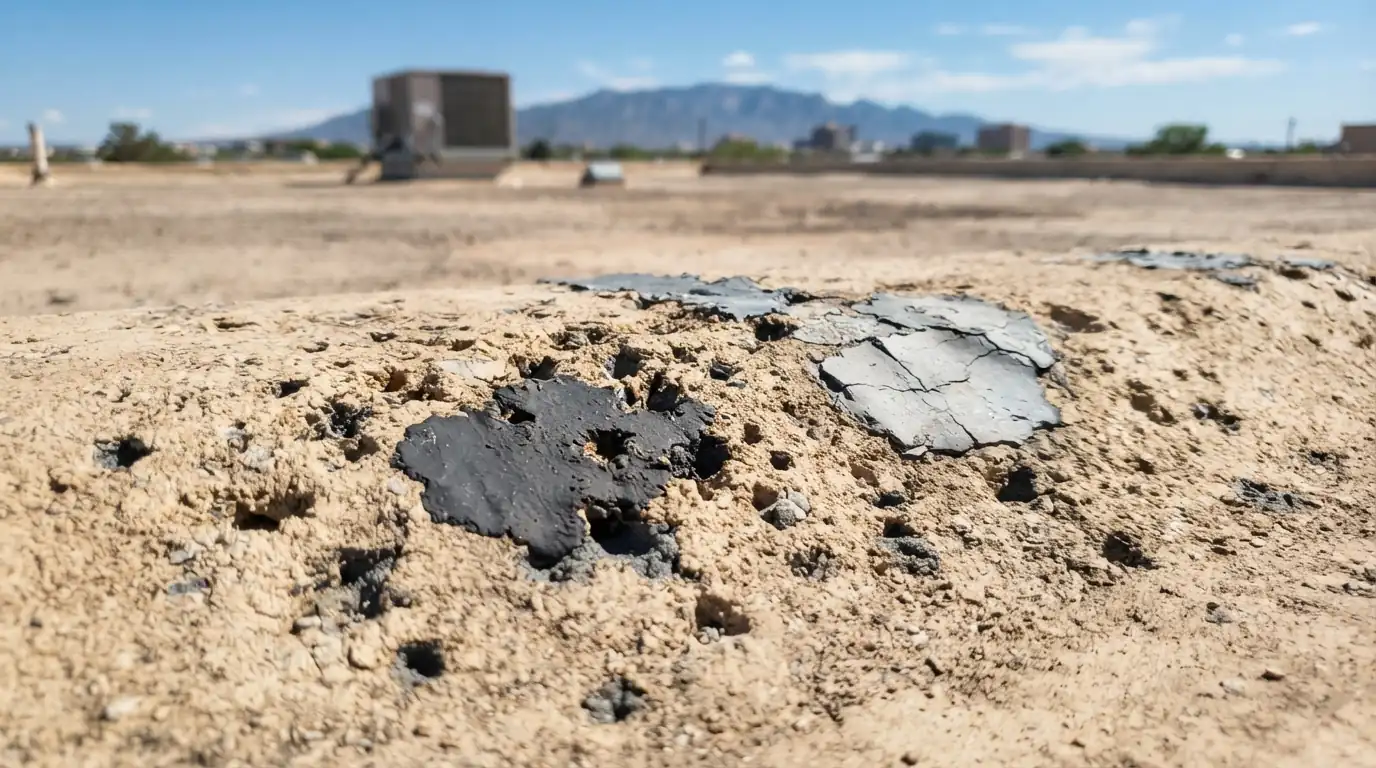
Foam is soft enough that birds peck holes in it and large hail dents or punctures the coating. Small dents with the coating intact are cosmetic. Punctures and peck holes let water and UV into the foam, and they need attention: we cut out the damaged foam, fill it with new foam or a foam patch, sand it flush, and recoat the area. After a hail storm, a close walk of the roof matters more than a look from the ground, because small punctures are easy to miss.
Foam Thickness and Slope Correction
One advantage of foam is that its thickness can vary across the roof. Where a flat roof ponds, we spray extra passes to build a slope toward the outlet, and around drains we taper the foam so water reaches them instead of sitting beside them. Thickness also sets the insulation value, so on roofs over living spaces we plan the depth with that in mind. We check thickness with a probe during the job rather than judging it from the surface.
Albuquerque conditions
What this job looks like on Albuquerque roofs
Foam roofs are common across Albuquerque, and local cost data names UV as the main force wearing them down, which is why the coating is the part of a foam roof that matters most. Hail is the other threat. Monsoon storms from mid July through September bring sudden hail and downbursts, and roofs on exposed ground such as the West Side and Sandia Heights take the hardest hits. After any hail event, a close walk of a foam roof is worth it, since a punctured coating lets the sun reach the foam.
How the job runs
How a foam roof is sprayed
- 1
Check moisture
The existing roof is probed and cored before anything else.
- 2
Prepare the base
Tear-off or cleaning, then deck repair where needed.
- 3
Mask and protect
Walls, windows and vehicles covered against overspray.
- 4
Spray the foam
Even passes, extra passes for slope, probed for thickness.
- 5
Coat the foam
Base coat and top coat applied at the specified thickness.
- 6
Walk and document
Final inspection, photos and a written recoat interval.
FAQ
Spray foam roofing questions
With the coating kept up, the foam itself can last decades. The coating is what needs renewing on a schedule.
If the existing roof is dry and well attached, often yes. Wet insulation has to come out first.
It can be, which is why we mask surfaces and watch the wind. On gusty days we reschedule.
Foam adds insulation above the deck and the white coating reflects sun, so rooms under a flat roof usually stay cooler.
Usually bird pecking or hail. They let water and UV in, so they should be patched and recoated.
Systems from GACO, Lapolla and Henry are common on our jobs. The scope names the foam and the coating.