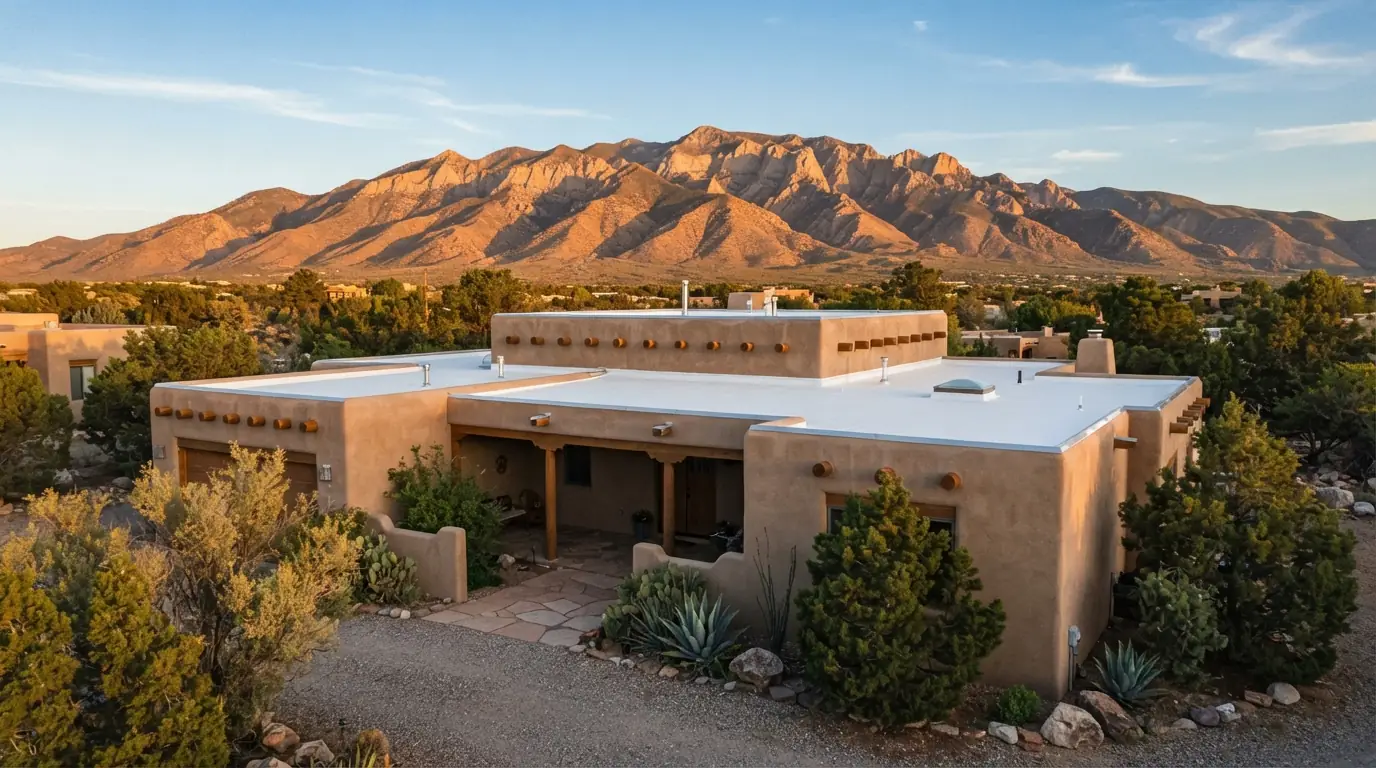
Quick answer: Most tile roof leaks in Albuquerque come from the underlayment beneath the tile rather than the tile itself, because the tile usually outlasts the layer it sits on. A cracked or slipped piece is still worth replacing quickly, since it exposes that layer to sun and rain. We lift the tile, repair what is underneath, and relay it.
Warning signs
Signs your tile roof needs a repair visit
Visible from the yard, often after wind.
A course that has slid down leaves an open gap above it.
Crumbled ridge bedding in gutters or on the patio.
Water got past the tile and the underlayment beneath.
Leaves and grit damming the water between two roof planes.
How the job runs
What a tile repair visit looks like
- 1
Photos first
Broken tile, ridges and valleys are documented before anything moves.
- 2
Trace the water path
Stains inside are traced back to the tile area feeding them.
- 3
Lift the affected courses
Tiles come off and are stacked so they go back in order.
- 4
Repair underneath
Underlayment, flashing, battens or fasteners are replaced as needed.
- 5
Relay and replace
Sound tile goes back; broken pieces get the closest match.
- 6
Check the rest
We walk the ridges and valleys and tell you what else we saw.
Clay and concrete tile
Why a tile roof leaks when the tile looks fine
Updated September 2026
Tile sheds water; it is not the waterproof layer. Rain runs down it, and the underlayment beneath catches what gets past the gaps. When that underlayment dries out and cracks, water that was always getting under the tile starts reaching the deck, while the roof still looks perfect from the ground.
Tile is also brittle underfoot; one careless trip can crack a dozen pieces. We walk it on the support points.
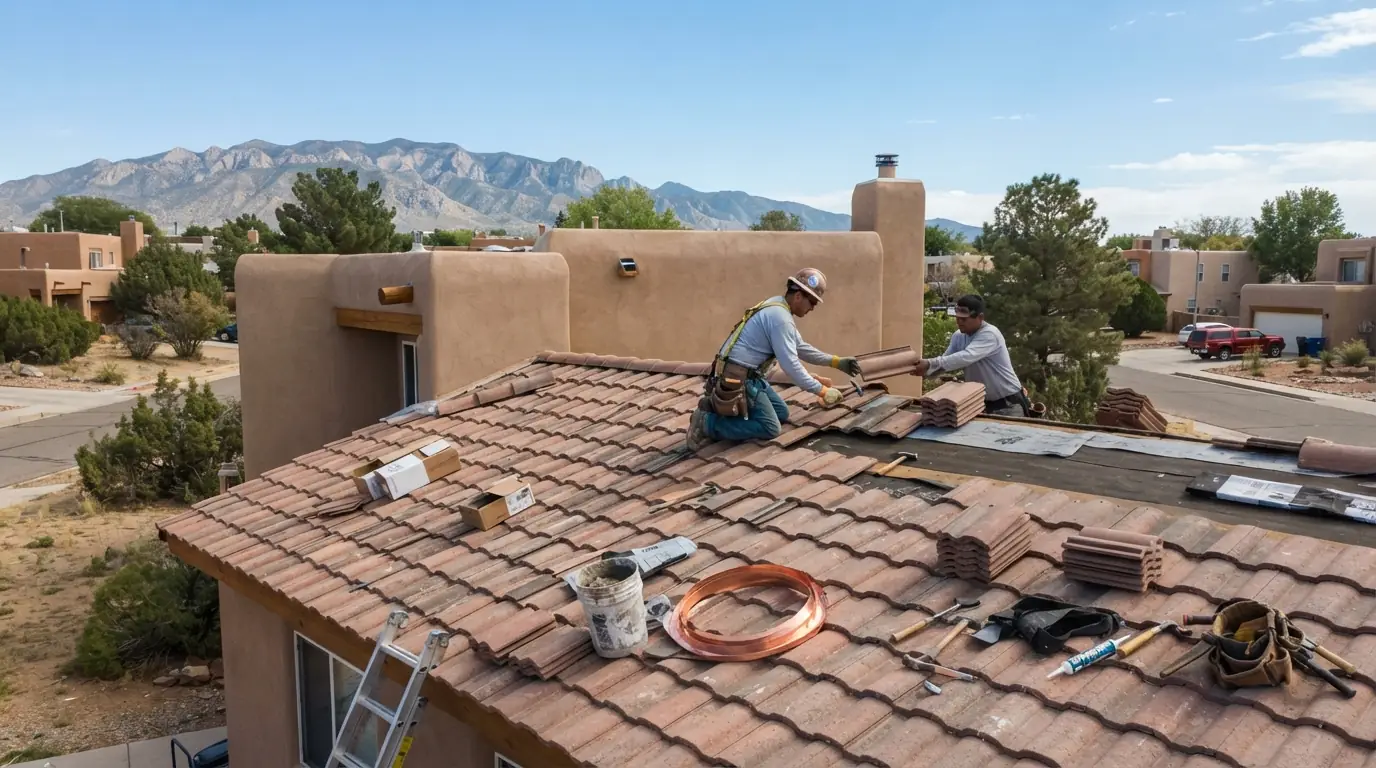
The work, piece by piece
Cracked and Slipped Tile Replacement
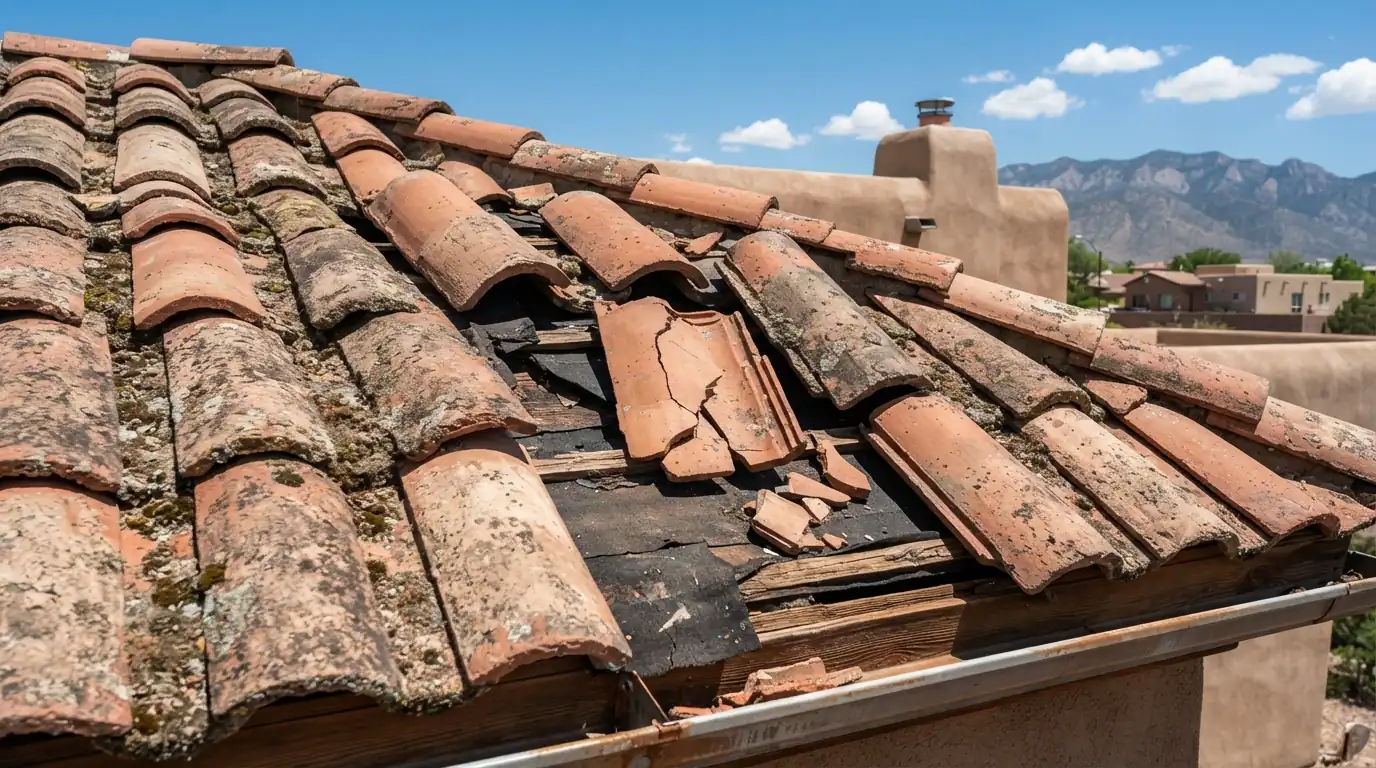
A cracked tile lets sun and rain reach the underlayment below it, and a slipped tile leaves a gap that does the same. We lift the courses above it, check the underlayment and the batten or fastener underneath, and set a replacement that matches profile and color as closely as current production allows. Slipped tiles usually mean a failed fastener or a broken nose lug, so we fix the attachment rather than pushing the tile back into place and hoping.
Underlayment Failure Under Tile
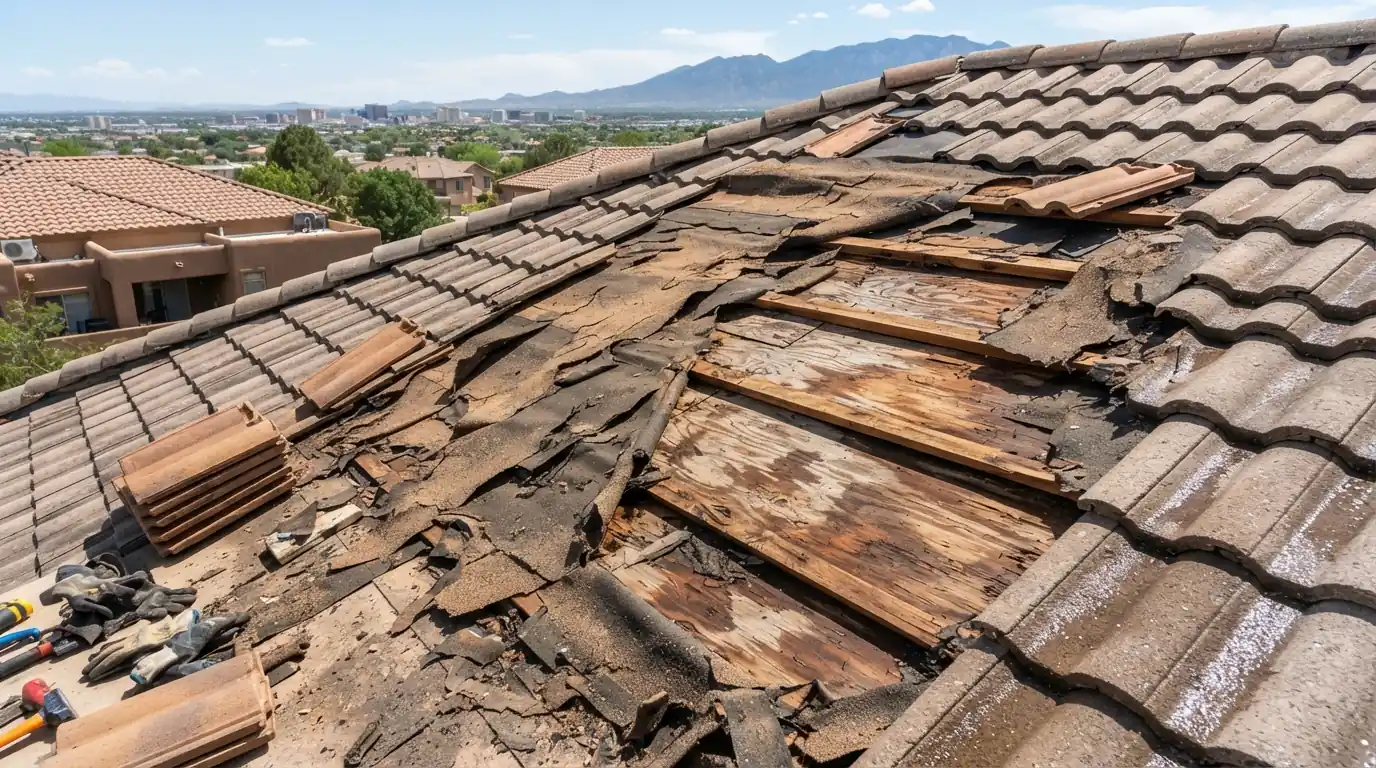
When the underlayment is the problem, the fix is to lift the tile over the failing area, replace the underlayment, and relay the same tile. On a small section that is a repair. When the underlayment has failed across most of the roof, the honest answer is a lift-and-relay of the whole roof, reusing sound tile over new underlayment. It costs far less than new tile, and it is often what an older tile roof actually needs. You see the underlayment in photos either way.
Tile Ridge and Hip Repair
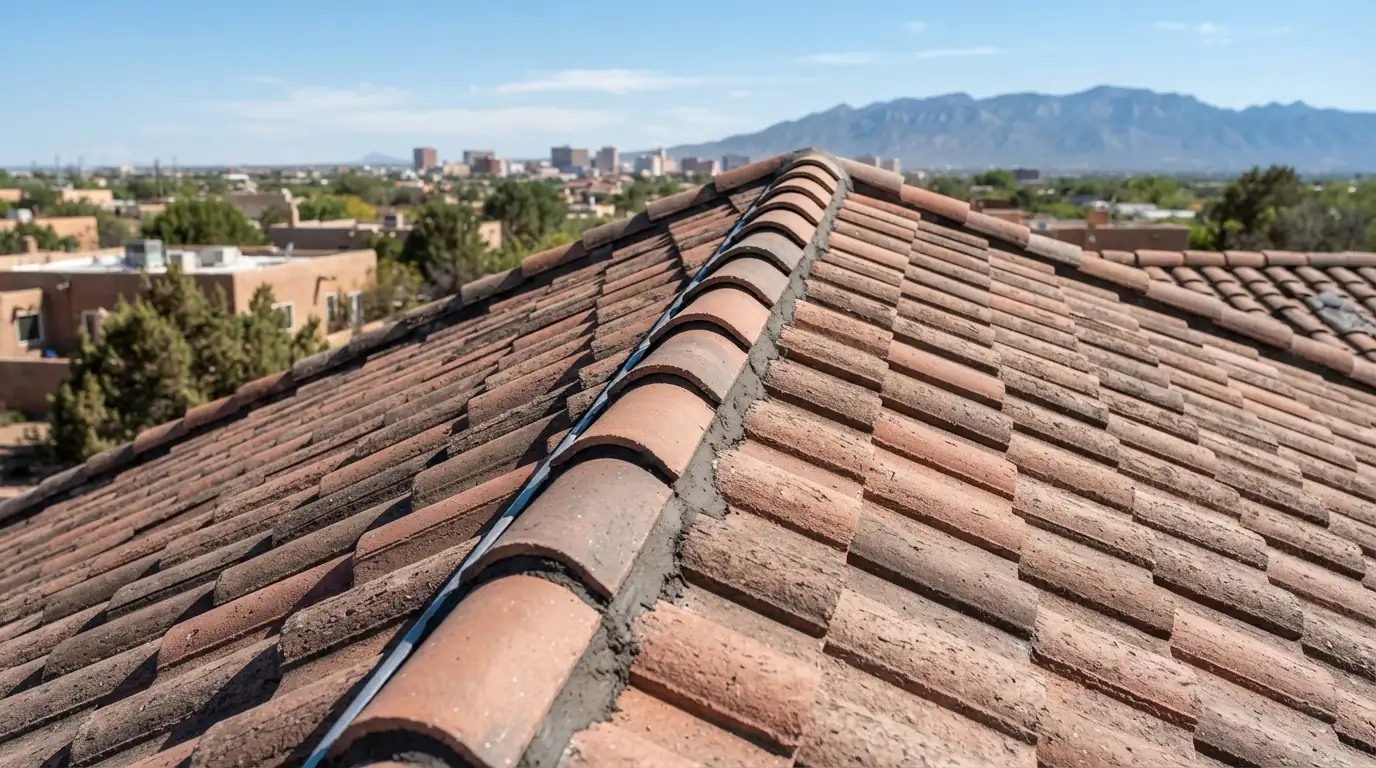
Ridge and hip tiles sit on the most exposed lines of the roof and take the wind first. Older ridges were often bedded in mortar that cracks and falls out after years of heating and cooling, which loosens the caps and lets water in at the peak. We remove loose caps, clean out the failed bedding, and reset them on a modern ridge system or fresh mortar with proper fastening, so the line stays straight and the next windstorm does not lift them.
Valley and Flashing Under Tile
Valleys carry the water from two roof planes, and on tile roofs they collect leaves, dust and broken pieces that dam the flow. Water then backs up under the tile edges and over the valley metal. We clear the valley, check the metal for rust and splits, and replace it where needed. The same goes for flashing at walls, chimneys and skylights, which hides under tile and is often the real source of a stain that shows up nowhere near it.
DIY or call
Why tile is a bad roof to fix yourself
Walking it breaks it
A heel in the wrong spot cracks tile; DIY trips often break more than they fix.
The leak is usually underneath
Sealant on a tile face never reaches failing underlayment.
What you can safely do
Photograph it from the ground and note when the stain appears.
Albuquerque conditions
What this job looks like on Albuquerque roofs
Wind is the tile roof's main enemy here. Monsoon downbursts from mid July through September can top 50 mph, and homes on the West Side ridges and up in Sandia Heights take the strongest gusts, with ridge caps and rake edges the first pieces to lift. Sun does the slower damage. At about 5,300 feet the UV is stronger than at sea level, and it dries out exposed underlayment wherever a cracked tile lets light through. After a big wind event, a look at the ridge line from the street tells you a lot.
Cost factors
What changes the price of this job
- Tile type Clay costs more to match than concrete, and discontinued profiles take longer to source.
- Area to lift Reaching underlayment means removing and relaying every course above the damage.
- Ridge and hip length Resetting caps is priced by the run.
- Underlayment condition A local patch and a full lift-and-relay are very different jobs.
- Access and pitch Steep and two-story roofs need more staging and time.
Tile repair is priced from photos of the damage, because cost depends on how much tile must come off.
FAQ
Tile roof repair questions
Usually closely; concrete is easier to match than older clay. If a profile is discontinued, we borrow sound tile from a hidden slope and put replacements there.
In monsoon season it can be. We tarp the area the same day and do the tile work once it is dry.
Well short of the tile's life, and less where cracked pieces let sun reach it. Photos from a lift show its condition.
Failed in one area, repair it. Failed across the roof with most tile sound, a full lift-and-relay is the better value.
Tile breaks when walked off its support points. We replace the pieces and check for punctured underlayment.
Yes, along with the underlayment, battens, flashing and ridges under them.