
Quick answer: Most canale and scupper leaks in Albuquerque happen where the metal meets the roof membrane and the parapet, not in the canale itself. Monsoon storms push a lot of water through these outlets in a short time, so a small gap at the flashing turns into a wet wall fast. We clear the outlet, reflash it into the roof, and replace rusted or undersized metal.
Warning signs
Signs a canale or drain is failing
Streaks or white mineral marks on the stucco under a canale.
Damp drywall or peeling paint on an exterior wall after rain.
Standing water near the outlet a day or more after a storm.
A canale tilted back toward the house or pulling off the parapet.
Water spilling over the parapet instead of through the outlet.
How the job runs
How we fix a leaking outlet
- 1
Stop it tonight
In an active storm we clear the outlet and tarp the wall or roof edge.
- 2
Trace the water
The stain is followed back to the outlet, flashing or parapet feeding it.
- 3
Clear and inspect
Debris out, metal and membrane checked at every joint.
- 4
Repair or replace metal
Canale reset or replaced; rusted scupper box rebuilt.
- 5
Reflash into the roof
Membrane turned into the outlet and sealed properly.
- 6
Water test
A hose test confirms the flow before we leave.
Flat roof drainage
Where the water leaves is where the leaks start
Updated September 2026
A flat roof sends all of its water to a few exits: canales through the parapet, scupper boxes, or internal drains. Each is a hole in the roof edge where metal, membrane and stucco meet, and each of those materials moves differently in the sun.
When an outlet fails, water runs down inside the wall or backs up onto the roof. Fixing it often means dealing with the parapet around it as well.
The work, piece by piece
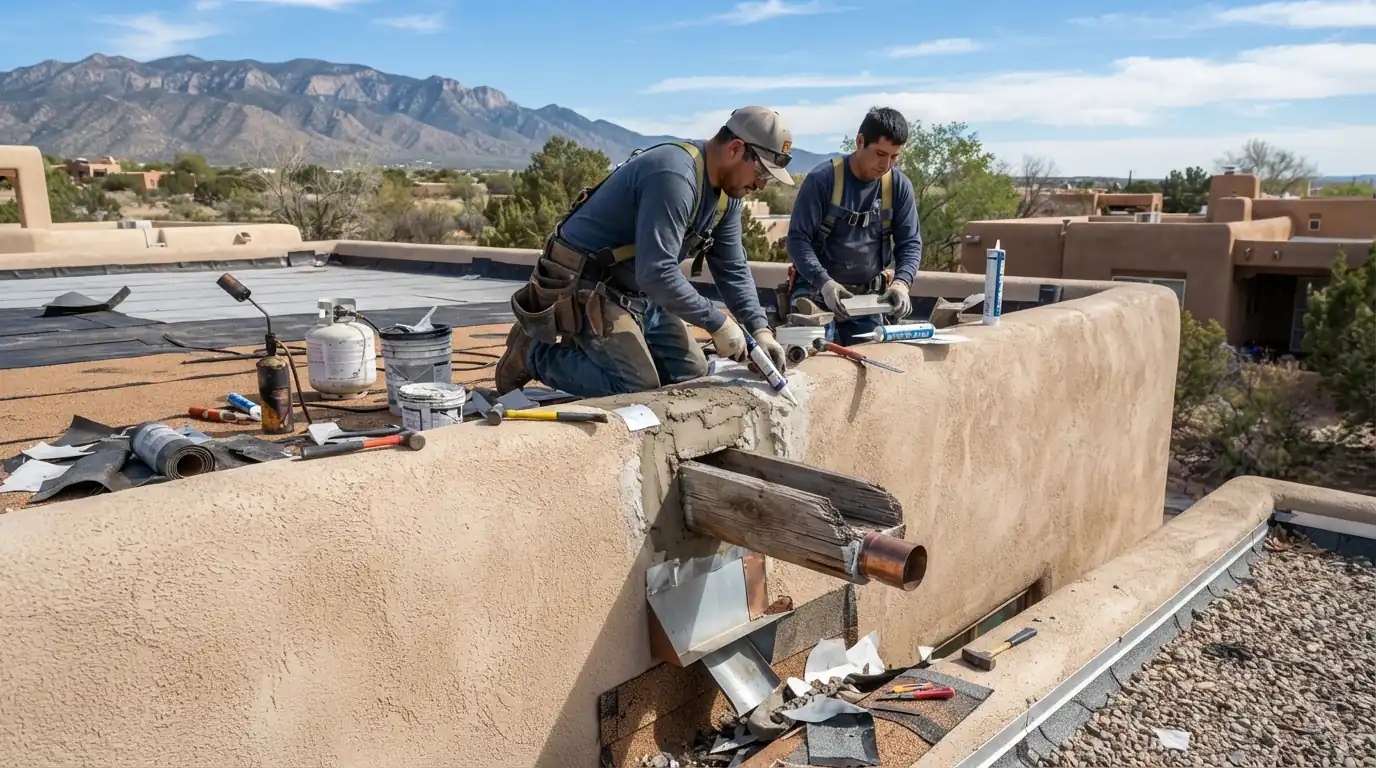
Canale Reflashing and Replacement
A canale is the channel that carries water through the parapet and throws it clear of the wall. Leaks happen where it passes through: the membrane tie-in splits, the sealant dries out, or the canale sags and tilts water back toward the wall. If the canale is sound, we reset it with the right fall and reflash it into the roof membrane. If it is rusted, too short or too small for the roof area it drains, we replace it with a galvanized or copper canale sized for the job.
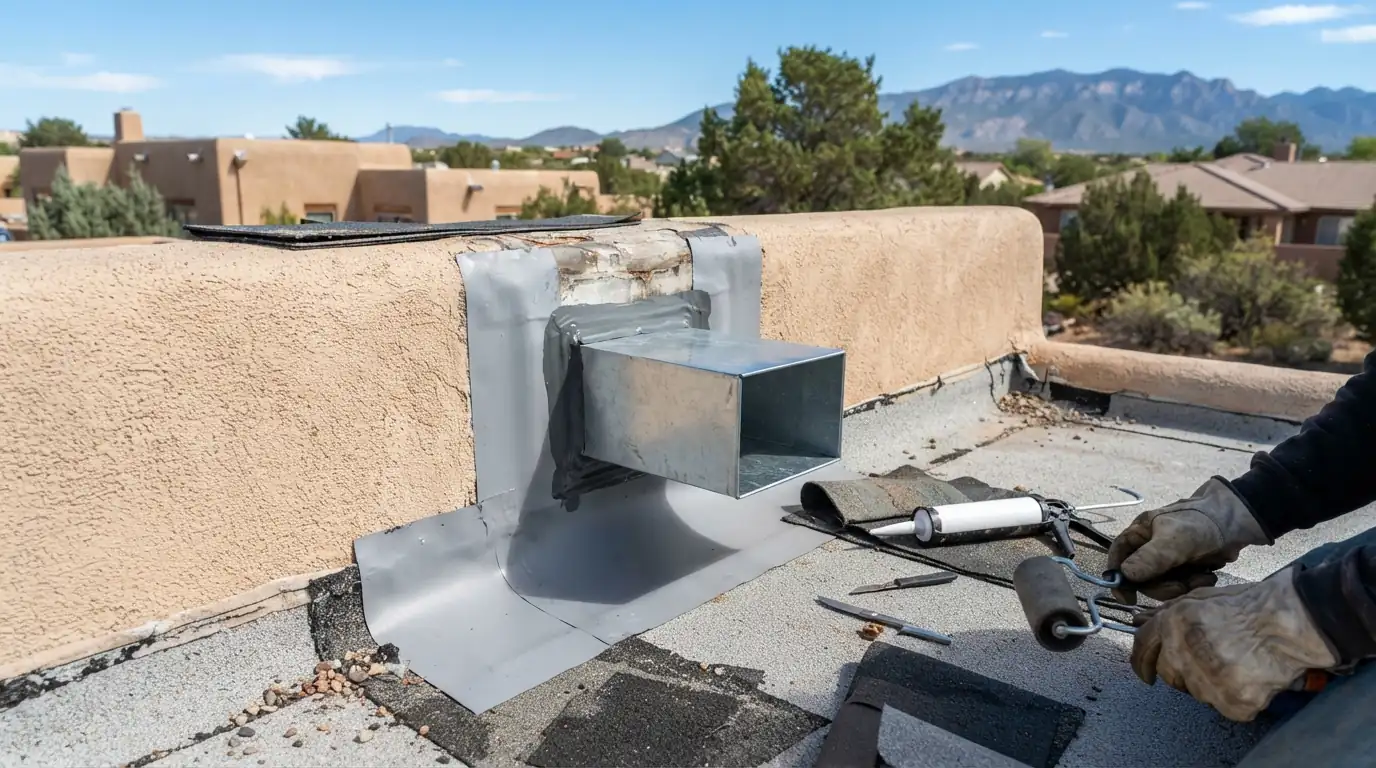
Scupper Box Leaks
Scupper boxes collect water at an opening in the parapet and feed it into a downspout. The box corners and the joint where the box meets the membrane are the usual failure points, along with rust at the bottom seam. A small split can be cleaned and reflashed; a box that has rusted through is replaced, with the membrane properly turned into the opening. We also check that the scupper is large enough, since an undersized one overflows in a heavy storm and sends water where it should not go.
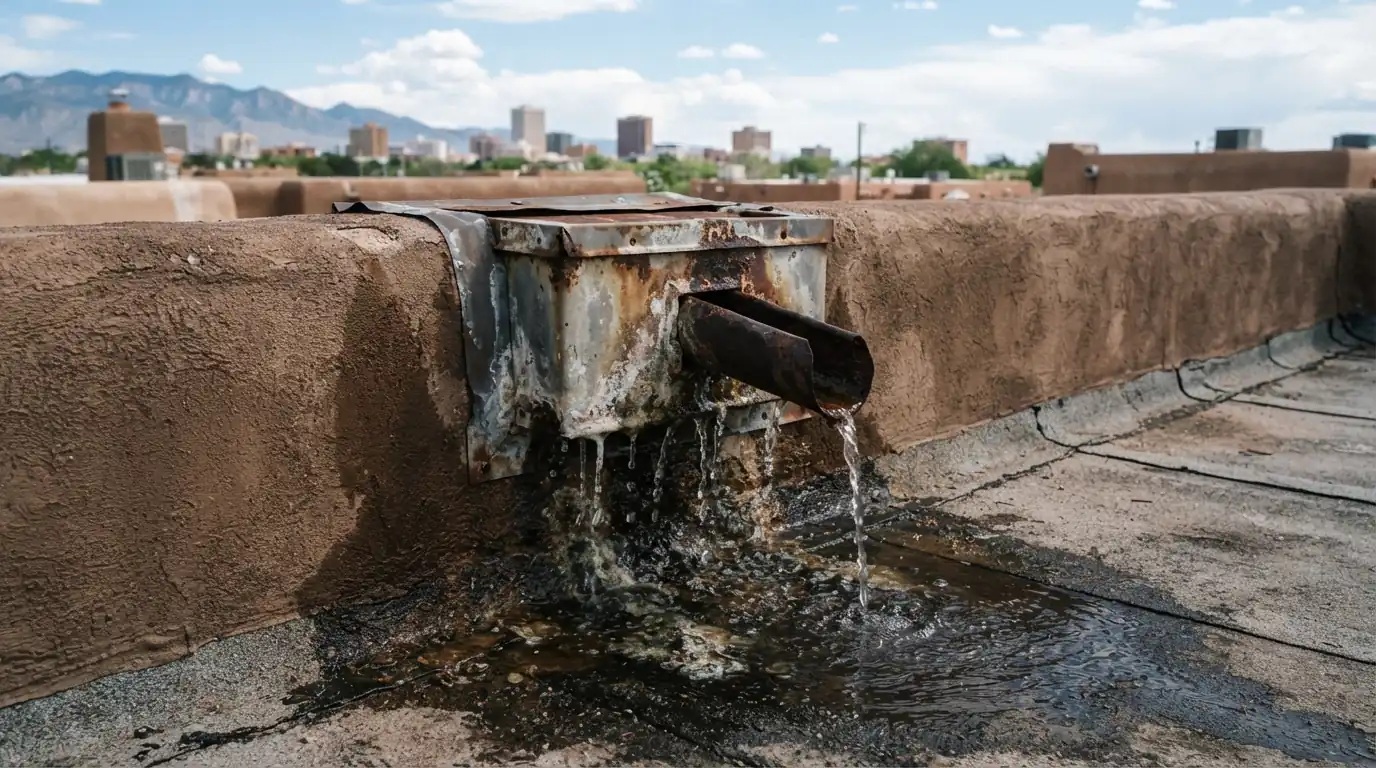
Roof Drain and Overflow Clearing
Internal roof drains are common on larger flat roofs, and they clog with leaves, gravel, dust and nesting debris. When a drain is blocked, water rises until it finds a seam or the top of the flashing. We clear the strainer and the line, check that the drain clamping ring is tight to the membrane, and replace missing strainer domes. Where a roof has no overflow path, we can add an overflow scupper so a blocked drain never floods the roof.
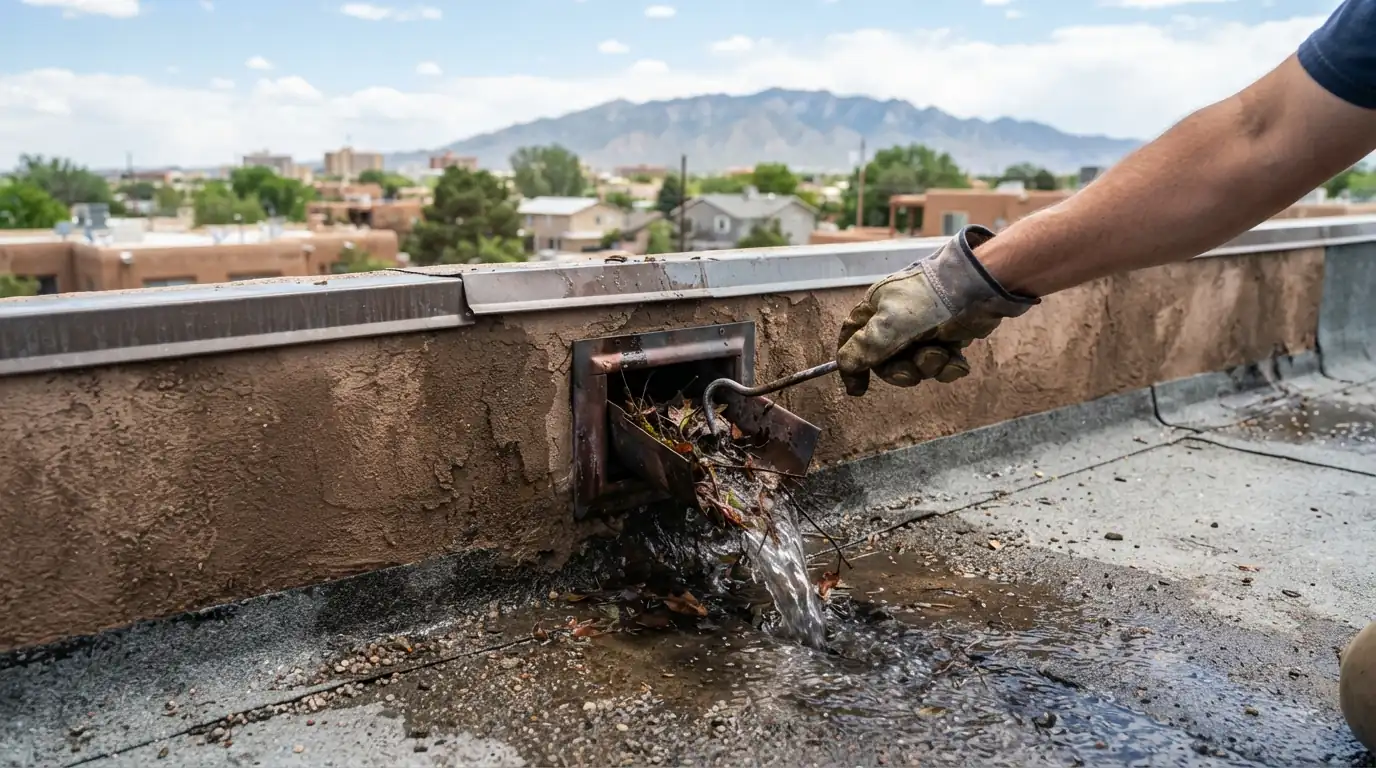
Ponding Near Drains and Outlets
Water that sits around an outlet for days after a storm means the roof is not sloped toward it, or the outlet sits higher than the surface around it. That ponding ages the membrane, collects dirt and eventually finds a seam. The fix is usually a small tapered cricket or sump built around the outlet so water actually reaches it. On roofs with ponding across the whole field, the real answer is tapered insulation during a flat roof replacement.
DIY or call
What you can clear yourself, and what to leave
Safe to do
From a steady ladder at a one-story canale, pull debris out by hand.
Leave to us
Walking the roof, cutting sealant, or resetting metal.
Never do this
Caulk over a leaking canale joint. It traps water behind the sealant and hides where it gets in.
Albuquerque conditions
What this job looks like on Albuquerque roofs
Albuquerque gets roughly half its yearly rain in the July and August monsoon peak, and it arrives in short, intense bursts rather than steady rain. That is the hardest test a canale or scupper faces, because the outlet has to move a lot of water in minutes. On September 28, 2025, a weather station in Kirtland AFB housing logged more than two inches in a single hour, and parked cars ended up submerged. Outlets that cope with a normal storm overflow in a burst like that, so we size them for the worst hour, not the average one.
Cost factors
What changes the price of this job
- Number of outlets Each canale, scupper or drain is its own detail.
- Metal replacement Galvanized, painted and copper canales differ in cost.
- Membrane condition Old membrane around the outlet may need a section replaced.
- Parapet damage Cracked stucco or a rotted cap at the outlet adds work.
- Access Two-story walls and tight side yards need more ladder time or a lift.
Outlet repairs are priced by what we find at the opening.
FAQ
Canale and roof drain questions
During a storm, yes. Water inside a wall soaks insulation fast; we stop it that night and repair it once dry.
A flashing gap above the normal water line, or an outlet too small for a downpour.
Yes, where the roof drains toward that side. We cut the parapet, set the canale and flash it in.
Galvanized costs less; copper lasts longer and weathers to a patina that suits Pueblo-style homes.
Before the monsoon and after any big wind event at a minimum. Roofs near trees need it more often.
We repair the parapet and flashing behind it and patch stucco the repair disturbs.