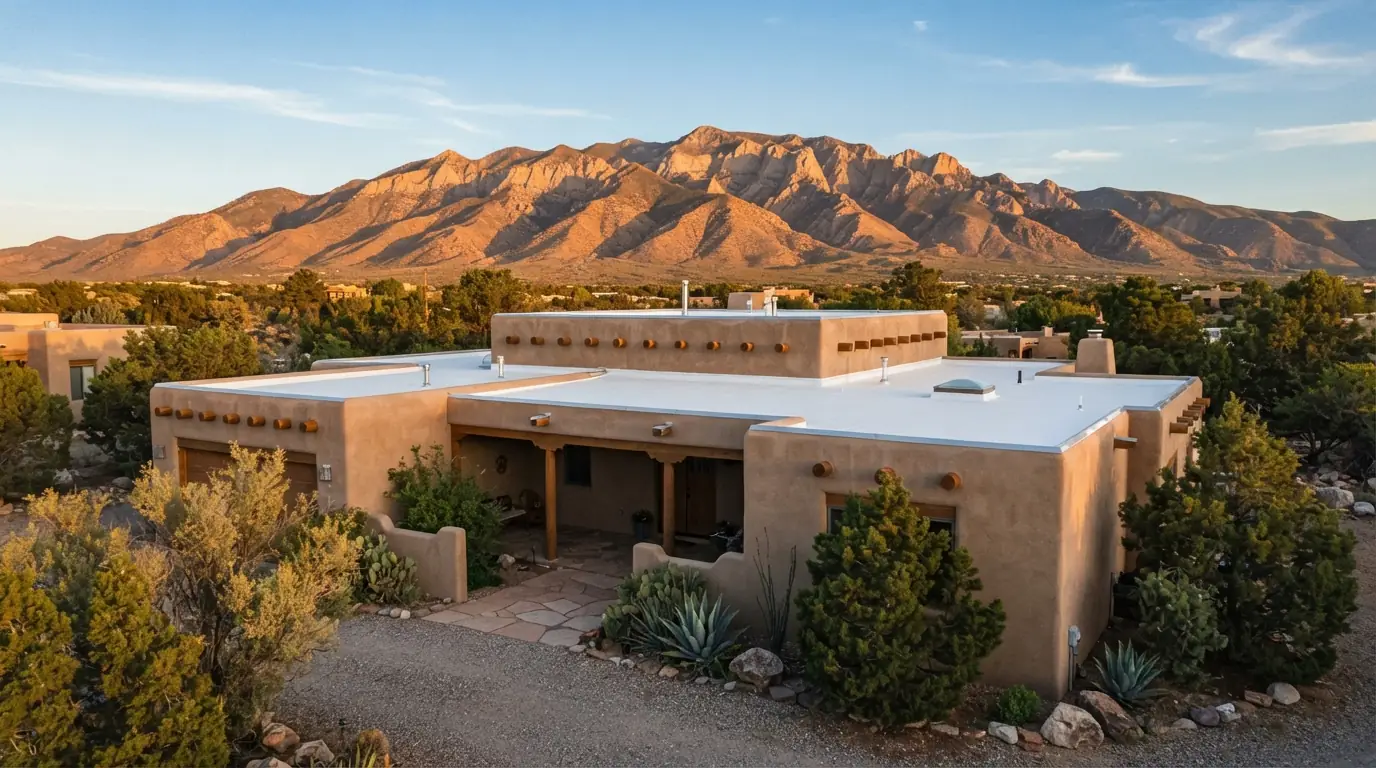
Quick answer: A TPO roof in Albuquerque is a white single-ply membrane with hot-air welded seams, and white TPO reflects roughly 70 to 80 percent of the sun that hits it. That keeps the roof far cooler than black torch-down in summer. We install it over a sound deck with tapered insulation so water leaves the roof instead of sitting on it.
Single-ply membrane
Why TPO became the flat roof of choice here
Updated September 2026
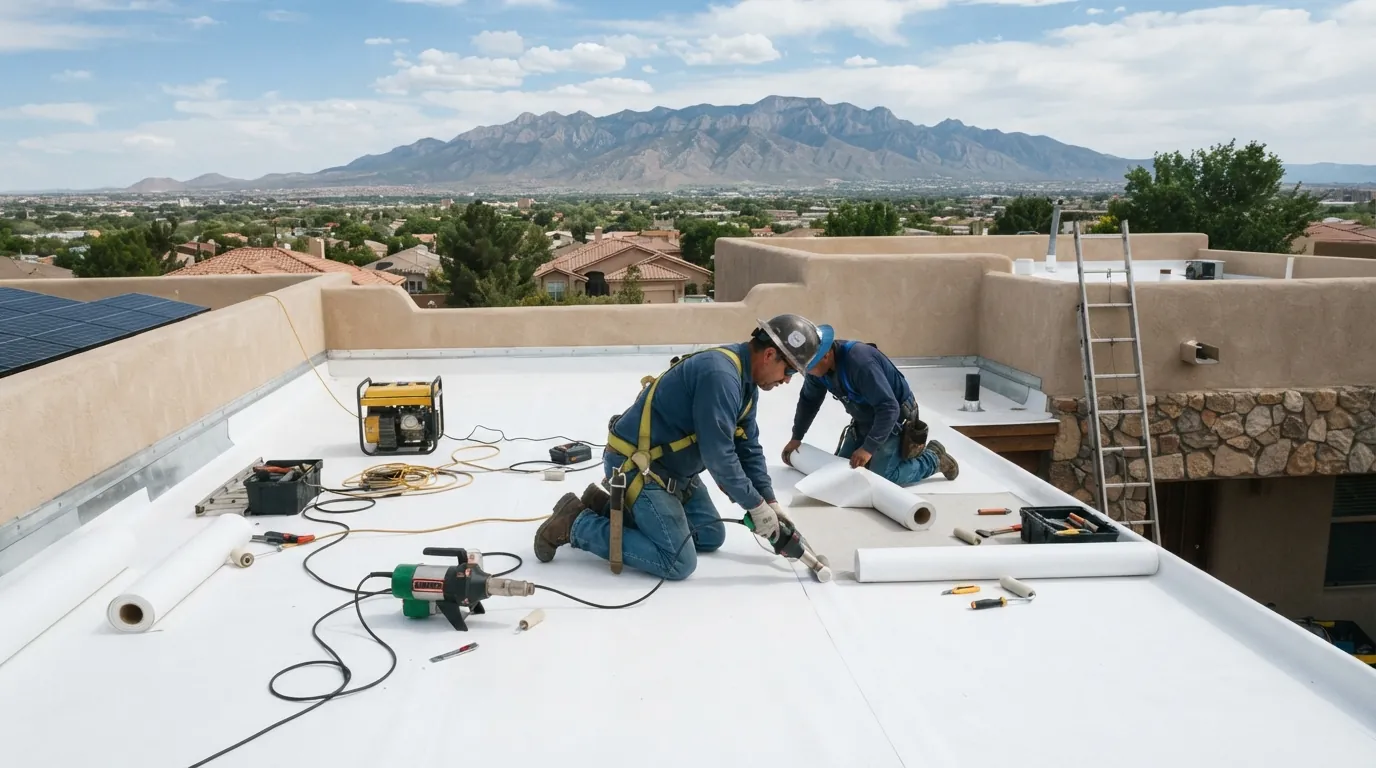
TPO arrives in rolls, gets fastened or glued over insulation board, and is joined by melting the overlaps together with a hot-air welder. A proper weld is stronger than the sheet around it. The white surface does the rest, reflecting sun instead of cooking under it.
It is not right for every roof. A deck with heavy traffic around swamp coolers can suit a mod-bit cap sheet better, and a roof crowded with small penetrations can suit spray foam. We say so when that is the case.
Cost factors
What changes the price of this job
Planning range: $4.00 to $6.00 per sq ft installed (published cost data, 2026-05). That is a planning range, not our price; the factors below move it in both directions.
- Tear-off or overlay Removing old layers adds labor and disposal; a qualifying overlay skips both.
- Membrane thickness 60 mil costs more per square than 45 mil.
- Attachment method Fully adhered needs cover board and adhesive and costs more.
- Tapered insulation Fixing ponding adds board, and is often the most valuable line.
- Penetrations and edges Every cooler curb, vent, skylight and canale needs its own flashing.
Another 2026 Albuquerque source puts TPO replacement at $5.50 to $9.00 per sq ft, which shows how much the scope behind a number matters.
Your options
TPO next to the other flat roof systems
| System | TPO | Modified bitumen | Spray foam |
|---|---|---|---|
| Surface | White and reflective | Dark or granulated cap | Foam under a coating |
| Seams | Hot-air welded | Torched or self-adhered laps | None; sprayed as one layer |
| Foot traffic | Good with walkway pads | Very good | Fair; the coating needs care |
| Best fit | Most home flat roofs | Service-heavy roofs | Roofs with many penetrations |
The work, piece by piece
TPO Over an Existing Roof
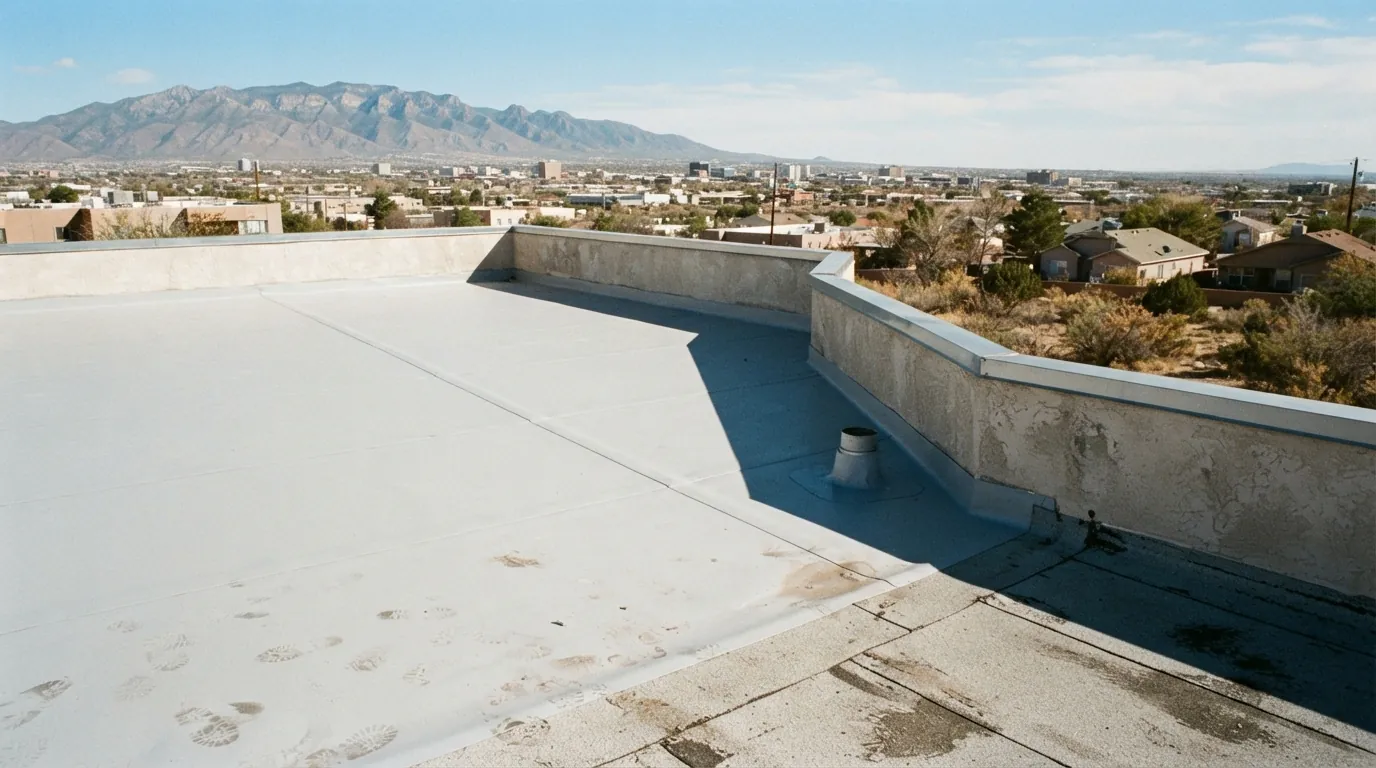
Laying TPO over the existing roof saves tear-off cost, and sometimes it is the right call: one existing layer, a dry deck, and a surface flat enough to take insulation board. We confirm all three before recommending it, with a core cut if the layer count is unclear. If the old roof holds wet insulation or already carries a second layer, the overlay is off the table. Covering wet material traps it against the deck, and code requires full tear-off once two layers exist.
Fully Adhered or Mechanically Attached TPO
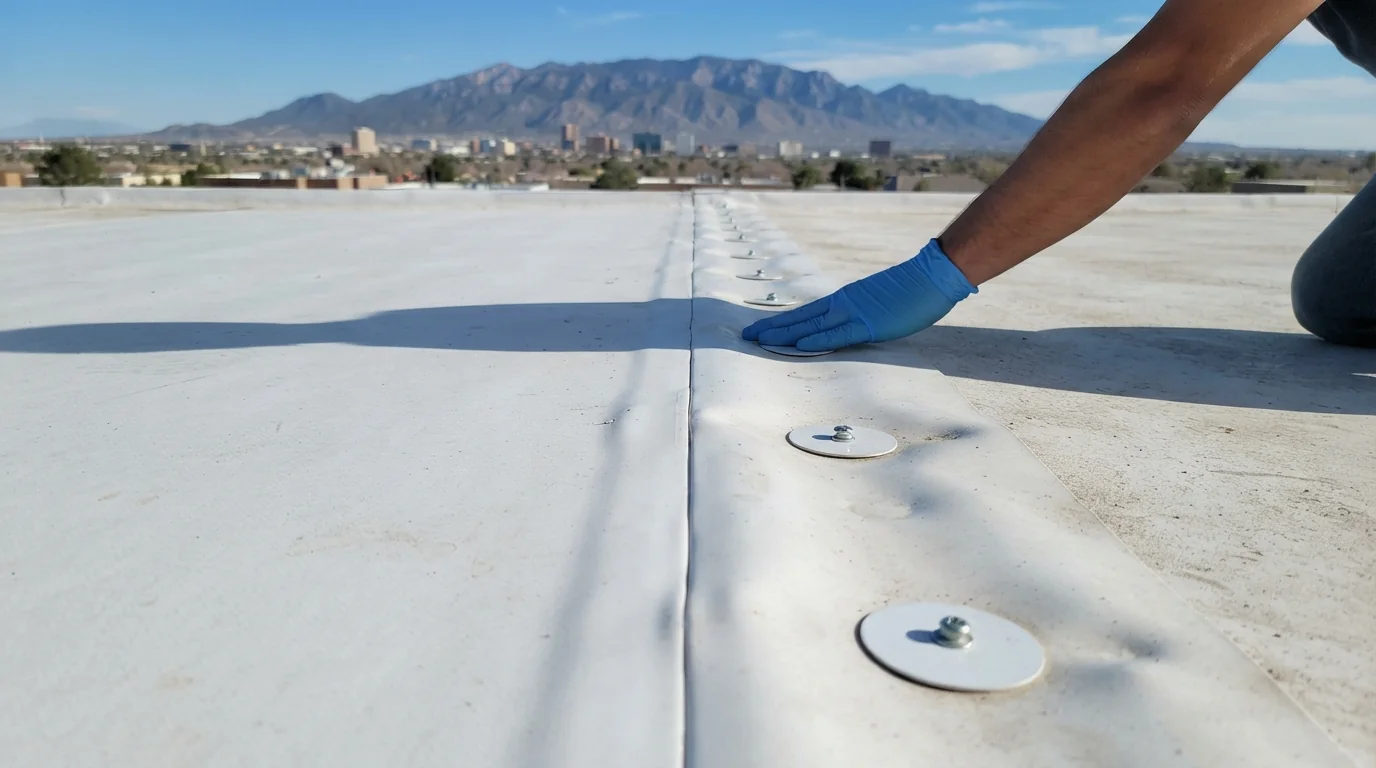
There are two common ways to hold TPO down. Mechanically attached systems screw the membrane through the insulation into the deck along the seams, which is fast and suits most residential flat roofs. Fully adhered systems glue the whole sheet to a cover board, which costs more but resists wind flutter and gives a quieter roof, a real advantage on exposed sites. We choose by deck type, wind exposure and what sits on the roof, and the scope explains the choice.
45 Mil or 60 Mil Membrane
Mil is membrane thickness in thousandths of an inch. The 45 mil sheet is the common residential choice and performs well when installed right. The 60 mil sheet carries more material above its reinforcing scrim, so it has more to give up to UV and foot traffic before the scrim is exposed. On a roof that sees regular cooler service or sits unshaded all day, we usually recommend 60 mil. Both prices go in the scope so the choice stays yours.
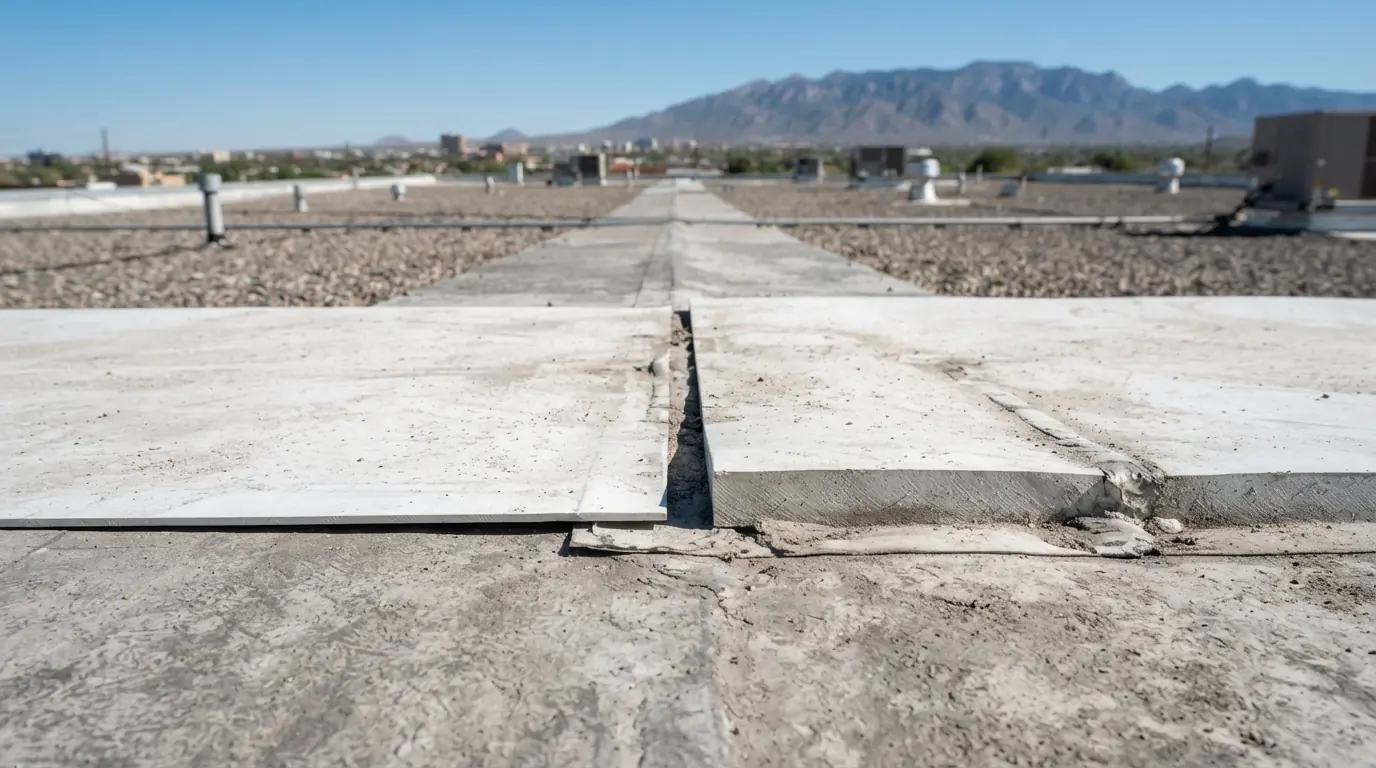
TPO Seam and Patch Repair
Most TPO leaks come from seams that were never fully welded, flashing around curbs and pipes, or punctures from dropped tools and hail. A bad seam can be probed, cleaned and re-welded. A puncture gets a welded patch of new membrane once the old surface is prepped, because weathered TPO has to be cleaned properly before new material will bond to it. We check the whole roof while we are up there, since one open seam usually means the installer missed others.
Albuquerque conditions
What this job looks like on Albuquerque roofs
Flat roofs are part of how this city builds, from adobe homes in the South Valley and North Valley to mid-century ranch houses in Rio Rancho, and TPO has become the most common flat system here over the past fifteen years. The reason is heat. An unshaded flat roof can reach 180 degrees on a summer afternoon, and a white membrane keeps the surface far cooler than the dark systems it replaces. On adobe homes we pay extra attention to the parapet tie-in, where the membrane has to turn up and over the wall.
How the job runs
How a TPO roof goes on
- 1
Measure and core
The real roof is measured and core-cut to count layers and check for moisture.
- 2
Strip or prepare
Old layers come off, or the surface is cleaned for an overlay.
- 3
Set insulation
Flat or tapered board goes down, fastened or adhered.
- 4
Lay and fasten
Membrane rolls out, fastened at the seams or glued to cover board.
- 5
Weld every seam
Overlaps are hot-air welded and probed along their full length.
- 6
Flash and finish
Parapets, curbs, pipes and canales are flashed, then edge metal goes on.
FAQ
TPO questions we hear most in Albuquerque
Local installers report 20 to 30 years with quality installation. Thickness, seam quality and foot traffic decide where a roof lands in that range.
A coating renews a roof that is still dry and sound; TPO replaces one that is not.
Yes, carefully. Where a cooler or AC unit gets serviced often, we add walkway pads along the route so the membrane does not wear there.
Only once the ponding is fixed. Tapered insulation moves water to the canales and drains; membrane that sits under standing water ages faster.
White reflects most of the sun, keeping the roof and the rooms under it cooler. Tan and gray versions give up some of that.
Membranes from Carlisle SynTec, GAF, Firestone and Johns Manville, among others. We choose by the roof and supply, and the scope names the product.