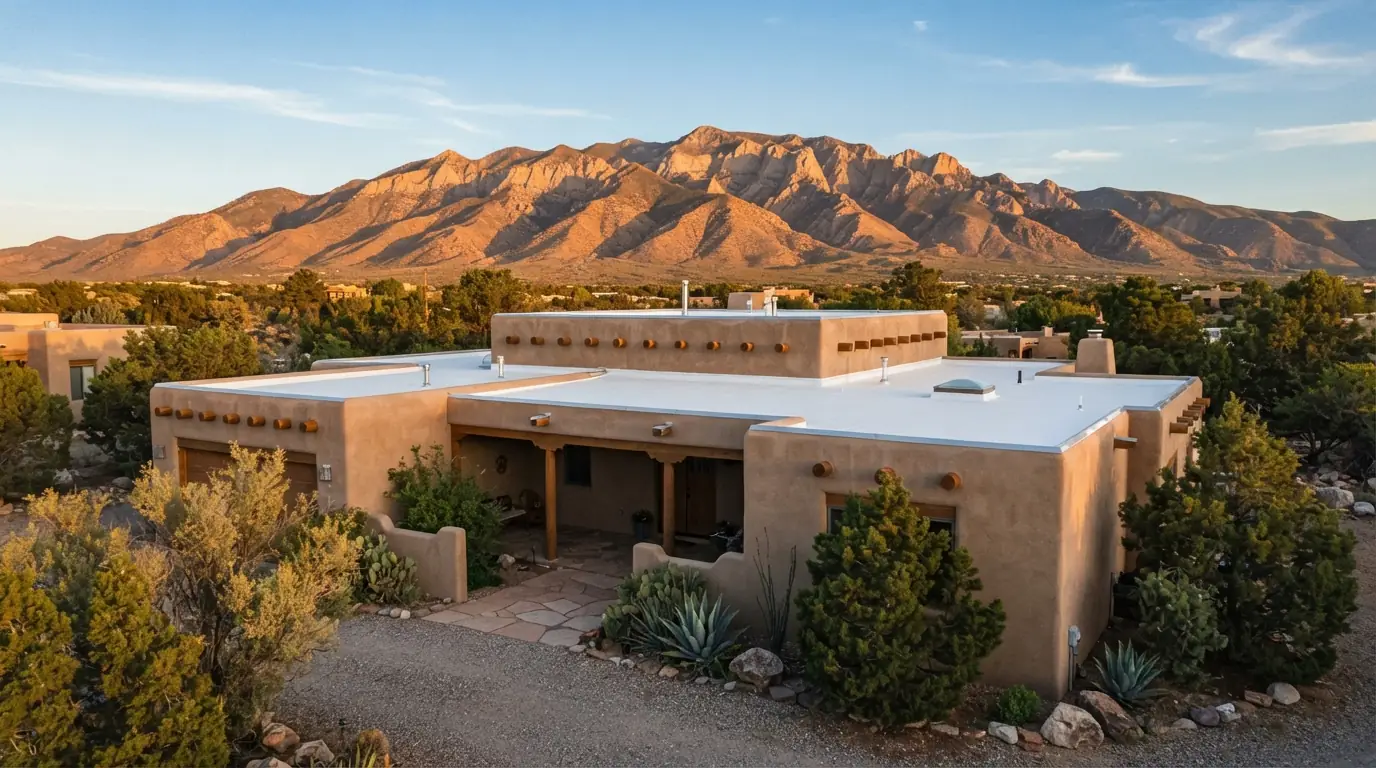
Quick answer: Metal roofing in Albuquerque runs roughly $10,000 to $20,000 for a 2,000 sq ft roof, according to 2025 local cost data, about double asphalt shingles. For that you get a roof that lasts far longer in a dry climate, sheds water quickly and resists fire. Standing seam is the premium option; exposed-fastener panels cost less.
Metal roofing
What you are paying for with metal
Updated September 2026
Metal's price buys longevity, low weight and very little upkeep. Unlike tile, it does not need heavy framing; unlike shingles, it does not shed granules in the sun. A good metal roof here can outlive the mortgage.
Its weak points are dents from large hail on thinner gauges, noise if it is fastened badly, and exposed screws that need re-tightening over the years. The replacement page compares metal with the other materials.
Cost factors
What changes the price of this job
Planning range: asphalt shingles $5,500 to $8,500; TPO $6,000 to $10,000; modified bitumen $5,000 to $8,000; metal $10,000 to $20,000 (published cost data, 2025-09). That is a planning range, not our price; the factors below move it in both directions.
- Panel type Standing seam costs substantially more than exposed-fastener panels.
- Gauge and finish Heavier gauges and premium finishes add cost.
- Tear-off or overlay An overlay can save tear-off; a questionable deck cannot.
- Roof shape Valleys, hips and dormers take more custom trim.
- Accessories Snow guards, ridge vents and trim colors are extras.
Your options
Standing seam, exposed-fastener and stone-coated steel
| Factor | Standing seam | Exposed-fastener | Stone-coated steel |
|---|---|---|---|
| Fasteners | Hidden under the seams | Screws through the panel | Hidden, interlocking |
| Upkeep | Very low | Periodic screw checks | Low |
| Look | Clean vertical lines | Ribbed, agricultural | Imitates shingle or tile |
| Relative cost | Highest | Lowest | Middle |
The work, piece by piece
Standing Seam Metal
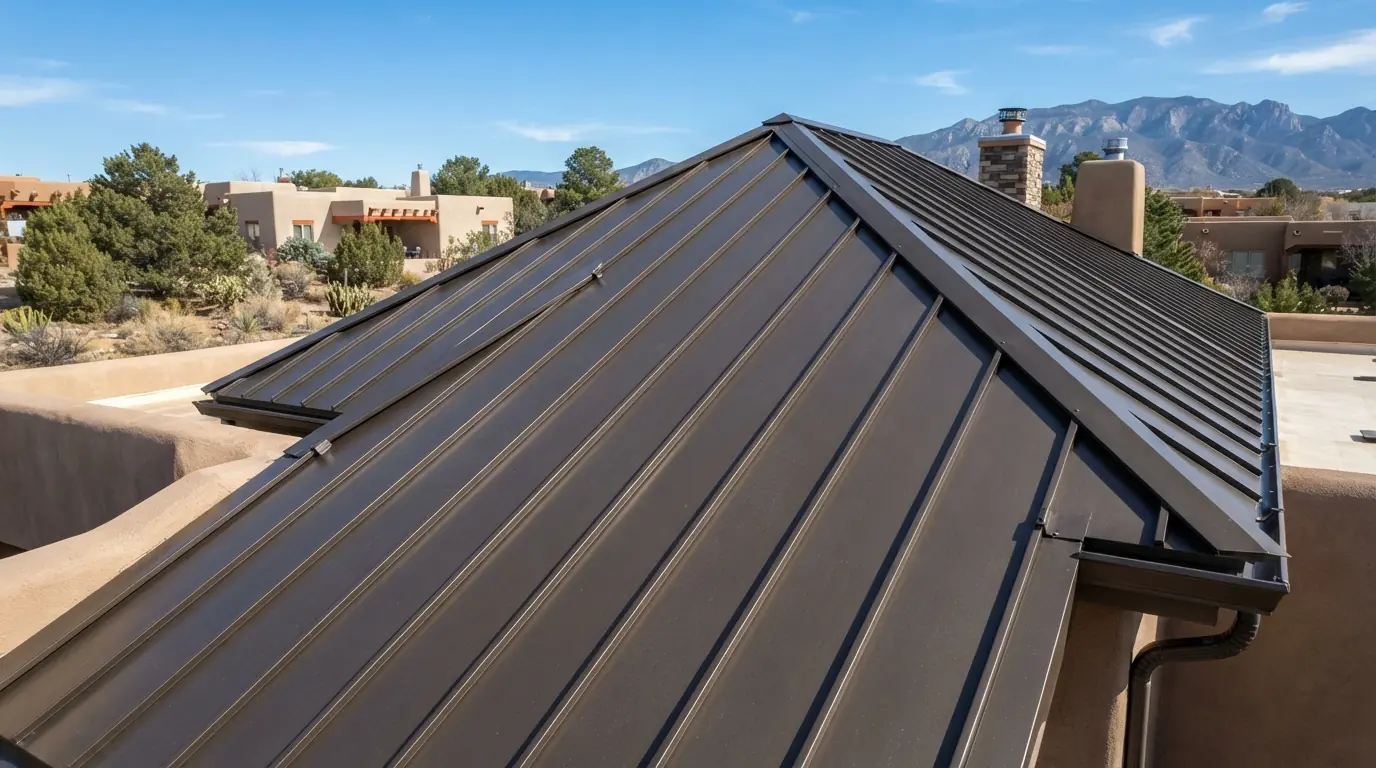
Standing seam panels run from eave to ridge with raised seams that lock together, and the fasteners are hidden under the seams where sun and rain never reach them. Clips let each panel expand and contract with the daily temperature swings without stressing the screws. The result is a clean, modern look and the longest life of any common residential roof. It costs the most to install, and it needs a skilled crew, because the details at valleys, walls and penetrations take real care.
Exposed-Fastener Metal Panels
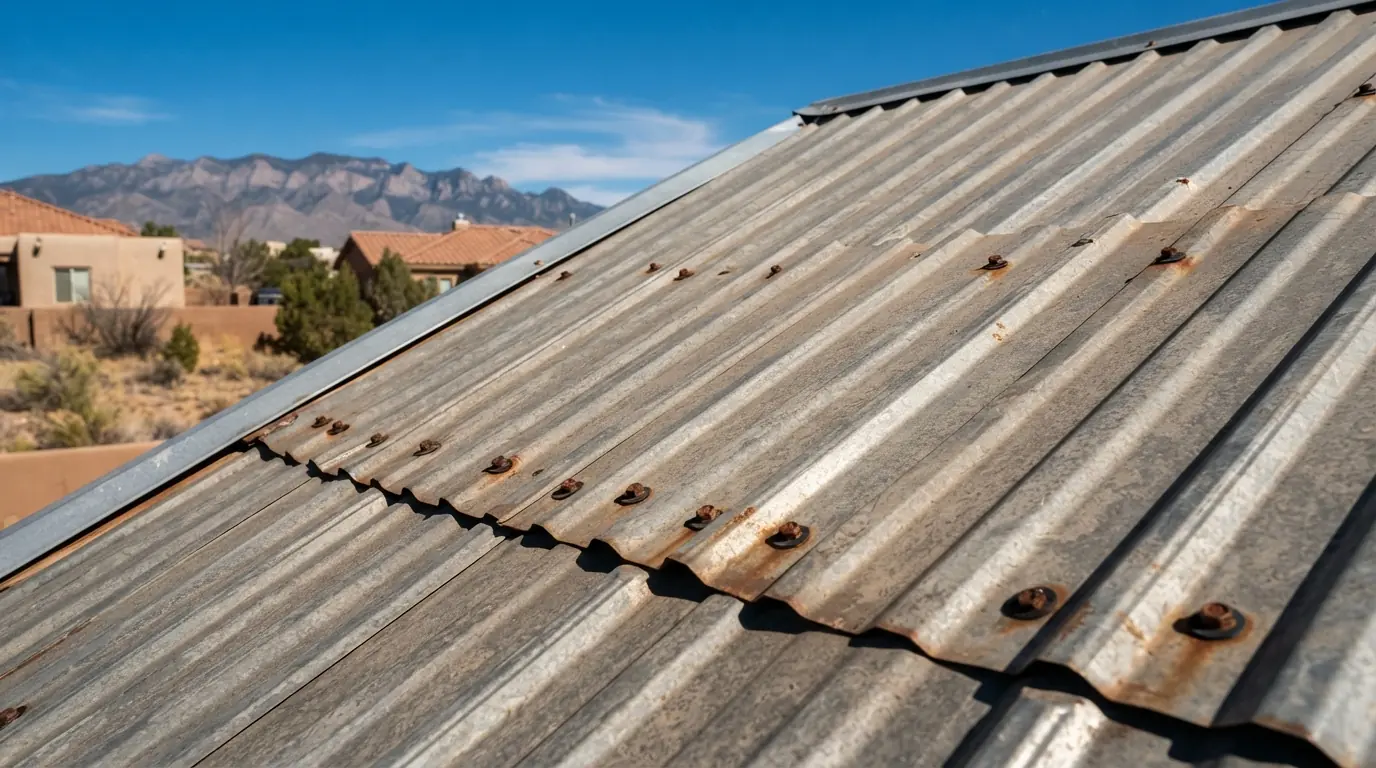
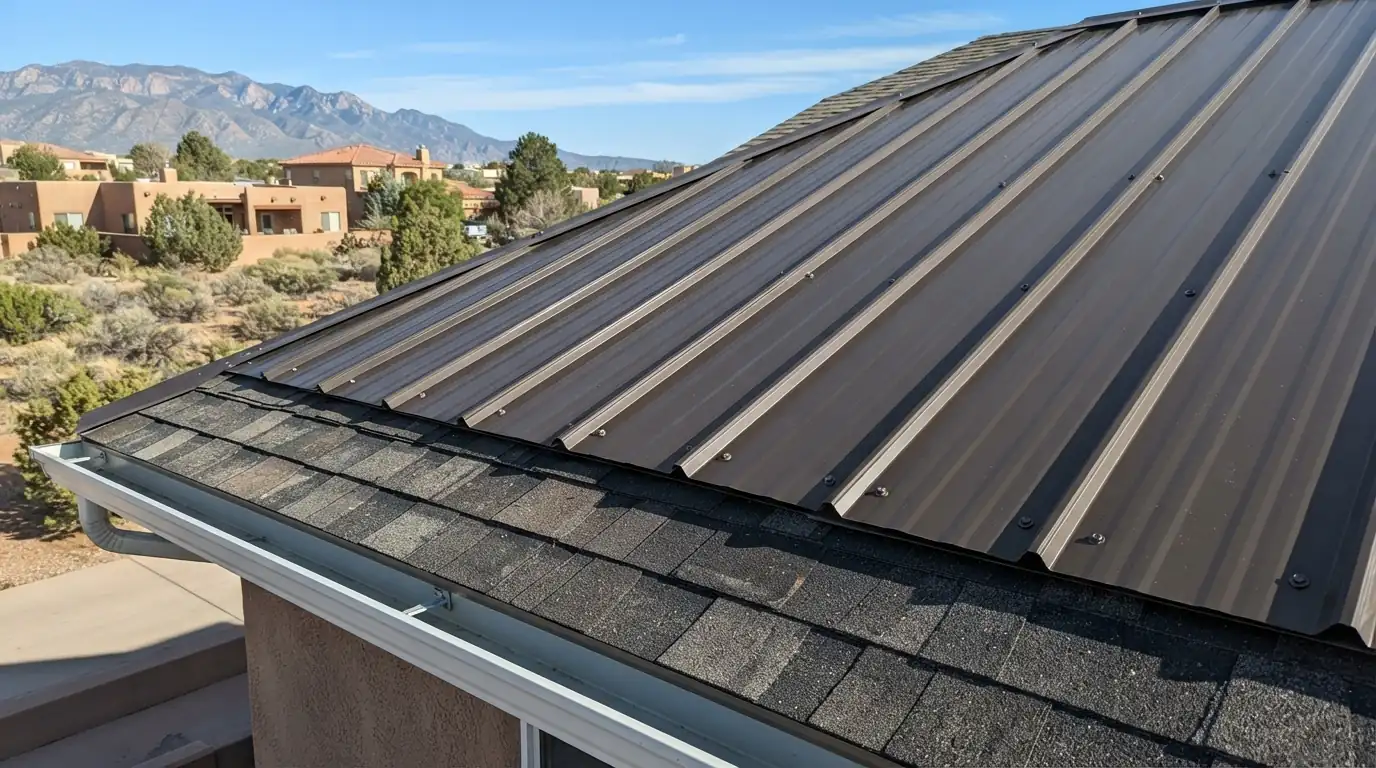
Exposed-fastener panels, often called R-panel or corrugated, screw straight through the metal into the deck or purlins, with rubber-washered screws sealing each hole. They cost substantially less than standing seam and install faster, which makes them popular on barns, shops and budget-minded homes. The trade-off is maintenance: those washers dry out in strong sun over the years, and screws can back out as the panels move. A periodic check and re-tightening of the screws keeps the roof sealed for the long haul.
Metal Over Existing Shingles
In some cases metal can go over a single layer of shingles, which saves tear-off cost and keeps the old roof as an extra layer. It only works when the deck underneath is sound and dry and there is just one existing layer. We install a separation layer or battens so the metal does not rest directly on the granules, and flash every edge and penetration as if it were new construction. If the deck is questionable, we recommend tearing off, since metal will outlast any hidden rot.
Snow and UV Performance
Metal handles both ends of the weather here. In winter, snow slides off smooth panels rather than sitting on the roof, which is why snow guards above entries and walkways are worth adding. In summer, a factory-applied Kynar or similar finish resists fading and chalking far better than paint, and lighter or cool-rated colors reflect much of the sun that would otherwise heat the attic. We help you choose a finish and a color with the house's exposure and style in mind.
Albuquerque conditions
What this job looks like on Albuquerque roofs
Metal suits Albuquerque for two local reasons. Weight is the first: the City keeps house plans on file only for homes built after August 1, 2012, so on most homes the framing is unknown until someone looks, and metal's light weight rarely raises the structural questions that tile does. Rain is the second. Normal monsoon rainfall at the Sunport is about 4.48 inches between mid June and September, much of it in hard bursts, and smooth metal panels shed that water faster than any other common roof.
How the job runs
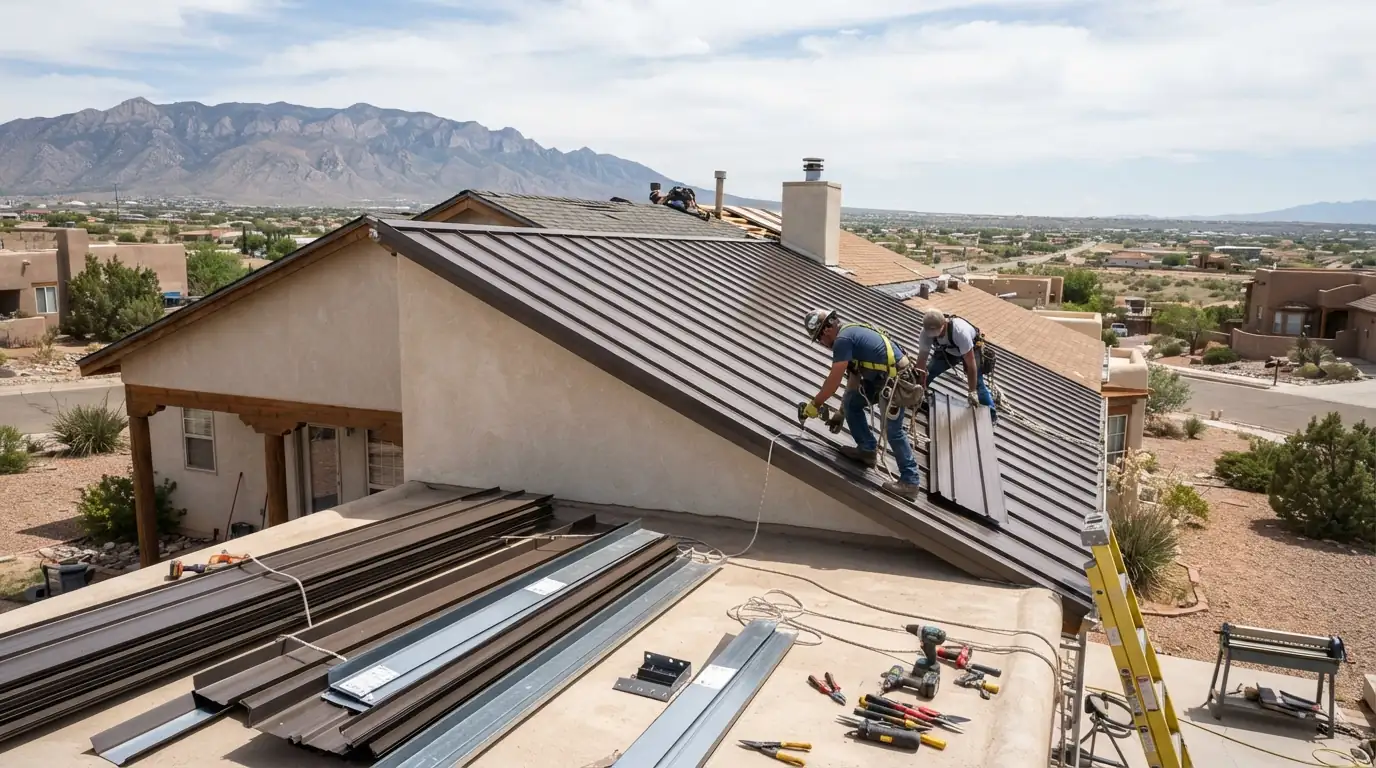
How a metal roof goes on
- 1
Measure and order
Panels ordered or formed to the measured roof.
- 2
Prepare the deck
Tear-off or overlay prep, then deck repairs.
- 3
Underlayment
High-temperature underlayment rated for metal goes down.
- 4
Trim and panels
Eave and rake trim, then panels fastened or clipped.
- 5
Flash the details
Valleys, walls, vents and skylights flashed to the panel profile.
- 6
Ridge and final check
Ridge cap and closures, then a full walk and photos.
FAQ
Metal roofing questions
Over solid decking and underlayment, most homeowners hear little difference. Noise complaints usually come from panels over open framing.
Large hail can dent thinner gauges. Heavier gauges and textured finishes show dents less, and many panels carry impact ratings.
No. Light or cool-rated finishes reflect sun, and the air space under the panels helps keep the attic cooler.
Standing seam can go on fairly low slopes with the right seam type; exposed-fastener panels need more pitch.
No more than other roofs, and it is noncombustible if lightning strikes nearby.
Panels from McElroy Metal, Drexel Metals and Union Corrugating, among others. The scope names the panel and gauge.