Quick answer: Most metal roof leaks in Albuquerque come from exposed screws whose rubber washers have dried out, laps and seams that have opened, or flashing and trim loosened by wind. The repair is usually targeted: replace fasteners with oversized screws and new washers, reseal laps with butyl tape, and replace any panel that is torn or badly dented.
Warning signs
Signs your metal roof needs attention
Streaks spreading from fastener heads.
Heads standing proud of the panel.
Loose panels, trim or ridge caps.
Water marks along the line of a screw row.
Rake or eave trim pulled away from the edge.
How the job runs
How a metal roof repair is done
- 1
Find the leak path
Stains traced to screws, laps, trim or penetrations.
- 2
Walk the roof
Every screw row, lap and trim piece checked.
- 3
Replace fasteners
Failed screws swapped for oversized screws and new washers.
- 4
Reseal laps and seams
Butyl tape and re-crimping where seals have opened.
- 5
Replace damaged metal
Torn or dented panels and trim replaced.
- 6
Photos and advice
What we fixed and what to watch.
Metal roof repair
Where metal roofs actually fail
Updated September 2026
The metal itself rarely fails. What fails are the parts that hold and seal it: the screws, the washers under them, the tape and sealant in the laps, and the trim at edges and ridges. Those age much faster than the panels.
If you are weighing a new metal roof instead, see metal roofing for standing seam and panel options.
The work, piece by piece
Fastener and Washer Replacement
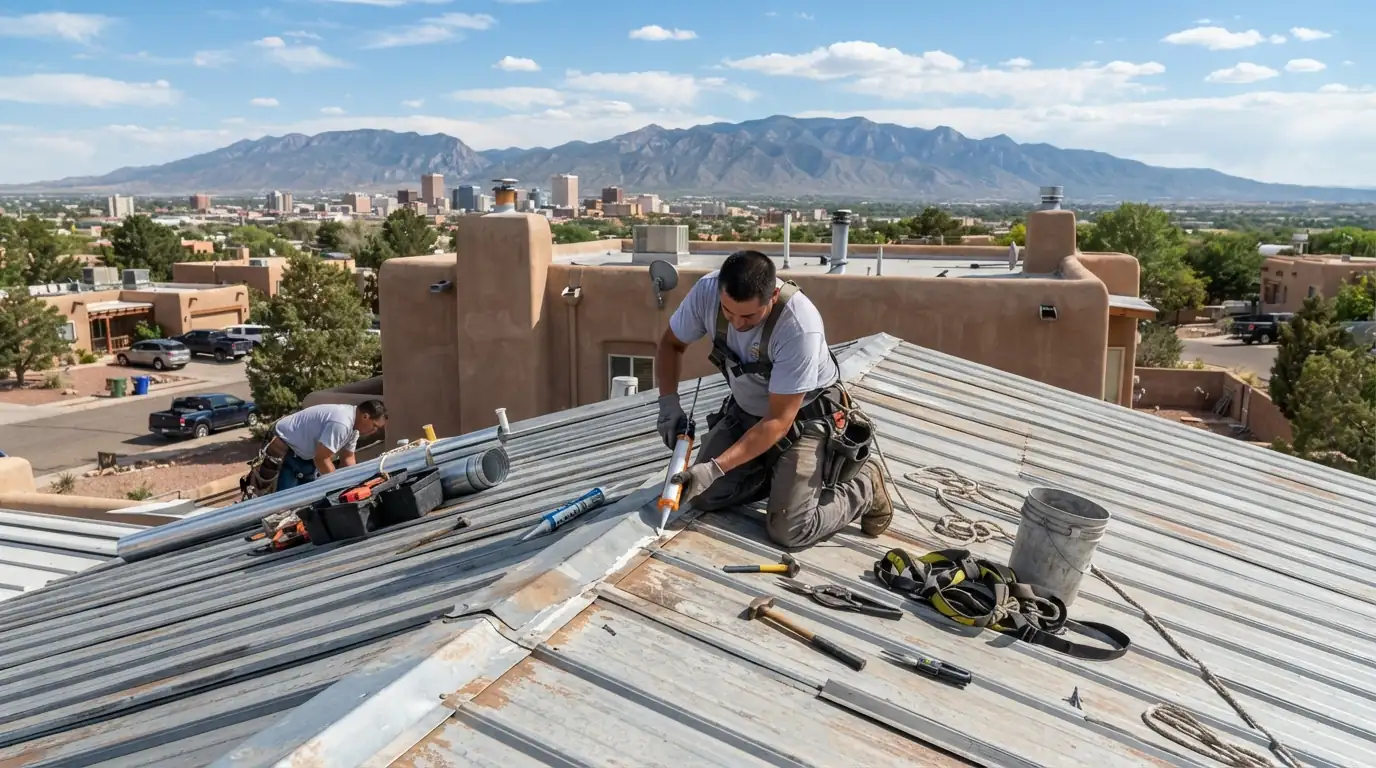
On exposed-fastener roofs, every screw is a potential leak. Rubber washers crack after years of sun, and screws loosen as the panels expand and contract, which lets water run in around the shank. We back out failed screws and replace them with slightly larger-diameter screws and new washers so they bite into fresh material, and we never overtighten, which crushes the washer. Screws driven into the flat of the panel instead of the rib are moved or sealed properly. Each screw row is checked end to end.
Panel Replacement
Panels torn by wind, punctured by debris or badly dented by large hail can be replaced individually. The new panel is matched in profile, gauge and color as closely as current stock allows, slid under the panel above, lapped over the one below, and fastened in the original pattern. On standing seam roofs, replacing a panel means opening the seams on both sides and re-seaming them, which takes more care but leaves no exposed fasteners behind. Dents that do not break the finish are usually left alone.
Seam and Lap Sealing
Where panels overlap, a strip of butyl tape or sealant keeps wind-driven rain from being pulled through the lap. Over time that seal dries out, and rain driven sideways by monsoon wind finds its way in. We open or clean the lap, apply new butyl tape, and refasten it. On standing seam roofs, seams that have opened are re-crimped and sealed. Surface-applied caulk on its own is a temporary fix at best. Laps facing the prevailing wind get the closest look, since that is where driven rain enters.
Flashing and Trim Repair
Ridge caps, rake trim, eave trim and wall flashing are the pieces wind grabs first. Lifted trim lets rain behind the panels, and loose ridge caps rattle and leak at the peak. We refasten or replace trim, replace missing closure strips under ridges and at eaves, and reflash walls, chimneys and pipes to the panel profile. Pipe boots on metal roofs are replaced with boots made to seal against ribbed panels. Loose trim is also a hazard in high wind, so it gets priority on any repair visit.
DIY or call
What you can check, and what to leave to us
From the ground
Look for rust streaks, lifted trim and screws standing proud, and photograph them.
Leave to us
Walking a metal roof. Panels are slippery, dent easily underfoot and can be very hot.
Avoid
Overtightening screws or smearing caulk over laps; both make a proper repair harder later.
Albuquerque conditions
What this job looks like on Albuquerque roofs
Metal roofs in Albuquerque spend their lives moving. Strong sun heats panels well past the air temperature during the day, and the high desert cools them quickly at night, so every panel expands and contracts daily across the seasons. That movement is what slowly works screws loose and wears the washers and lap seals that keep water out. The metal lasts decades; the small parts that hold it tight are the ones worth checking every few years.
Cost factors
What changes the price of this job
- Roof type Standing seam repairs take more labor than exposed-fastener panels.
- Number of fasteners A full screw and washer pass is priced by roof area.
- Panel replacement Matching profile, gauge and color affects cost.
- Trim and flashing Ridge, rake and wall pieces priced by the run.
- Access Steep pitches and two-story roofs need extra setup.
Metal roof repairs are priced by what failed: a screw and washer pass across a roof is a very different job from replacing panels or re-seaming standing seam.
FAQ
Metal roof repair questions
The rubber washers have dried and cracked, or the screws have loosened with movement.
Cosmetic dents with the finish intact usually can. Tears or punctures need replacing.
Only as a stopgap. Fasteners and laps need proper repair to stay dry.
Usually closely, though older faded panels may show a difference.
Sometimes. A coating system can seal many fasteners at once on a sound roof.
Every few years, and after any major wind or hail storm.