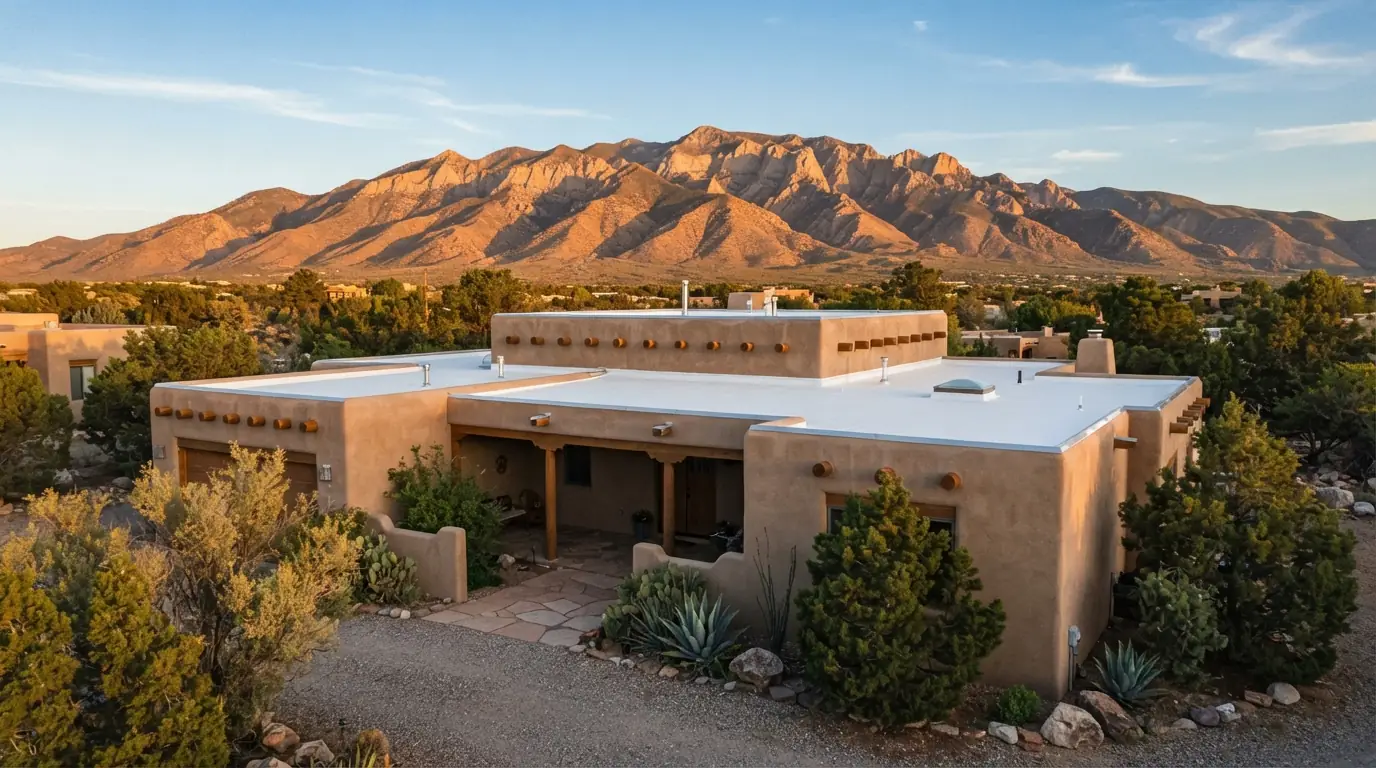
Quick answer: Most Albuquerque homeowners pay between $6,500 and $18,000 for a full roof replacement, according to 2026 local cost data, with asphalt shingles running $3.50 to $5.50 per sq ft installed. The final number depends on roof size, pitch, layers to remove, deck repairs and the material you choose.
Replacement
How to tell repair from replacement
Updated September 2026
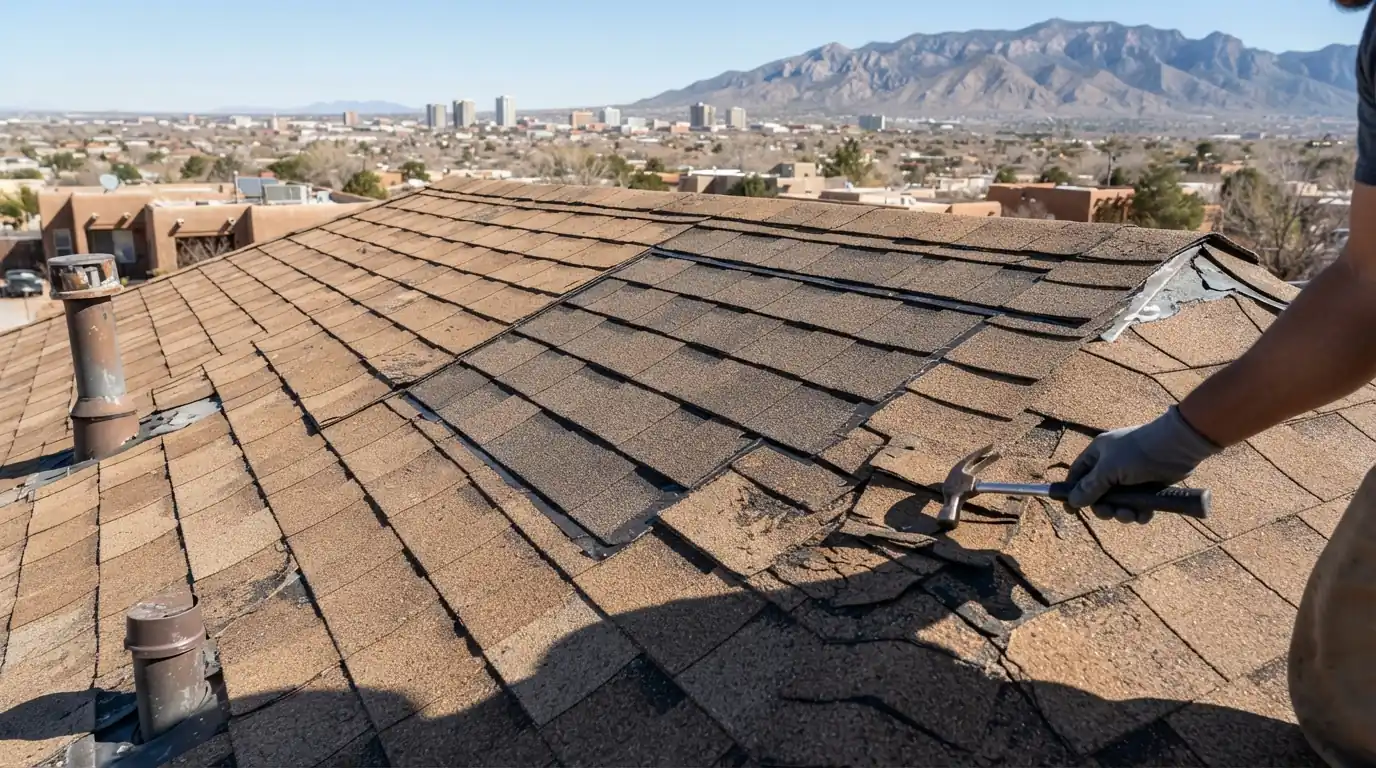
A roof needs replacing when the problem is the whole surface, not one spot: shingles bald of granules, curling or cracking across entire slopes, repeated leaks in different places, or soft decking underfoot.
Where only one slope or one area has failed, a shingle repair or a section replacement may buy years. We show you both options in photos.
Cost factors
What changes the price of this job
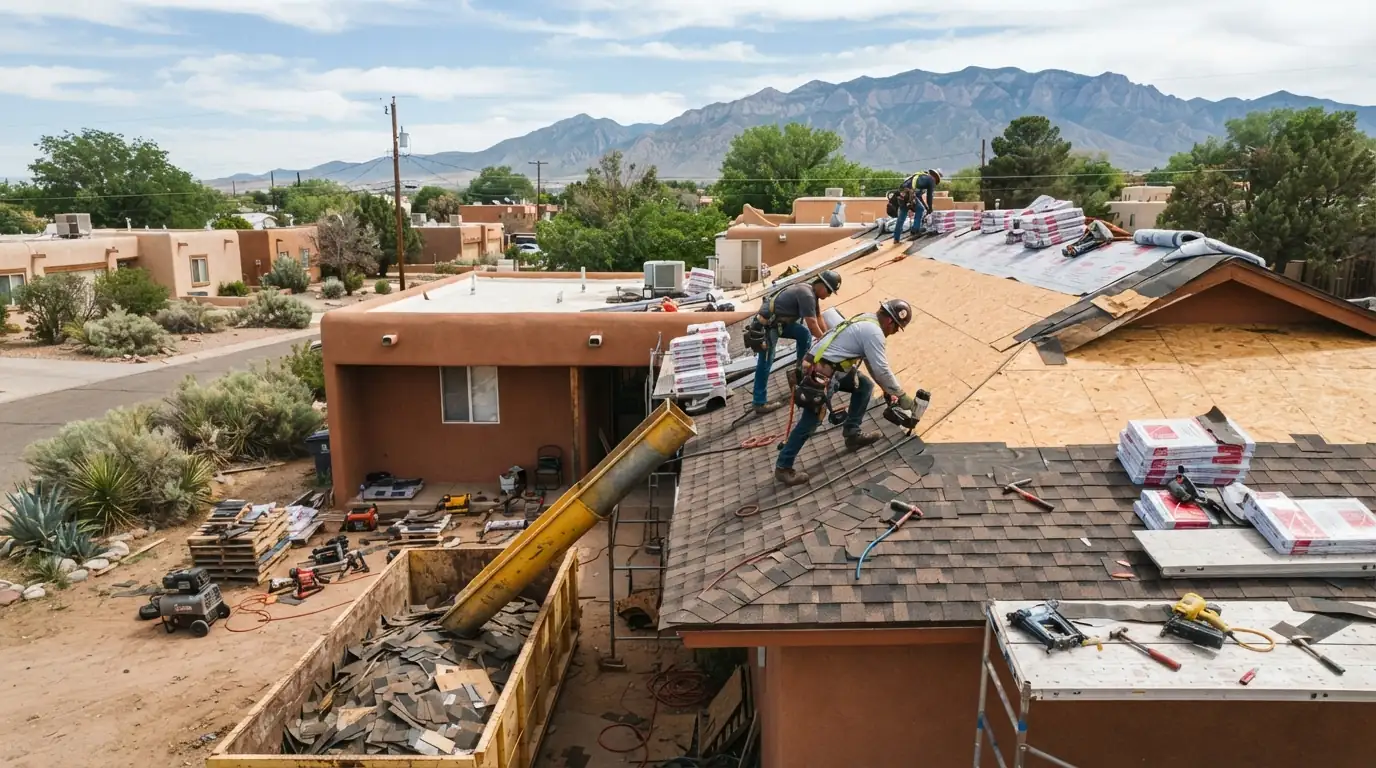
Planning range: $6,500 to $18,000 complete; asphalt shingles $3.50 to $5.50 per sq ft installed (published cost data, 2026-08). That is a planning range, not our price; the factors below move it in both directions.
- Roof size and pitch Steeper, larger and more cut-up roofs take longer and need more material.
- Layers A second existing layer means more tear-off and disposal.
- Deck repairs Soft or rotted sheathing is replaced by the sheet.
- Material Shingle, metal, tile and flat systems differ widely.
- Details Chimneys, skylights, valleys and vents each need new flashing.
A residential roofing permit in Albuquerque typically adds $100 to $350.
Your options
Roof replacement by material in Albuquerque
Planning ranges for a 2,000 sq ft roof from 2025 Albuquerque cost data. Your roof's size and details move these.
| Material | 2,000 sq ft planning range | Wear notes | Best for |
|---|---|---|---|
| Asphalt shingles | $5,500 to $8,500 | Sun wears granules, south slopes first | Most pitched homes |
| TPO membrane | $6,000 to $10,000 | White surface handles heat well | Flat roofs |
| Modified bitumen | $5,000 to $8,000 | Tough underfoot, runs hot unless capped | Flat roofs with traffic |
| Metal | $10,000 to $20,000 | Very long life in a dry climate | Long-term owners |
The work, piece by piece
Repair or Replace: The Honest Assessment
We walk every slope, photograph the worst areas, check the attic for daylight, stains and ventilation, and probe the deck wherever it feels soft. Then the scope says plainly which way we lean and why. If a repair will give you several more good years, that is what we recommend, even though a replacement is the bigger job. If the roof is past that point, the photos usually make the case on their own, and you can compare them with what you see from the ground.
Full Tear-Off and Deck Inspection
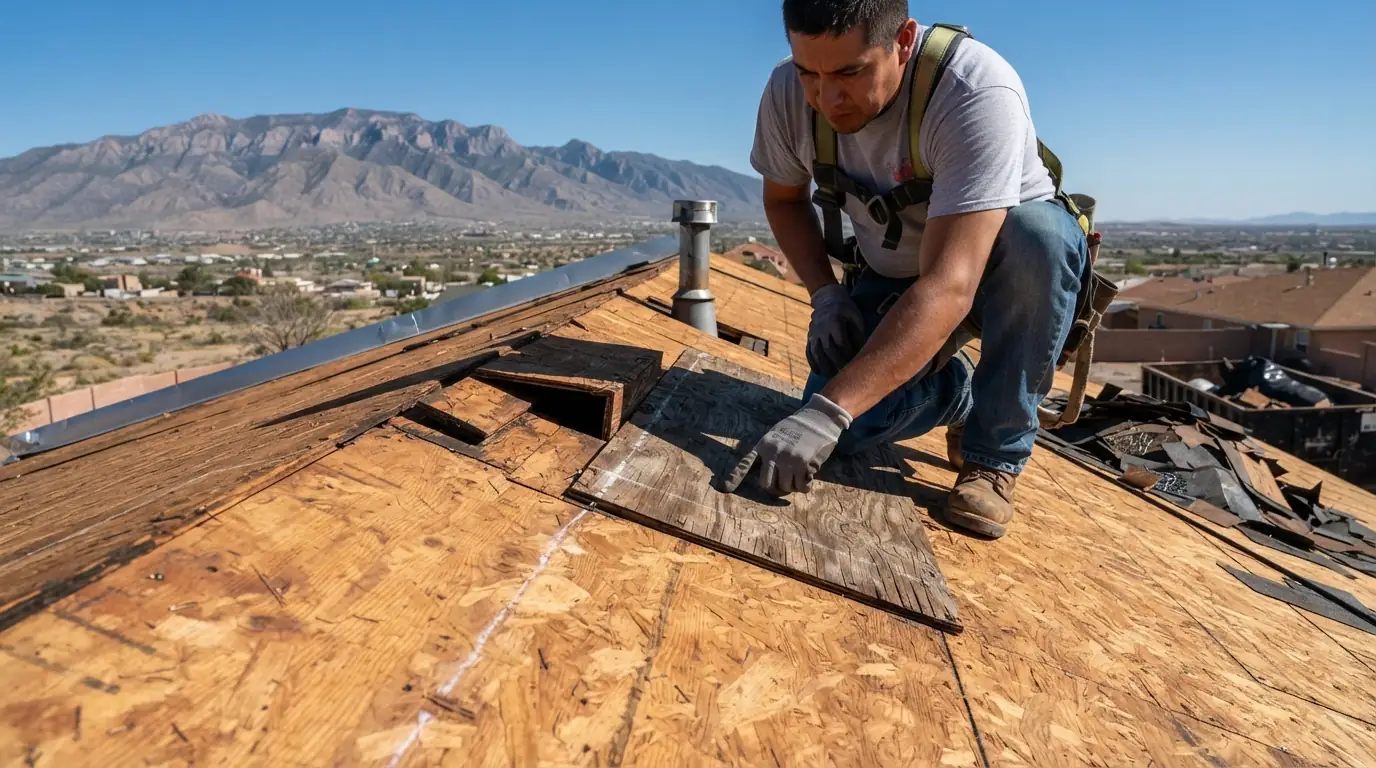
We remove the roof down to the deck rather than laying new shingles over old ones. That lets us see and fix what the old roof was hiding: soft or delaminated sheathing, rot around old leaks, gaps at the eaves and damaged fascia. Bad decking is replaced sheet by sheet, loose sheathing is re-nailed, and the whole surface is swept clean before underlayment goes down. A new roof over a weak deck fails early, however good the shingles on top are.
Underlayment and Ice-and-Water Membrane
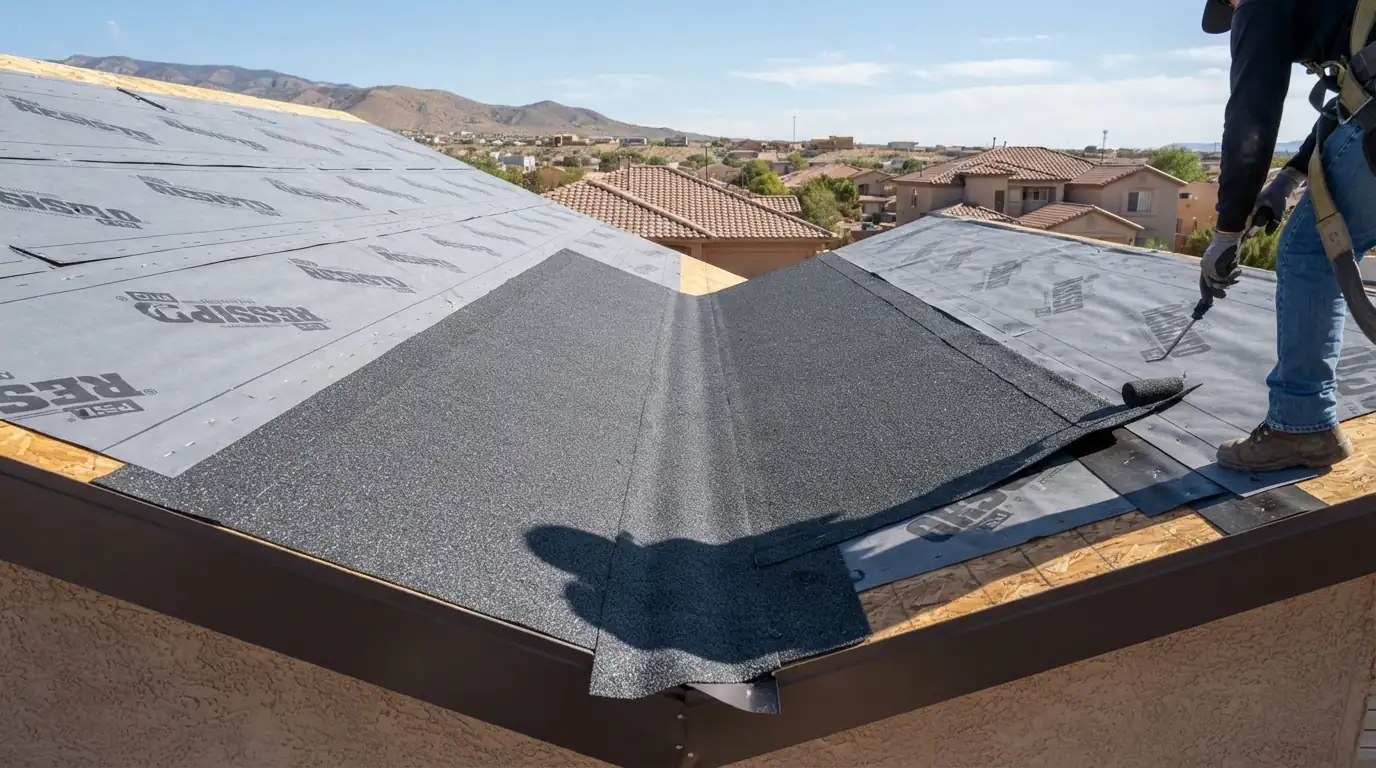
Under the shingles, a synthetic underlayment covers the whole deck, and a self-adhered ice-and-water membrane goes into every valley, around chimneys and skylights, and along the eaves where it is required. Heavy ice is uncommon in the city, but valleys carry concentrated water during monsoon storms and wind drives rain sideways under shingle edges. That membrane is the layer that keeps water out when the shingles are pushed to their limit, so we never skip it anywhere it belongs on your roof.
Choosing the Roofing Material
Architectural shingles are the most common choice and the best value. Impact-rated Class 4 shingles cost more and resist hail better, and some insurers discount for them. Standing seam metal lasts far longer and shrugs off sun but costs roughly double. Tile suits Spanish and Pueblo styles if the framing can carry it. Flat sections get TPO, mod-bit or foam. The table on this page shows local price ranges, and your written scope prices the options that fit the house.
Albuquerque conditions
What this job looks like on Albuquerque roofs
Two things shape a roof replacement here. The first is weather exposure: monsoon downbursts and hail hit exposed ground hardest, homes on the West Side and in Sandia Heights see recurring wind damage at ridge caps and rake edges, and south- and west-facing slopes usually wear out before the rest of the roof. The second is paperwork. The City of Albuquerque lists re-roofing among the projects that require a building permit, so every replacement we do inside city limits is permitted and inspected.
How the job runs
What happens on replacement day, and around it
- 1
Assessment and scope
Photos, an attic check and a written scope with options.
- 2
Permit and materials
Permit filed; materials ordered to the measured roof.
- 3
Protect the property
Tarps over plants and walls; the driveway kept clear.
- 4
Tear off and repair
Old roof off to the deck; bad sheathing replaced.
- 5
Install the new roof
Underlayment, membrane, flashing, then the roofing itself.
- 6
Inspect and clean up
Permit inspection, magnet sweep and a final photo walk.
FAQ
Roof replacement questions
Size, layers and weather decide it. The scope gives you the expected number of days before we book the work.
Not the whole time. We need access to power, the attic if required, and a walkthrough at the start and end.
Sometimes, if the other slopes are sound and the material can be matched. We will tell you if it would look patched.
If hail or wind caused the damage, it may. We document it for your adjuster; the claim decision is your insurer's.
Tarps go over plants and against walls, debris goes straight into a trailer, and the yard gets a daily magnet sweep.
GAF, Owens Corning, CertainTeed and Malarkey, among others. The scope names the product line.