
Quick answer: Most roof leaks in Albuquerque come from flashing, seams, pipe boots, canales or ponding areas rather than open field shingles or membrane, and the ceiling stain is often feet away from the actual opening. We trace the water path from inside and out, repair the source with the roof's own materials, and check nearby details likely to fail next.
Warning signs
Signs of a roof leak before the stain appears
Damp insulation or wood above the ceiling.
Dark streaks or rings on attic framing.
Paint bubbling or flaking near exterior walls.
Light showing through the roof deck.
Dripping sounds in the ceiling during rain.
How the job runs
How we find and fix a leak
- 1
Start inside
Stain location measured and the attic checked.
- 2
Follow the trail
Water marks traced up rafters or along the deck.
- 3
Check upslope
Flashing, seams, vents and valleys above the stain inspected.
- 4
Water test if needed
One section at a time, watched from inside.
- 5
Repair the source
With the roof's own materials, not surface sealant.
- 6
Record moisture
Attic and ceiling readings noted so you know when to repaint.
Leak repair
Why leaks show up in the wrong place
Updated September 2026
Water rarely drips straight down. On a pitched roof it runs along the underlayment and down rafters; on a flat roof it spreads through the insulation. The stain marks where the water finally found a way through the ceiling, not where it got in.
If the leak is clearly at a chimney, skylight or vent, flashing repair covers that detail, and our flat roof repair work goes deeper on membrane roofs.
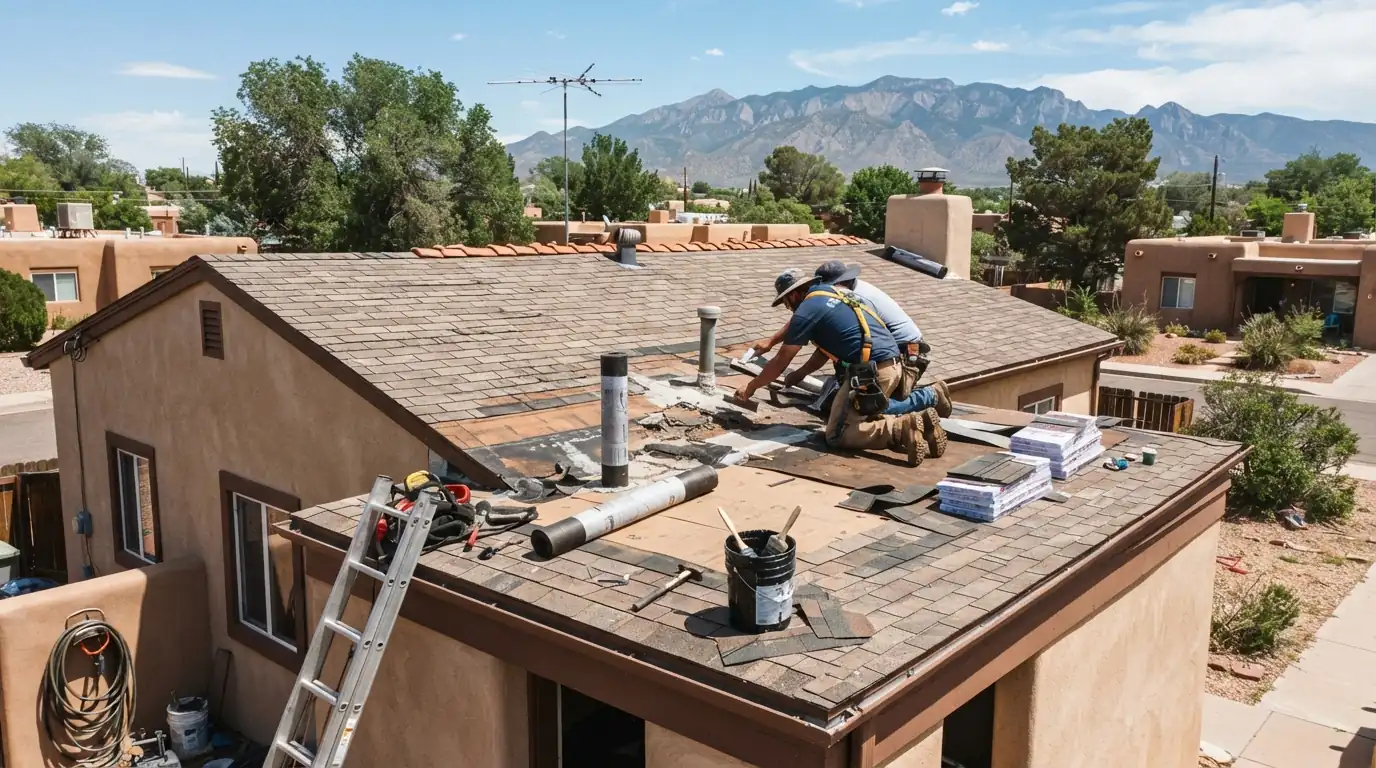
The work, piece by piece
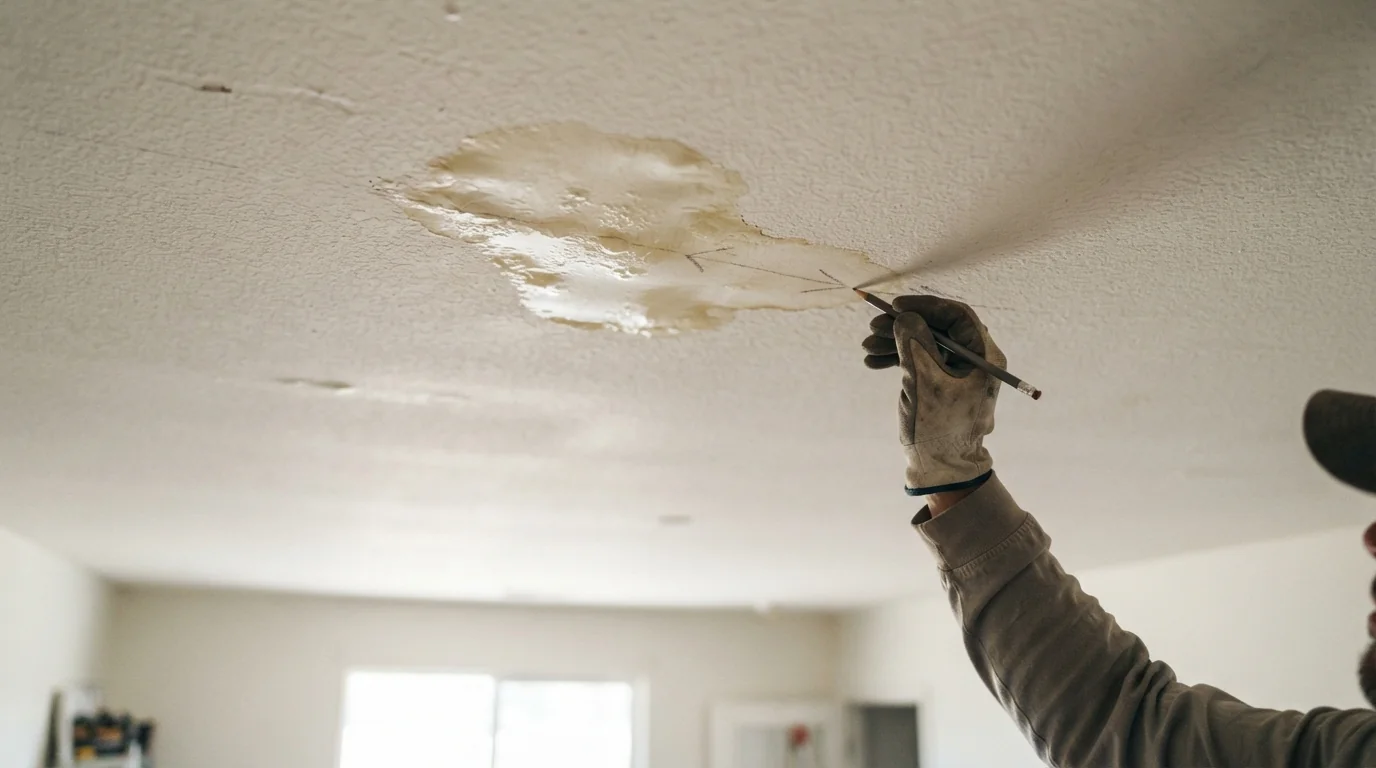
Tracing a Leak From the Ceiling Stain
We start inside: measure the stain's position from two walls, check the attic above it with a light and a moisture meter, and follow the water trail up the rafters or along the deck. Then we find the same spot on the roof and look upslope for the likely entry points. When the source still is not obvious, a controlled water test, running a hose on one section at a time while someone watches inside, pins it down without guesswork.
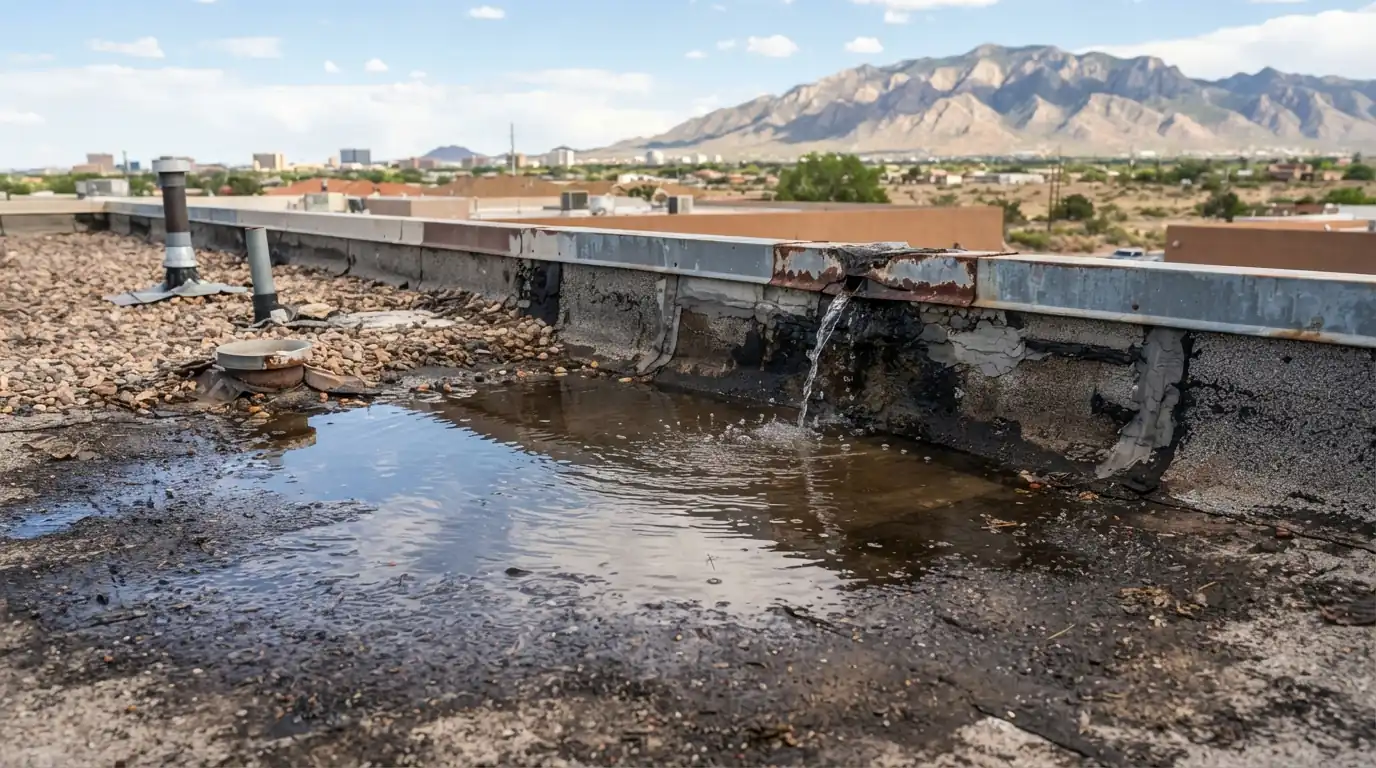
Leaks From Ponding on Flat Roofs
On flat roofs, water that sits for days slowly works into any weakness: a seam, a pinhole, a blister. The leak often appears only after big storms, when the ponding is deepest. We map where water collects, repair the seam or puncture feeding the leak, and fix the slope with tapered insulation or a cricket so water stops sitting there. Patching the opening without fixing the ponding usually means the leak returns with the next heavy monsoon storm, however good the patch looked.
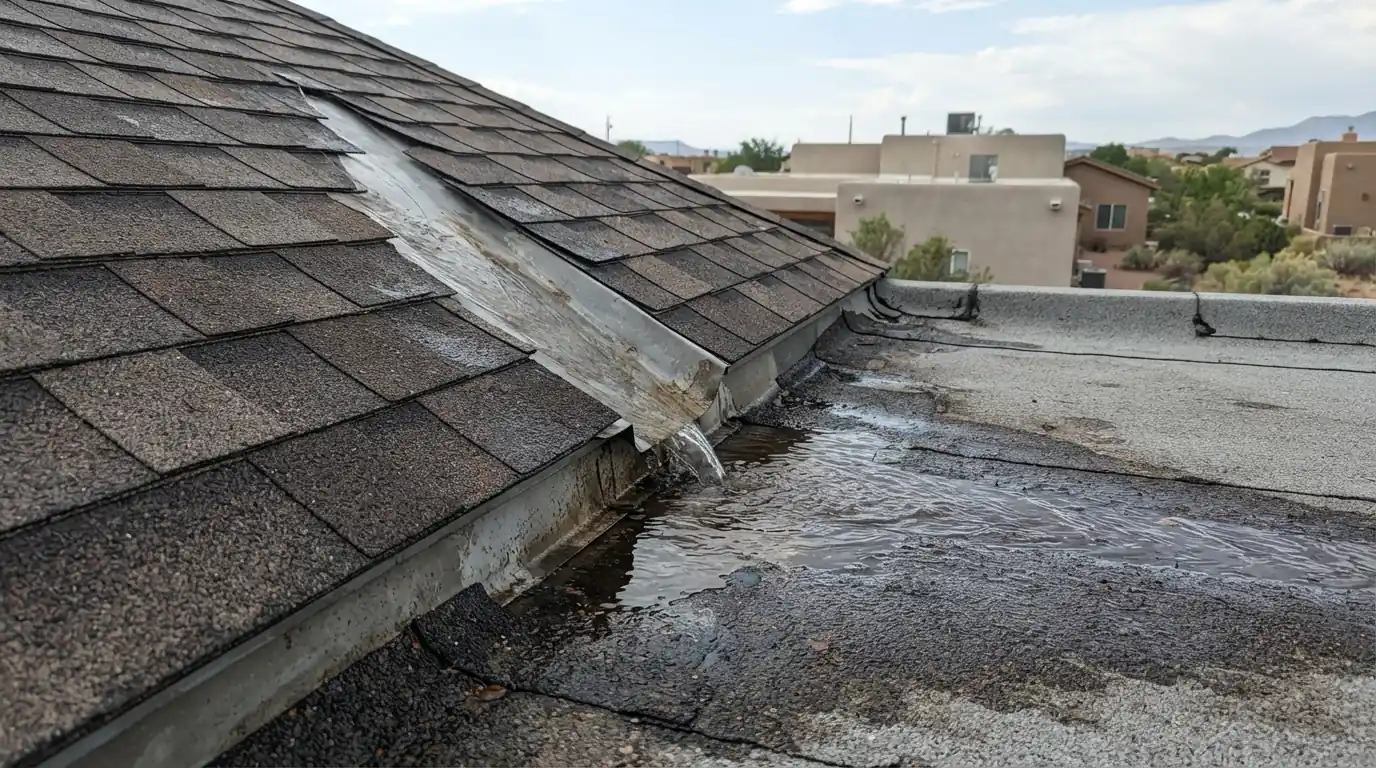
Valley Leaks on Pitched Roofs
Valleys carry water from two roof planes at once, so they see more water than any other part of a pitched roof. Leaks there come from worn or cut shingles in closed valleys, rusted or split valley metal, debris dams, and missing ice-and-water membrane underneath. We open the valley, check the membrane and metal, replace what has failed, and reinstall the shingles or tile so water runs down the center of the valley rather than working in under its edges.
Checking Interior Water Damage
A leak often leaves wet insulation and drywall behind, and those need to dry out before anything is painted. We check the attic insulation and the ceiling above the stain with a moisture meter, pull out soaked insulation that is sitting on the drywall, and tell you which areas are still wet. Drywall repair and painting are finish work best scheduled once the area is dry, and the moisture readings we record tell you exactly when that point has come.
Albuquerque conditions
What this job looks like on Albuquerque roofs
Leaks in Albuquerque follow the housing stock. Tar and gravel has long been the most common covering on New Mexico flat roofs, and on those older built-up roofs the leak is often where the gravel has migrated and left the felt bare to the sun, or where an old flashing is buried under layers of patches. On the city's newer pitched roofs the usual suspects are valleys, pipe boots and step flashing instead. Knowing which kind of roof you have narrows the search before we ever climb the ladder.
Found a new stain on the ceiling? Call and we will trace it.
Call (505) 636-9496Cost factors
What changes the price of this job
- Finding the source Straightforward leaks are quick; hidden ones may need a water test.
- Type of detail Pipe boots cost little to fix; valleys and chimneys cost more.
- Roof system Tile, flat and shingle roofs need different materials.
- Wet materials Soaked insulation or soft decking must be replaced.
- Access Two-story and steep roofs need extra setup.
Leak repairs are priced once the source is found; tracing a stubborn leak with a water test is its own step, and we tell you before doing it.
FAQ
Roof leak questions
Wind-driven rain or deep ponding reaches openings that light rain never touches.
Most can. Replacement is only the answer when leaks and wear are spread across the roof.
Many are found in one visit. Stubborn ones may need a water test on a dry day.
No. Call while it is fresh; an active leak is easier to trace.
We handle the roof and the attic. Drywall and paint are finish work best done once the area is dry.
Yes. Small stains often mean wet insulation and decking that keep getting worse out of sight.