
Quick answer: Most parapet leaks in Albuquerque start at the top of the wall, through a cracked stucco cap, open coping joints or a failed membrane wrap, not through the roof itself. Water runs down inside the wall and shows up as stains, bubbling stucco or a wet ceiling along the edge. The fix is to reseal or rebuild the cap and tie it properly into the roof.
Parapet walls
Why parapets leak before the roof does
Updated September 2026
The top of a parapet faces straight up into the sun and rain with nothing over it. Stucco caps crack as the wall moves through heat and cold, and a hairline crack is all the water needs. Once inside, it runs down the framing where nobody can see it.
Parapet repair usually goes hand in hand with the outlets through the wall, so we check the canales and scuppers on the same visit.
Cost factors
What changes the price of this job
- Length of wall Priced by the run of parapet being repaired.
- Cap type Metal caps cost more than stucco but end the crack cycle.
- Hidden damage Wet framing inside the wall adds drying and repair work.
- Stucco finish Matching texture and color takes extra coats.
- Membrane tie-in Rebuilding the roof-to-wall joint adds membrane work.
Parapet work is priced by the length of wall involved and what we find inside it, so opening one section first can save you from rebuilding more than you need.
The work, piece by piece
Parapet Cap Flashing
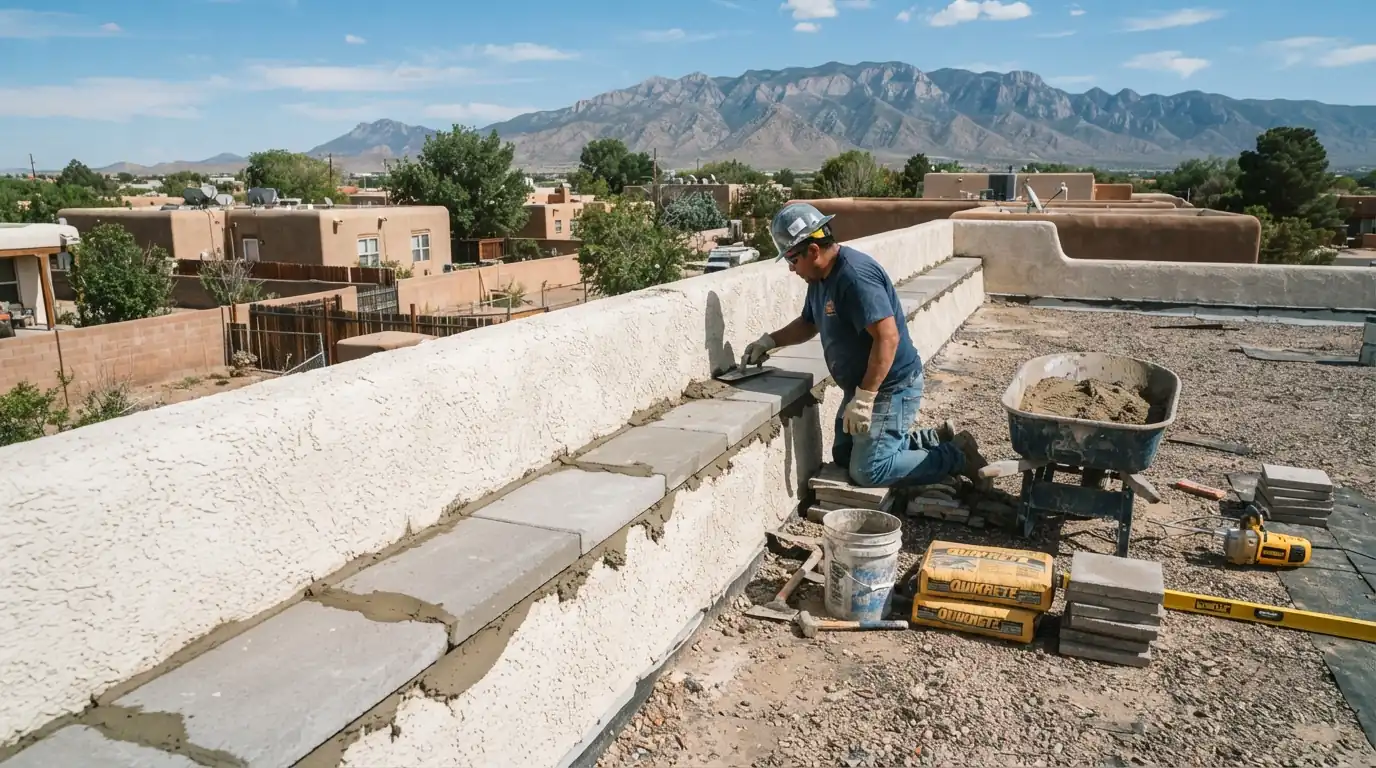
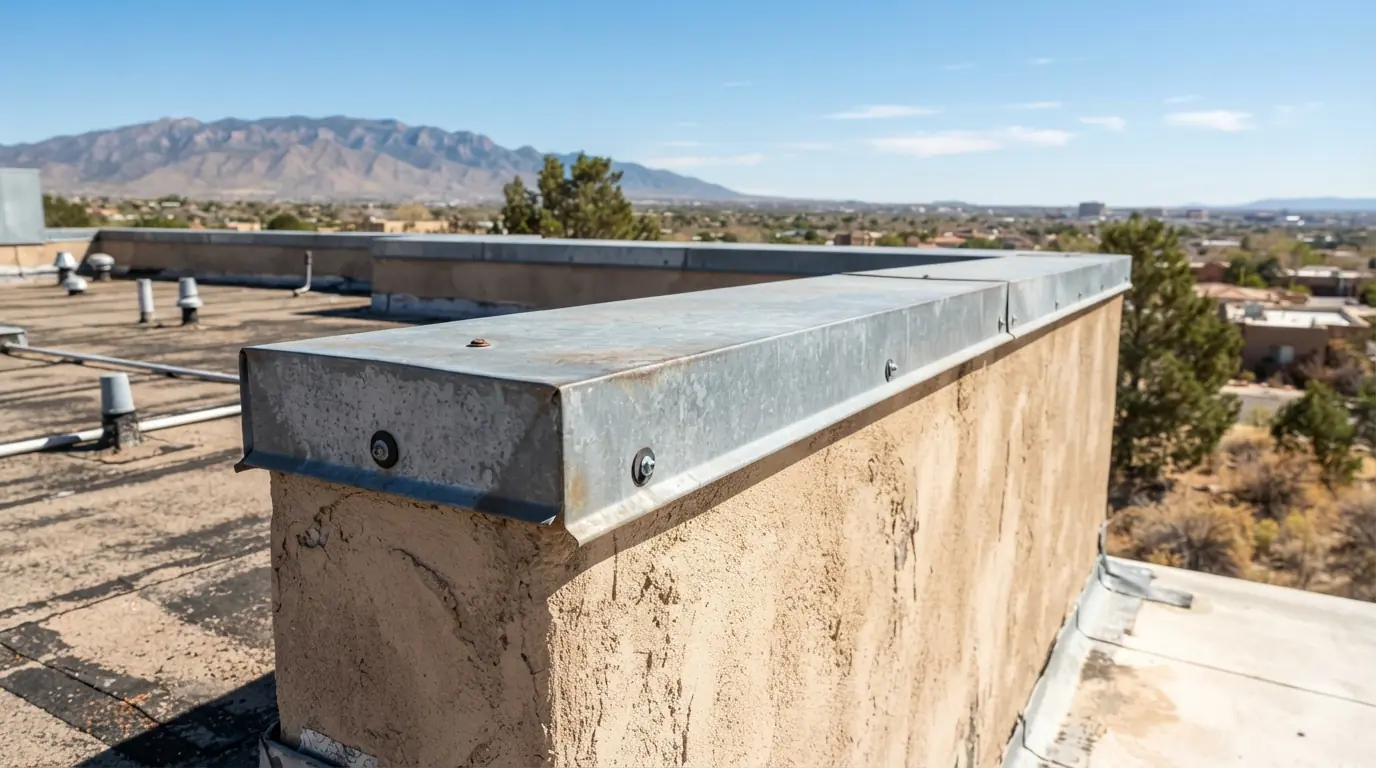
The best protection for a parapet top is a membrane wrapped over it and a cap on top that sheds water to both sides. On many older homes the top is only stucco, which cracks. We strip the failed cap, wrap the top of the wall with membrane that laps down both faces, and finish it with either a sloped stucco cap over lath or a metal cap. A metal cap costs more but ends the crack problem for good, and it can be color-matched to the stucco or trim.
Stucco Parapet Crack Sealing
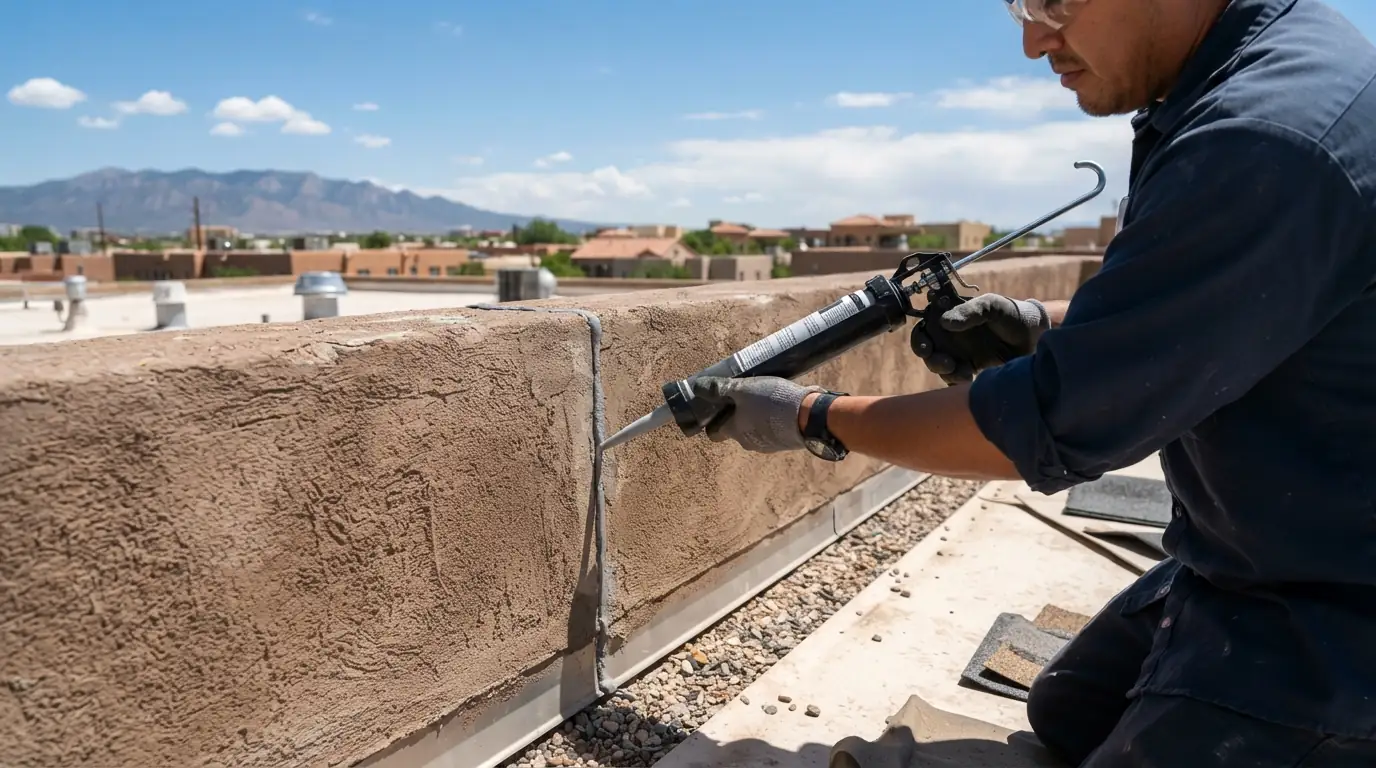
Small cracks on the face or top of a stucco parapet can be routed out, sealed with an elastomeric crack filler and coated to match. That is a sound repair where the framing inside is dry and the crack is recent. If the stucco is bulging, soft or hollow when tapped, water has been in the wall for a while, and sealing the surface would trap it inside. In that case we open the wall, dry and repair the framing, and rebuild the stucco and cap properly.
Coping Metal Replacement
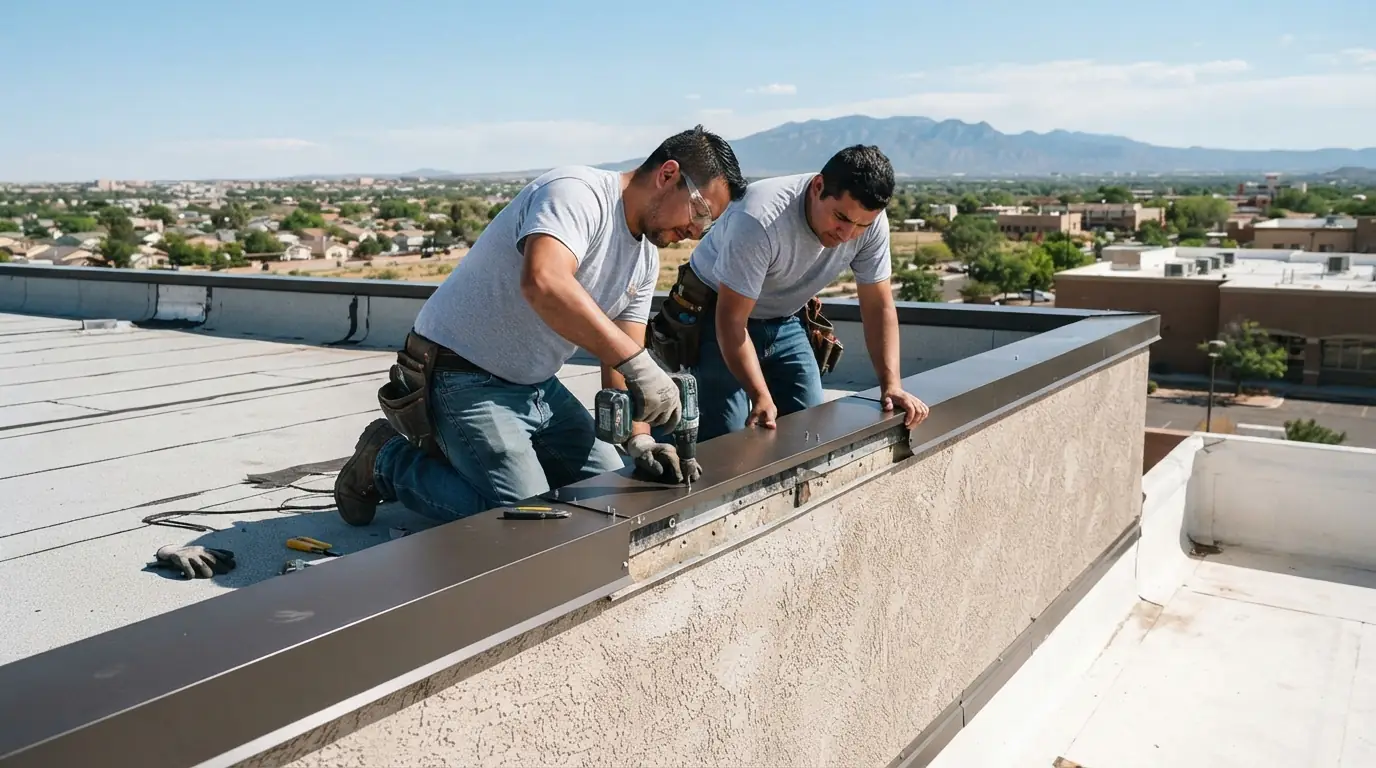
Metal coping caps the parapet with sheet metal that overhangs both sides. Leaks come from open joints between coping sections, missing cleats that let the coping lift in wind, and fasteners driven through the top where water collects. New coping goes on continuous cleats with concealed joint covers, sloped slightly toward the roof so water drains inward, and fastened only on the sides. On commercial buildings we match the coping color and profile to the rest of the building's trim and metal.
Parapet-to-Roof Membrane Tie-In
Where the roof meets the inside face of the parapet is one of the busiest leak points on any flat roof. The membrane has to turn up the wall high enough to stay above standing water, be fastened or adhered along its top edge, and be covered by counterflashing or the parapet wrap so water cannot run behind it. We rebuild tie-ins that were stopped short, sealed only with mastic or cracked at the corners, which is where most of them fail.
Albuquerque conditions
What this job looks like on Albuquerque roofs
Parapets are everywhere here because the architecture calls for them. Pueblo Revival and Territorial homes, from adobe houses in the South Valley and North Valley to mid-century ranches in Rio Rancho, hide low-slope roofs behind stucco walls. Those walls face the monsoon first. July and August together deliver about half of the city's precipitation in a normal year, often as short, wind-driven bursts that strike the parapet cap before they reach the roof. A cap that cracked over the winter usually announces itself in the first August storm.
DIY or call
What to do about a cracked parapet before we arrive
Photograph it
Take pictures of the crack and any stains inside, noting when they appeared.
Skip the caulk gun
Caulk over a wet crack traps water in the wall and hides the damage.
Watch the inside wall
Bubbling paint or soft drywall along an exterior wall points to a parapet leak.
How the job runs
How a parapet repair is done
- 1
Find the entry point
Cap, face, coping joints and tie-in checked along the wall.
- 2
Open where needed
Suspect stucco sounded and opened to check the framing.
- 3
Dry and repair framing
Wet or rotted wood dried or replaced.
- 4
Wrap the top
Membrane lapped over the wall and down both faces.
- 5
Cap and finish
Stucco cap over lath, or new metal coping installed.
- 6
Tie into the roof
Membrane turned up and counterflashed at the base.
Stains along the top of an exterior wall? Have the parapet checked.
Call (505) 636-9496FAQ
Parapet repair questions
If stains follow the outer walls or sit near the ceiling edge, the parapet is a likely source. We test both.
If your stucco cap has cracked more than once, metal usually costs less over time.
We match texture and color as closely as the existing finish allows; very faded walls may show a difference.
Yes. A yearly look at caps and coping joints catches cracks before water gets inside.
Yes, including metal coping on long commercial parapet runs.
We repair the parapet and roof. Interior drywall and paint are usually handled by a finish contractor.