
Quick answer: Solar panel detach and reset in Albuquerque means removing the array and racking before roof work, then reinstalling it on new flashed mounts once the roof is done. The electrical disconnect and reconnection are handled by your solar installer or an electrician. Timing matters: replacing an aging roof before panels go on, or while they are off, saves paying for removal twice.
Solar and roofing
Why the roof under solar still needs attention
Updated September 2026
Solar panels shade the roof, but they do not protect it forever. Every mount is a hole through the roof, and the membrane or shingles under the array keep aging. When the roof reaches the end of its life, the panels have to come off before anything else can happen.
If you are planning solar on an older roof, the best time for a roof replacement is before the panels go on.
Cost factors
What changes the price of this job
- Number of panels More panels mean more removal, storage and reinstall time.
- Racking type Rail and rail-less systems handle differently.
- Roof type Tile and flat roofs need different mount flashing than shingle.
- Roof work Repair or replacement under the array is its own line.
- Critter guards Priced by the length of the array's perimeter.
Detach and reset is priced by the number of panels, the mounting system and the roof type, plus whatever roof work happens while the array is off.
What's included
What a detach and reset includes
- Coordination with your solar provider
- Photos and labels for every panel
- Careful removal and on-site storage
- Racking removed to the mounts
- Roof repair or replacement underneath
- New mounts set into framing
- Flashing matched to the roof system
- Old mount holes sealed and patched
- Array reinstalled for reconnection
The work, piece by piece
Detaching Panels Before a Re-Roof
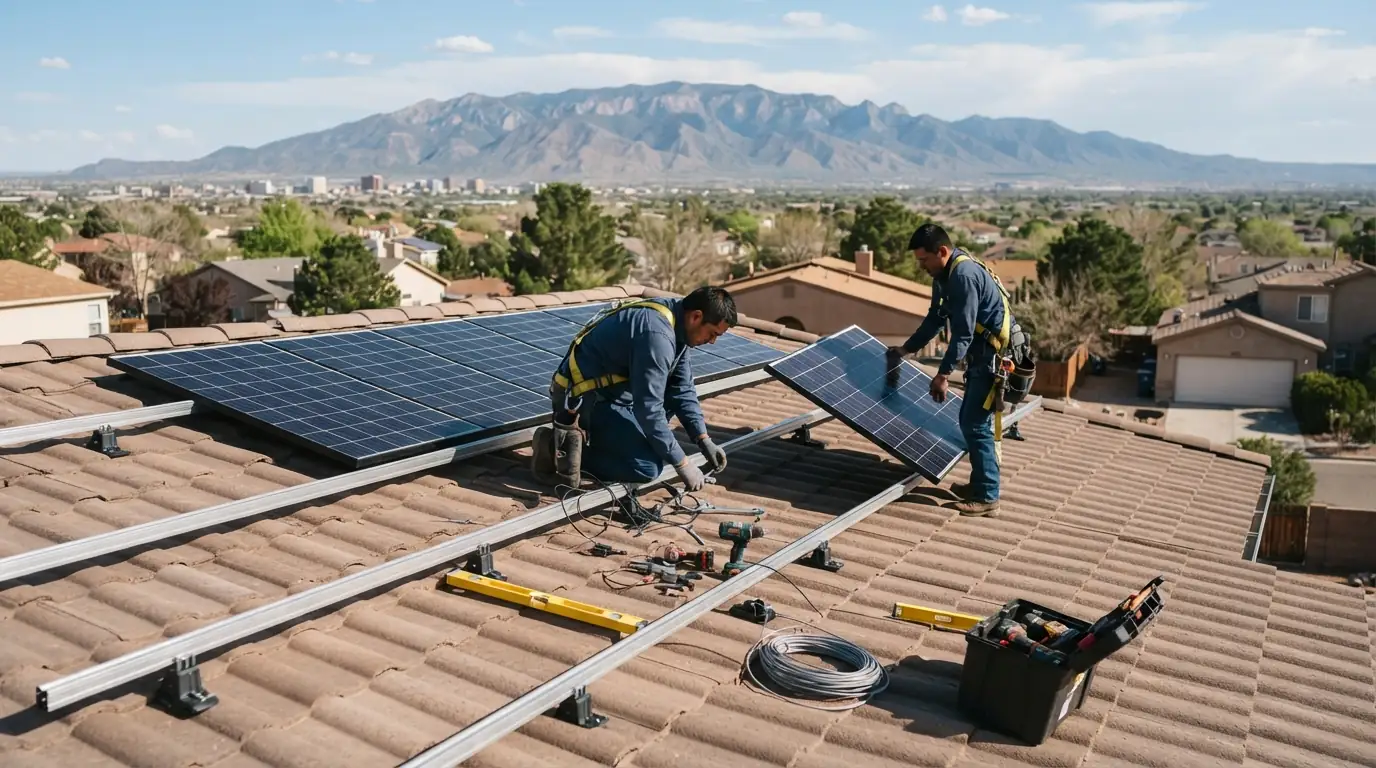
Once your solar provider or an electrician has safely disconnected the system, the panels are unbolted, labeled by position and stacked in a protected area, and the racking is removed down to the mounts. Wiring is kept organized for reconnection. We then carry out the roof work, whether a full replacement or a large repair, with the array's layout marked so the new mounts land in sound framing. Reinstallation follows the original layout unless you choose to change it, and nothing is left loose on the roof overnight.
Roof Repair Under Panels
Leaks under solar arrays usually start at a mount, where the original flashing has failed or was never installed properly, or at debris dams where leaves and dust collect behind the panels. Some can be repaired by removing only the affected panels rather than the whole array. We locate the source first, then remove the smallest number of panels needed to fix it properly, which keeps downtime and cost as low as the repair allows. Debris behind the panels is cleared while they are off.
Flashed Mount Replacement
Every solar mount is a penetration, and the mounts are where solar roofs most often leak. When the array is reset, mounts are installed into framing with flashing that suits the roof system: flashed feet under shingles, sealed and flashed standoffs on tile, and membrane-flashed pedestals or curbs on flat roofs. Old mount holes are sealed and patched rather than reused where the roof has changed. That is the detail that keeps the new roof dry for its full life.
Critter Guard Installation
The gap under a solar array is sheltered, shady and hard for predators to reach, which makes it an attractive spot for birds and small animals. Nests collect debris, block drainage and can chew wiring. When the array is reset, a mesh guard can be installed around its perimeter to close the gap without drilling into the panels. It is a small addition that protects both the roof and the solar system underneath, and it can also be added to an existing array without any roof work at all.
Albuquerque conditions
What this job looks like on Albuquerque roofs
Solar is common here: more than 50,000 New Mexico homeowners and businesses have installed it. That puts a lot of arrays on roofs that will need work during the panels' lifetime. Timing also changed recently. The 30 percent federal residential credit ended for systems installed after December 31, 2025, while New Mexico still offers a state credit of 10 percent up to $6,000, so homeowners adding solar now often weigh whether to replace an older roof first.
How the job runs
How a detach and reset is done
- 1
Plan with your installer
Disconnect and reconnect scheduled with your solar provider or electrician.
- 2
Document the array
Layout photographed and panels labeled by position.
- 3
Remove and store
Panels and racking removed and stored safely on site.
- 4
Roof work
Repair or replacement carried out with mount points marked.
- 5
New flashed mounts
Mounts installed into framing and flashed to the roof.
- 6
Reset and hand back
Array reinstalled for reconnection and inspection.
Timeline
How long the array is off the roof
The system produces nothing from disconnect to reconnection, so the schedule matters. For a repair that needs only a few panels removed, that window is short. For a full re-roof, it runs from the first panel off to the last one back on, plus whatever time the electrical reconnection and any required inspection take.
We agree the dates with you and your solar provider before anything is unbolted, and we avoid monsoon afternoons for the roof work, so the array is back in service as quickly as the job allows.
FAQ
Solar and roofing questions
Your solar provider or an electrician handles the electrical disconnect and reconnection; we handle the roof and the racking.
Check your installer's terms before work starts; some require the original installer or their written approval.
Often. We remove only the panels needed to reach the source.
If the roof has limited life left, yes, to avoid paying for removal and reset later.
From disconnect to reconnection. The scope sets out the schedule before work begins.
No. We handle the roof and the removal and reset of existing arrays.