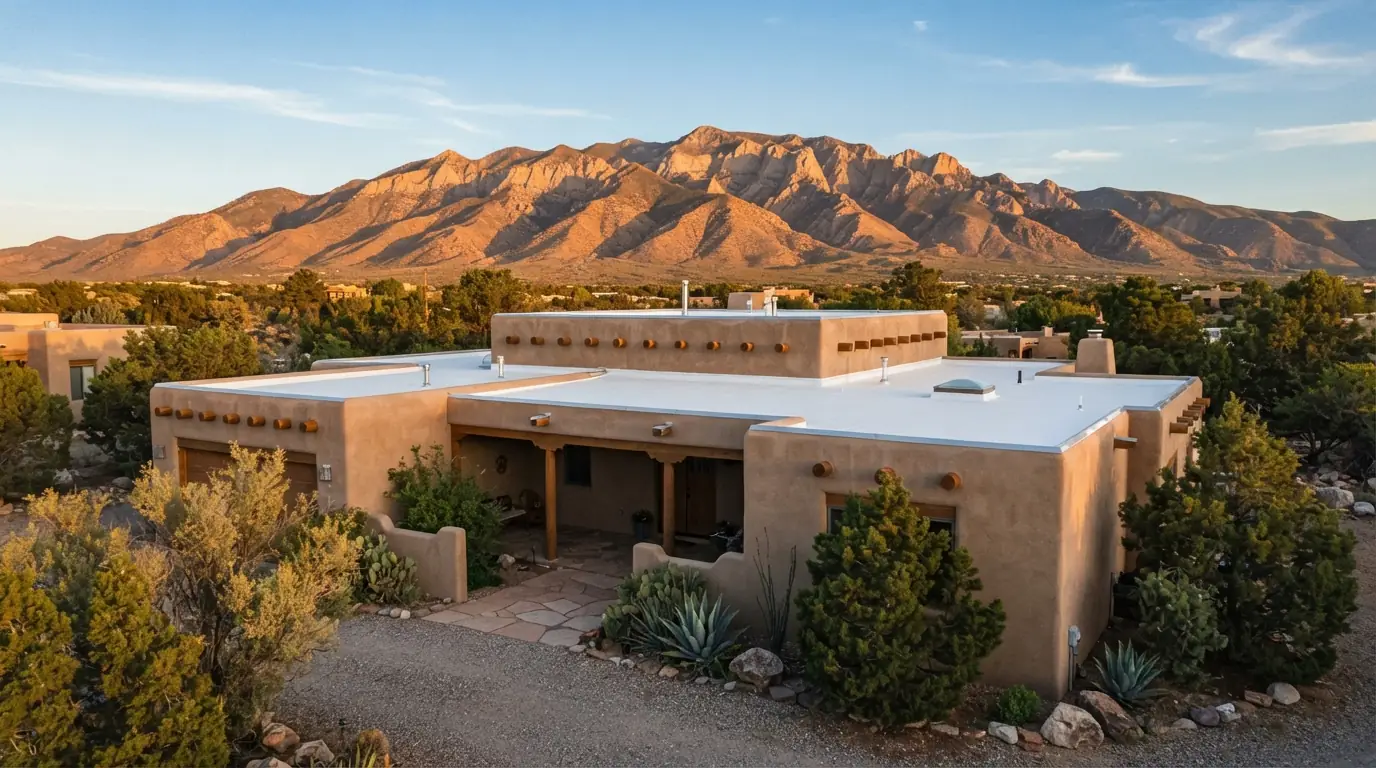
Quick answer: Most skylight leaks in Albuquerque come from the flashing or curb around the unit rather than the glass, and on flat roofs the curb is often too short to keep water out. Replacing the skylight is the moment to fix that: we rebuild or raise the curb, flash it into the roof, and set a new unit on top.
Skylights and sun tunnels
When a skylight is worth replacing, not resealing
Updated September 2026
Resealing works on a sound skylight with one failed joint. Replacement makes sense when the dome is cracked or yellowed, the glass has fogged between panes, the frame is warped, or the unit has been caulked so often that nothing sticks to it anymore.
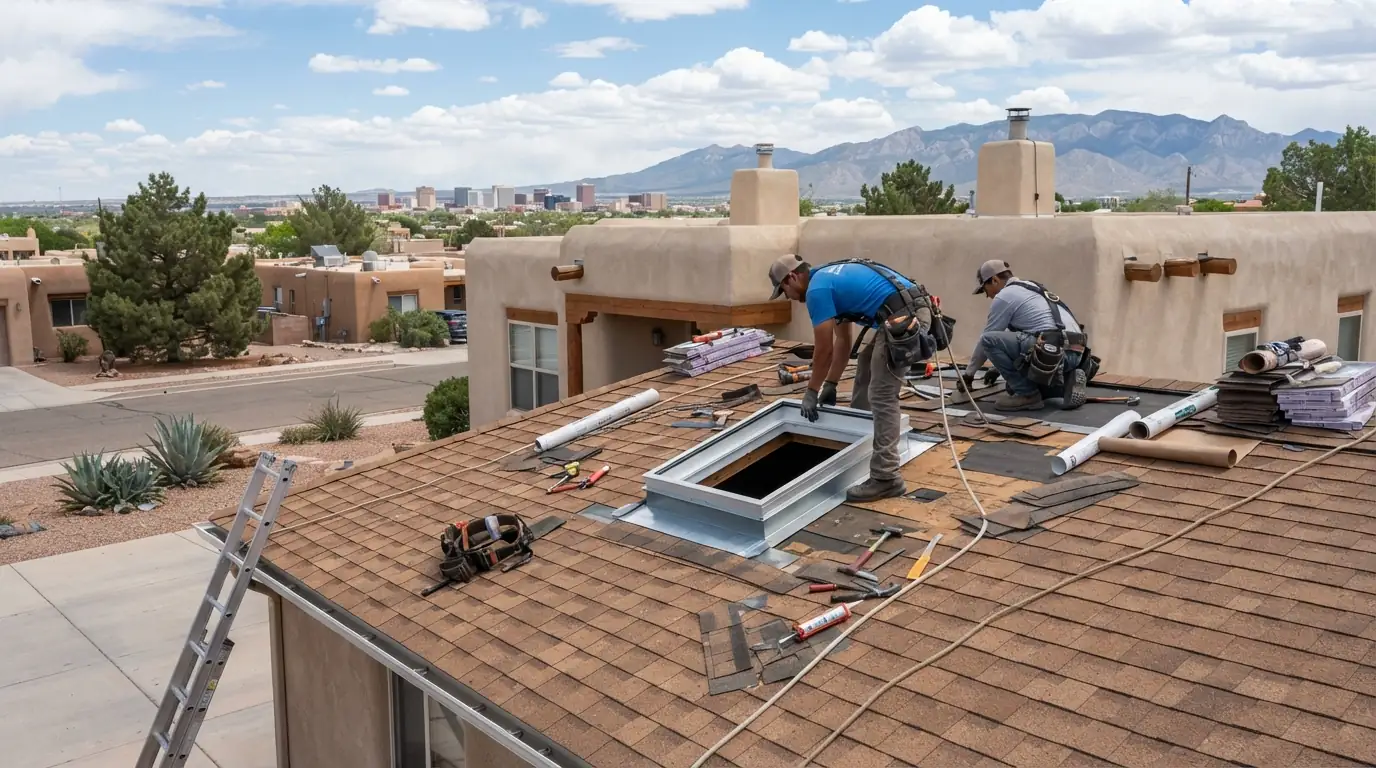
On an aging roof, timing matters. A skylight replaced a year before a new roof gets torn out again, so we tell you when to wait and do both together.
Cost factors
What changes the price of this job
- Unit type Fixed, vented and solar-powered units differ widely in price.
- Glass or acrylic Glass costs more; acrylic is cheaper but ages faster in strong sun.
- Curb work A sound curb is reused; a rotted or low curb is rebuilt or raised.
- Roof type Tile and flat roofs take more labor to open and flash than shingle.
- Interior finishing New shaft drywall or trim is a separate line if needed.
Skylight pricing depends on the unit and on what the curb and flashing need, so we quote after measuring the opening and checking the curb.
What's included
What a skylight replacement includes
- Measurement of the existing curb and opening
- Removal of the old unit and flashing
- Curb inspection for rot and height
- Curb rebuild or raise where needed
- New underlayment around the opening
- Manufacturer flashing kit or step flashing
- Membrane tie-in on flat roofs
- Interior check for water damage
- Photos of the finished install
The work, piece by piece
Curb-Mounted Skylight Swaps
Curb-mounted skylights sit on a raised wood box built on the roof, and they are the most common type on Albuquerque homes. When the curb itself is sound, the swap is simple: remove the old unit, check the curb for rot, reflash it, and fasten a new unit sized to that curb. When the curb is rotted or too low, we rebuild it before the new unit goes on. Curb size is the first thing we measure, since it decides which replacement units fit.
Deck-Mounted Skylights
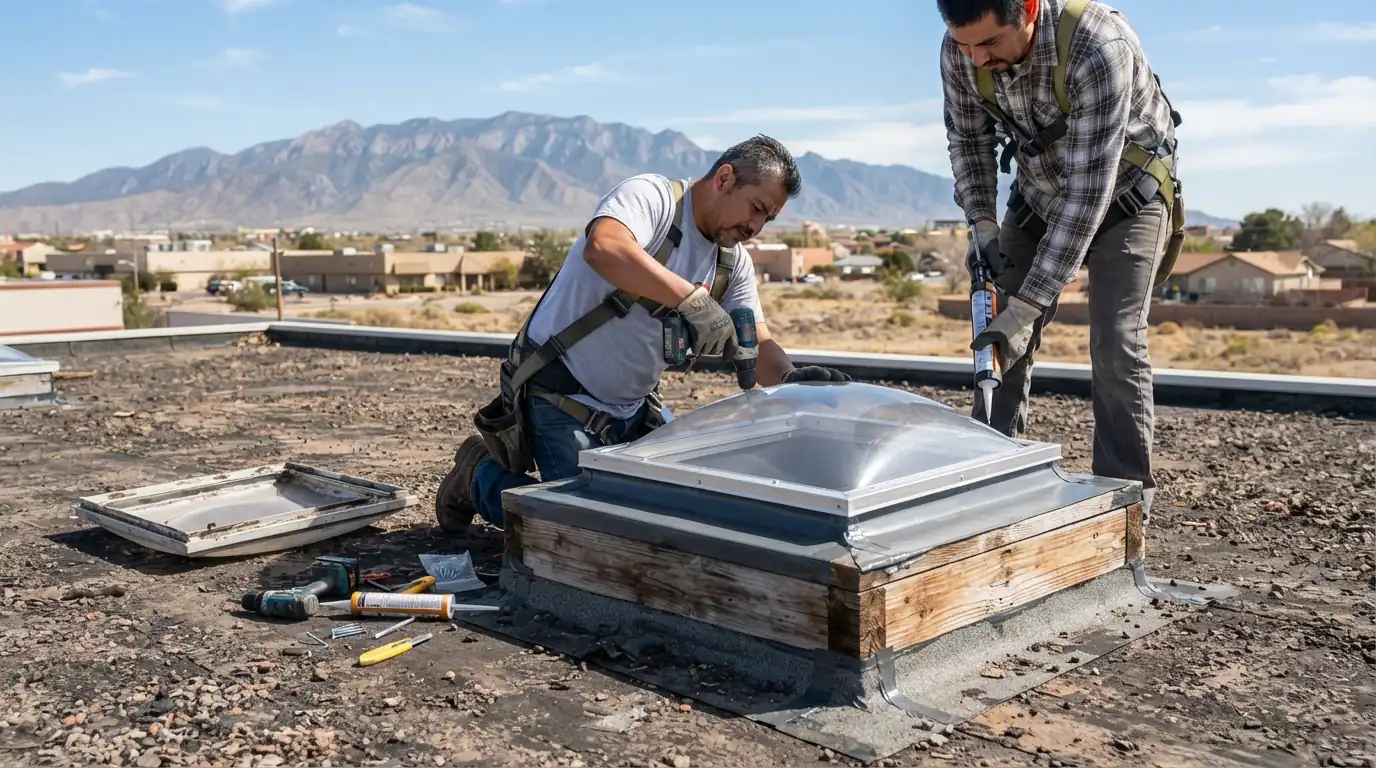
Deck-mounted skylights attach directly to the roof deck with a built-in flange and rely on a manufacturer flashing kit instead of a site-built curb. They suit pitched shingle and tile roofs and sit lower and cleaner. The flashing kit has to go in the right order with the roofing, so on a shingle roof we remove and reweave the shingles around it rather than caulking over the edges. Installed that way, a deck-mounted unit is one of the most reliable options there is.
Skylights on Flat Roofs
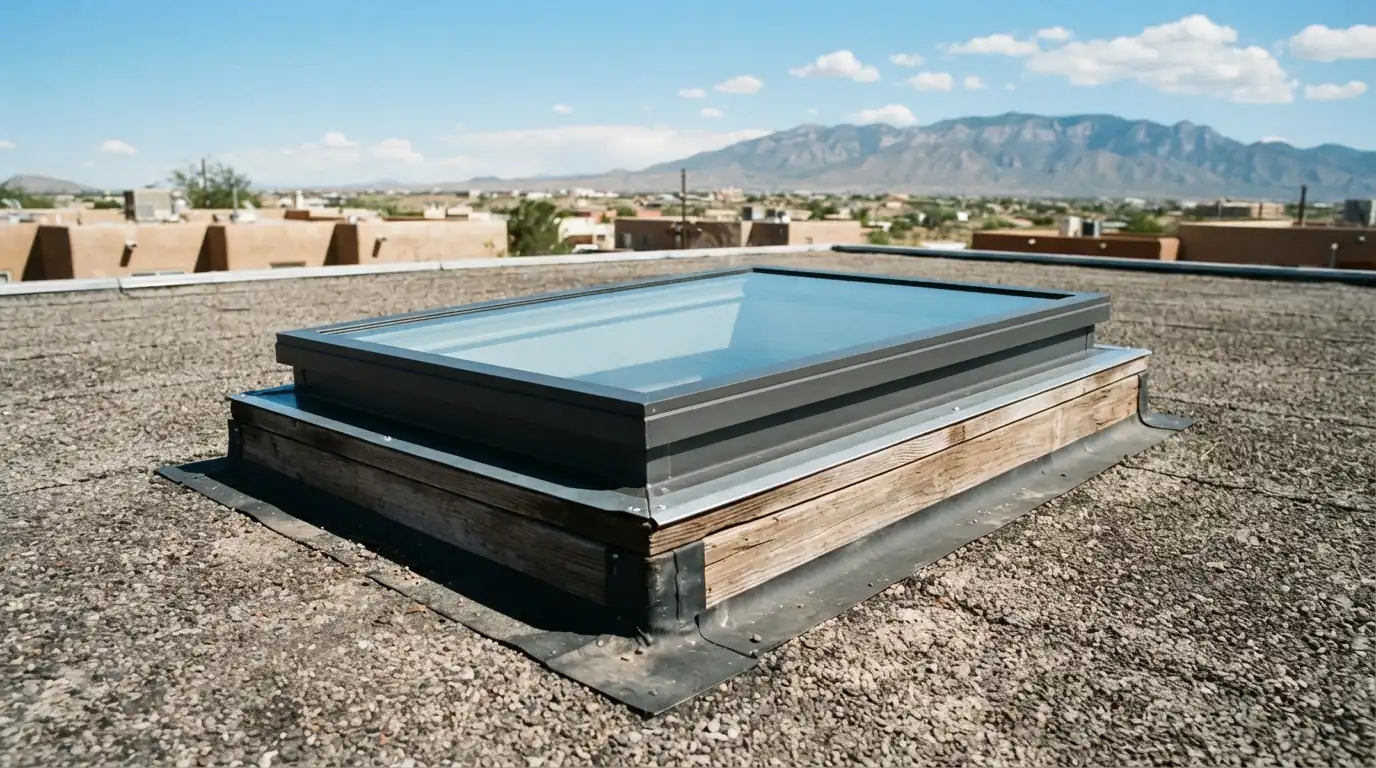
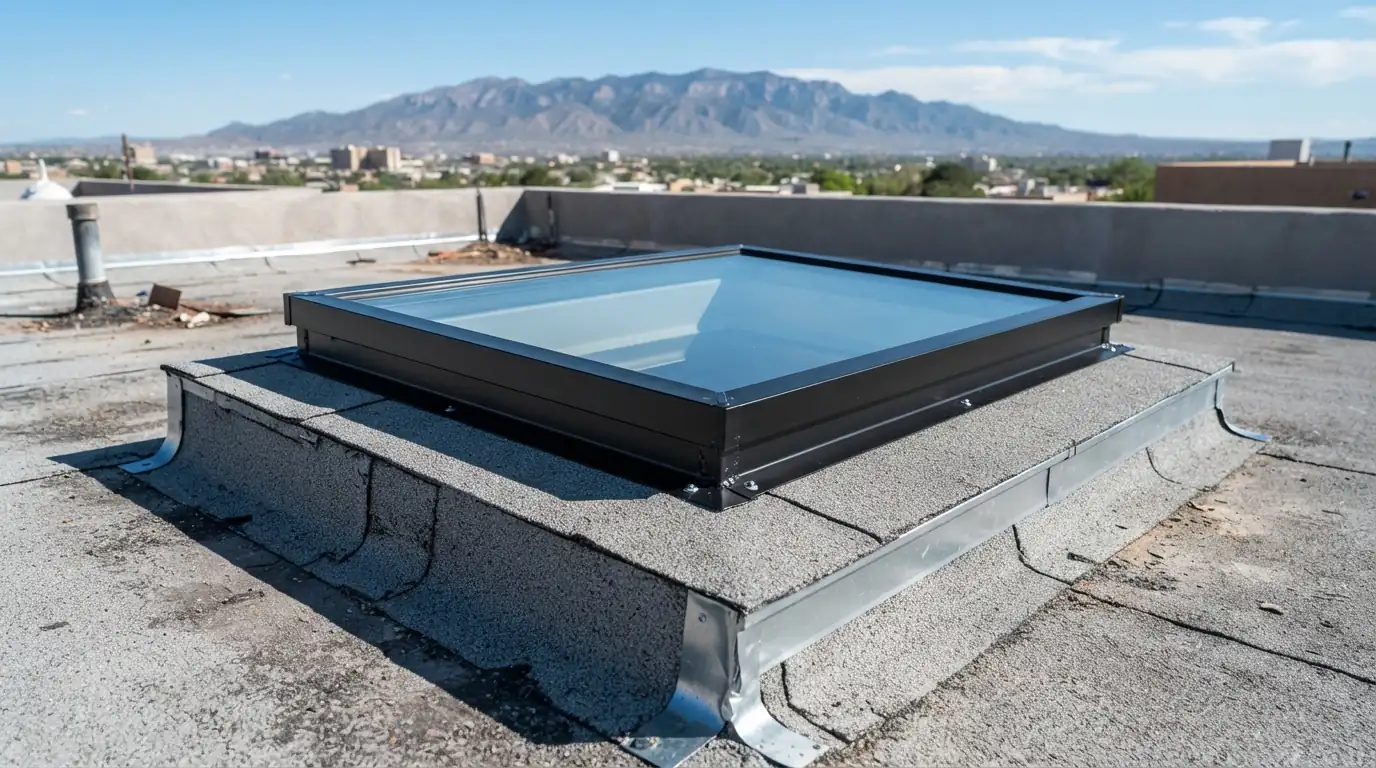
Flat roofs are the hardest place for a skylight, because water does not run away from the curb; it sits against it. A flat-roof skylight needs a curb tall enough to stand well above any ponding, a membrane turned up and sealed on all four sides, and ideally a small cricket on the uphill side so water moves around it. Many older flat-roof skylights were set on short curbs, and those are the ones most likely to leak after a monsoon storm.
Sun Tunnel Installation
A sun tunnel, sometimes called a tubular skylight, brings daylight into a hallway, bathroom or closet through a reflective tube, with a small dome on the roof. It fits between rafters, needs no drywall shaft, and cuts a much smaller hole in the roof than a full skylight, which makes it a good choice for dark interior rooms. On flat roofs we use a curb-mounted version for the same reason as any other flat-roof penetration: the dome has to sit above standing water.
Albuquerque conditions
What this job looks like on Albuquerque roofs
Albuquerque roofs carry a lot of holes. Swamp cooler platforms, skylights and satellite mounts are common here, and every one of them is a penetration that adds labor and leak risk to the roof. Skylights are the largest of those openings, and the sun works on them hard. At about 5,300 feet the UV is stronger than at sea level, which is why older acrylic domes in this city yellow and turn brittle, and why we usually recommend glass or a UV-rated dome when a unit is replaced.
How the job runs
What a skylight replacement involves
- 1
Measure and inspect
Curb size, roof type and any interior water damage recorded.
- 2
Choose the unit
We show you units that fit the opening and the roof.
- 3
Remove the old skylight
Unit and old flashing come off; the curb is checked.
- 4
Rebuild the curb
Rotted or low curbs are rebuilt or raised.
- 5
Set and flash
The new unit is fastened and flashed into the roof.
- 6
Water test
Flashing and interior checked, with photos of the finished install.
FAQ
Skylight questions from Albuquerque homeowners
Sometimes, if the unit is sound and one joint failed. A cracked dome, fogged glass or a unit caulked many times needs replacing.
Usually, if they are past the middle of their life. Doing both together avoids cutting into a new roof later.
Glass lasts longer and stays clear. Acrylic is lighter and cheaper but yellows and turns brittle faster in strong sun.
Yes. We frame and deck the opening, roof over it to match, and the ceiling can then be patched.
Yes, manual and electric vented units, including solar-powered models that need no wiring.
Velux is the most common, along with Solatube for sun tunnels and Wasco units. The scope names the model.