
Quick answer: Leaks around chimneys, skylights, vents and swamp cooler curbs in Albuquerque almost always trace back to failed flashing: dried-out sealant, or metal that has pulled away after years of heat and cold. The lasting fix is to remove the old flashing, rebuild it in layers that shed water, and seal it into the roof.
How the job runs
How a flashing repair is done
- 1
Stop active leaks
In a storm we tarp or temporarily seal the area.
- 2
Find the failed detail
Every penetration near the stain is checked.
- 3
Strip the old flashing
Caulk and failed metal come off down to sound material.
- 4
Repair what is underneath
Rotted decking or curb framing is replaced.
- 5
Rebuild in layers
New flashing lapped so each piece sheds water over the next.
- 6
Seal and test
Sealed into the roof, water tested and photographed.
Flashing repair
Why flashing fails before the roof does
Updated September 2026
Flashing lives at the joints, where two surfaces move differently. A chimney moves one way, the roof deck another, and the sealant between them takes all of it every day and every season. Eventually it cracks, lifts or pulls loose.
Many flashing leaks have already been caulked, sometimes several times. We remove that and rebuild the detail properly, and if the roof around it is failing too, we cover the wider leak picture as well.
The work, piece by piece
Chimney Counterflashing
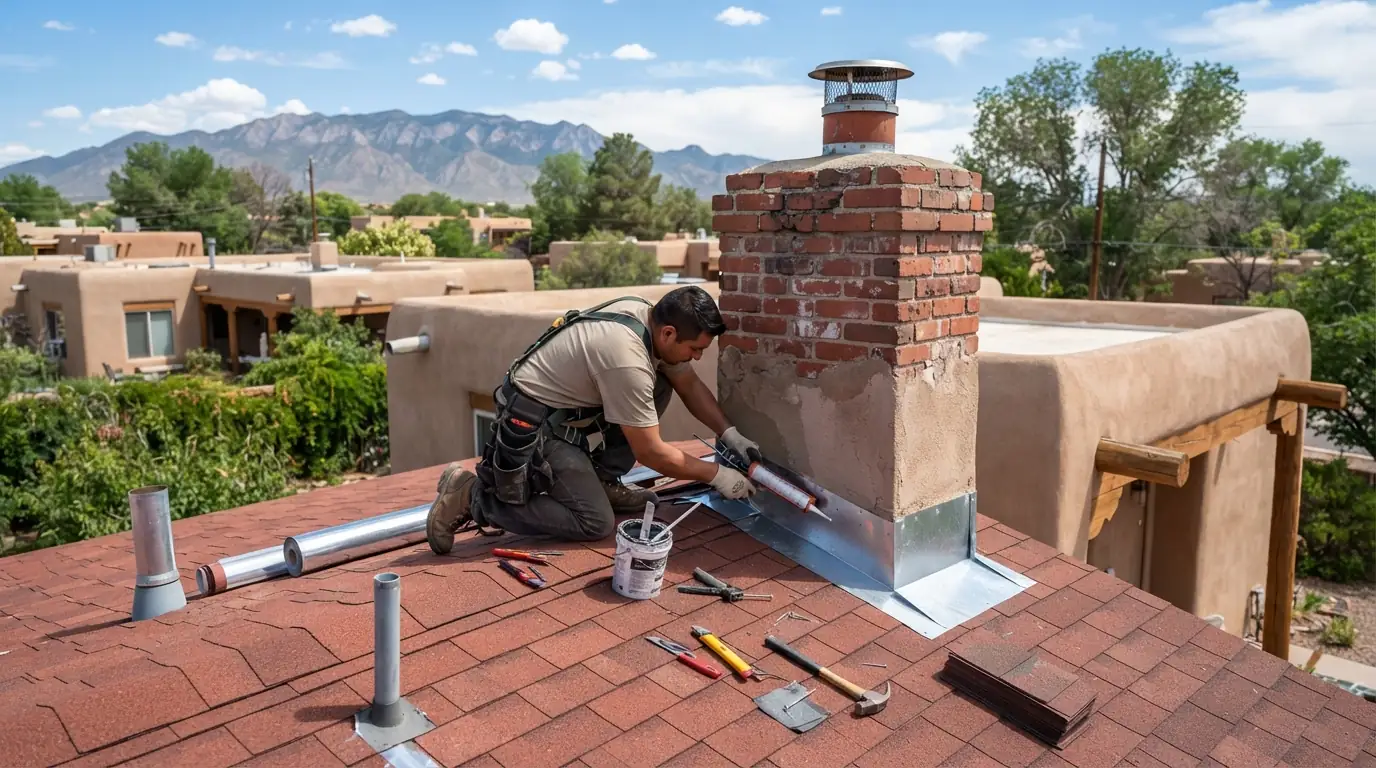
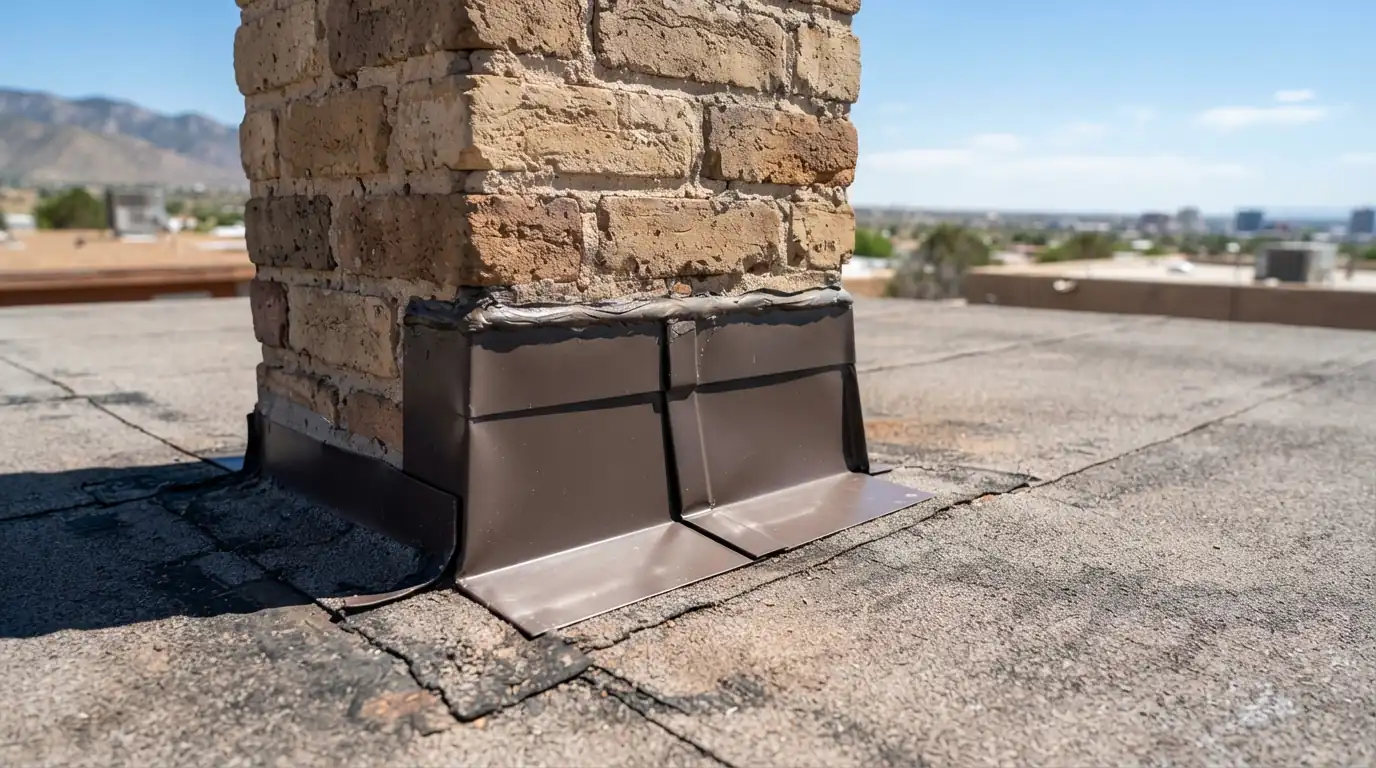
A chimney needs two layers of flashing: step or base flashing tied into the roof, and counterflashing set into the masonry or stucco that laps over it. When the counterflashing is only caulked to the chimney face, the caulk fails and water runs behind it. We cut a reglet into the mortar or stucco, set new counterflashing into it, and add a cricket behind wider chimneys so water cannot pool against the uphill side. Rusted base flashing is replaced at the same time.
Skylight Flashing Leaks
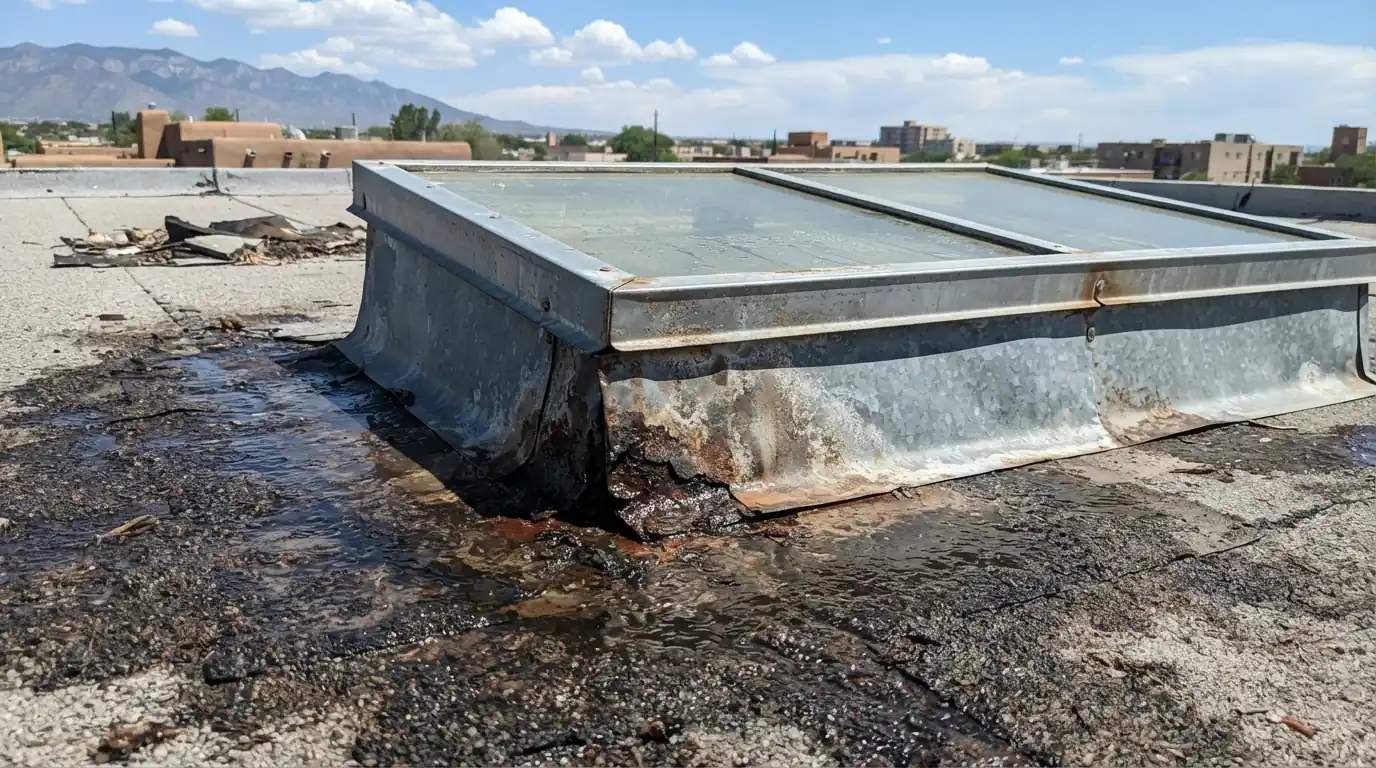
When a skylight leaks, the unit is often fine and the flashing around it is not. On pitched roofs that means step flashing woven with the shingles plus head and sill pieces at the top and bottom of the curb; on flat roofs it means membrane turned up the curb and sealed. We remove the failed pieces, check the curb for rot, and rebuild the flashing in the right order. If the unit itself is cracked or fogged, replacing the skylight is the better repair.
Pipe Boots and Vent Flashing
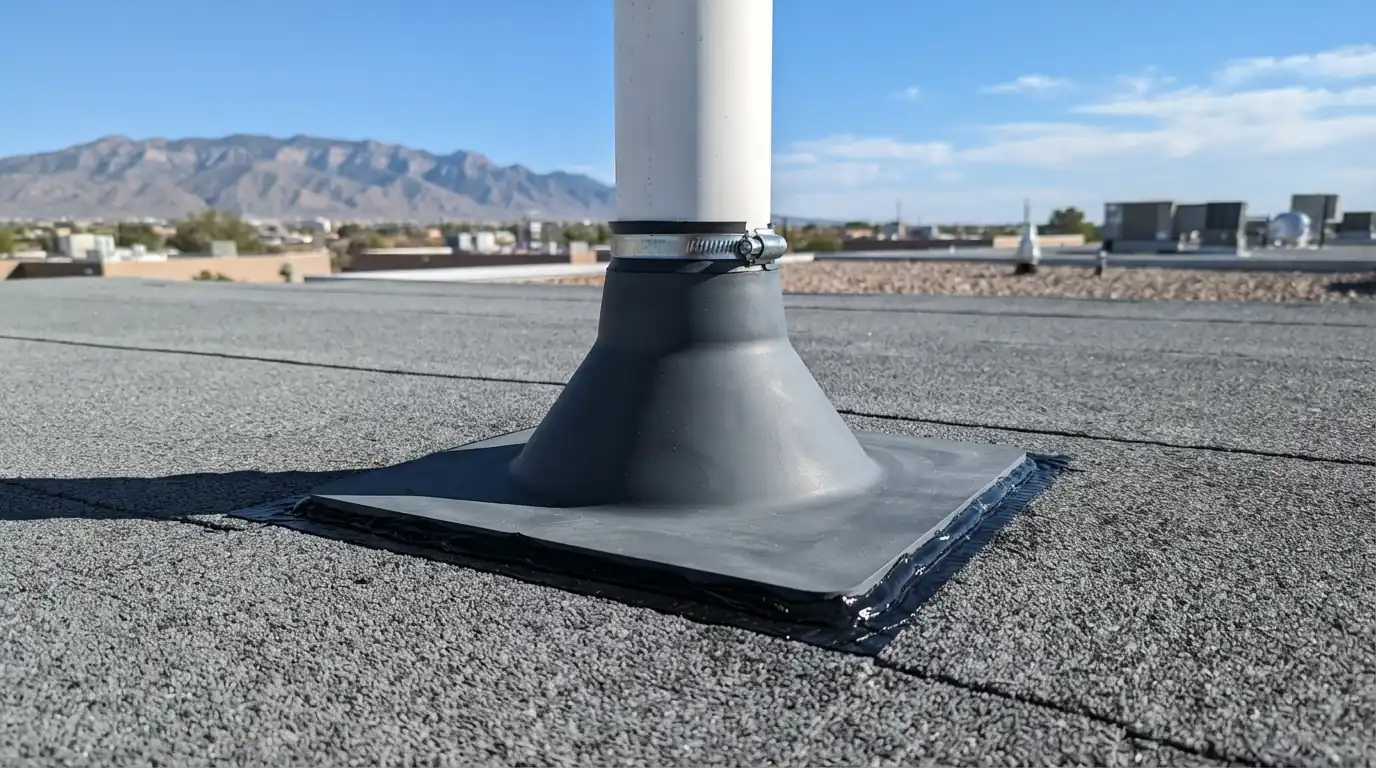
Plumbing vents and exhaust pipes pass through the roof inside a rubber-collared boot. In strong sun the rubber collar cracks and splits long before the roof around it wears out, and water runs straight down the pipe into the attic. We replace cracked boots with UV-resistant models, or fit a lead or metal jack where that suits the roof. Exhaust vents and roof jacks for water heaters and furnaces get the same check, since their flashing often loosens as the roof ages.
Swamp Cooler Curb Flashing
Evaporative coolers sit on a curb or platform, carry water, and vibrate when they run. That combination loosens flashing faster than any other roof penetration. Overflow and drain lines can also dump water onto the roof around the curb for months at a time without anyone noticing. We rebuild the curb flashing into the roof, check the cooler's drain routing, and look for soft decking around the platform, which often turns up where a cooler has been leaking quietly for a while.
DIY or call
Why caulk is not a flashing repair
What caulk does
It hides the gap for a season. Sun and movement crack it, and water gets in behind it again.
What it costs you
Layers of caulk make the real flashing harder to inspect and repair later.
What you can do
Photograph where the stain appears and when, and protect the ceiling below until we arrive.
Albuquerque conditions
What this job looks like on Albuquerque roofs
Flashing in Albuquerque works harder than it does in milder places. The roof goes through daily swings of 30 to 40 degrees, so metal expands at midday and contracts overnight, and the sealant at every joint is stretched and squeezed hundreds of times a year. Add everything mounted on roofs here, from swamp cooler platforms to skylights and satellite dishes, and a typical house carries several flashed joints, each one a place worth checking on every visit.
Water running down a chimney chase or skylight well? Call now.
Call (505) 636-9496Cost factors
What changes the price of this job
- Type of penetration Pipe boots cost least; chimneys and cooler curbs cost most.
- Roof system Tile and flat roofs take more work to open and seal than shingle.
- Hidden damage Rotted decking or curb framing under old flashing adds work.
- Masonry work Cutting reglets and repairing stucco or mortar at a chimney.
- Access Two-story roofs and steep pitches need extra setup.
Flashing repairs are priced by the detail: a single pipe boot is a small job, while a chimney with a new cricket and counterflashing is a larger one.
FAQ
Flashing and chimney leak questions
If the stain sits near a chimney, skylight, vent or cooler, or shows up only in wind-driven rain, flashing is the usual cause.
Yes. We rebuild the detail and tie it into the existing roof; new roofing is only needed if the area around it has failed.
Wind-driven rain gets behind loose counterflashing or through cracked masonry that ordinary rain never reaches.
We handle the flashing, cricket and crown sealing. Structural masonry repair is mason work.
In strong sun the rubber collars crack sooner than the roof around them, so we check them every time we are up there.
Often both. We check the curb flashing and the cooler's drain lines, since either can put water on the roof.