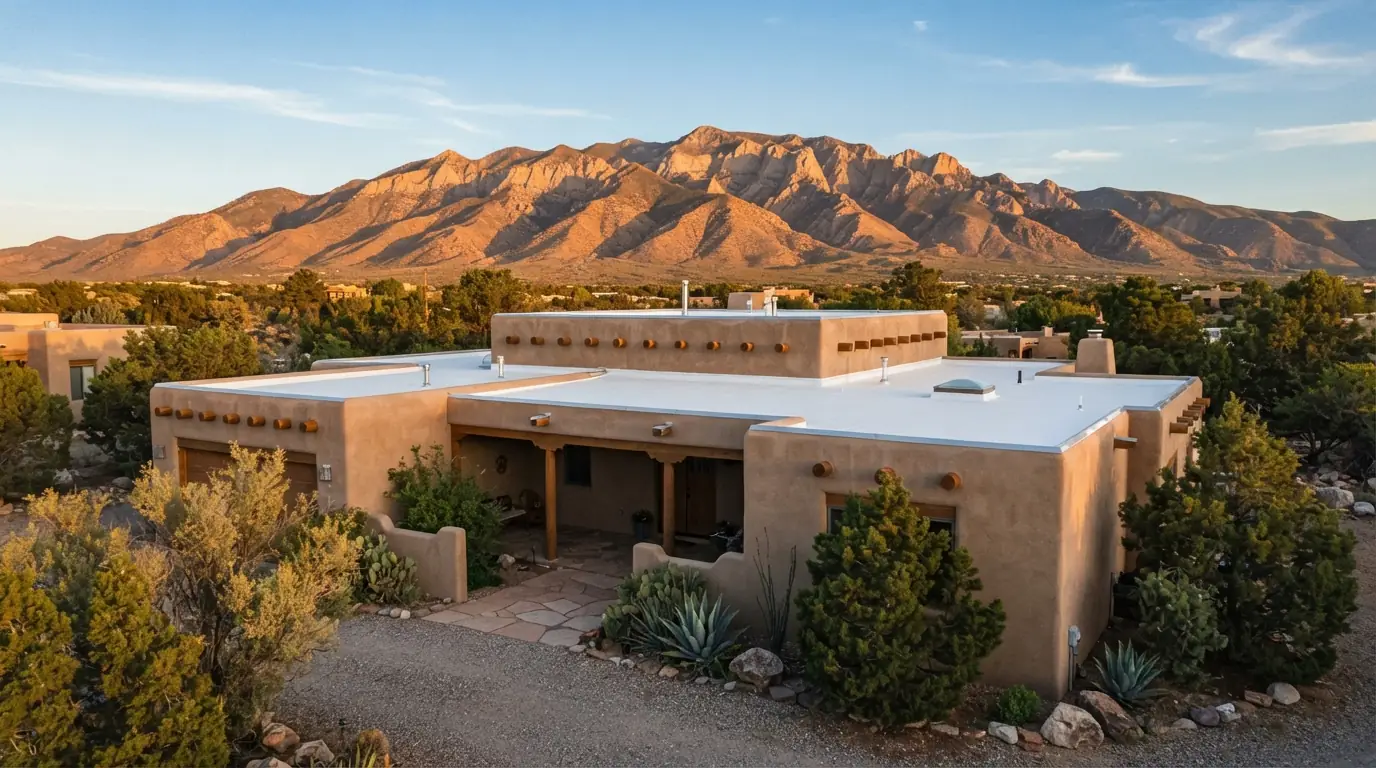
Quick answer: Most flat roof leaks in Albuquerque start at a seam, a blister, a flashing edge or a spot where water ponds, and the stain inside is often several feet from the real opening. We find the entry point, repair it with material that matches the roof system, and fix any ponding that fed it.
Warning signs
Signs your flat roof needs repair now
Especially one that grows after each storm.
Ponding on the roof two days after rain.
Blisters that feel soft or spongy underfoot.
Splits where the roof meets a parapet or curb.
Spots where the black layer shows through.
How the job runs
From the first drip to a dry ceiling
- 1
Stop the water
In a storm we tarp the area so the ceiling stops taking water.
- 2
Trace the leak
We work outward from the stain to the entry point.
- 3
Check for moisture
Probes show how far water spread into the insulation.
- 4
Open and dry
Damaged membrane and wet board are cut out.
- 5
Repair to match
Patch, weld or rebuild with the roof's own system.
- 6
Photo report
You see the repair and anything else we found.
Leak repair on flat roofs
Finding the actual hole, not just the stain
Updated September 2026
Water that gets through a flat roof travels along the deck or through the insulation before it drips, so the stain rarely marks the leak. We start above the stain and work outward, checking seams, flashing, curbs and outlets until the entry point shows itself.
A repair is the right answer when the damage is in one place and the rest of the roof is sound. When it is everywhere, replacing the flat roof costs less over time, and we say so.
The work, piece by piece
Blister and Split Repair
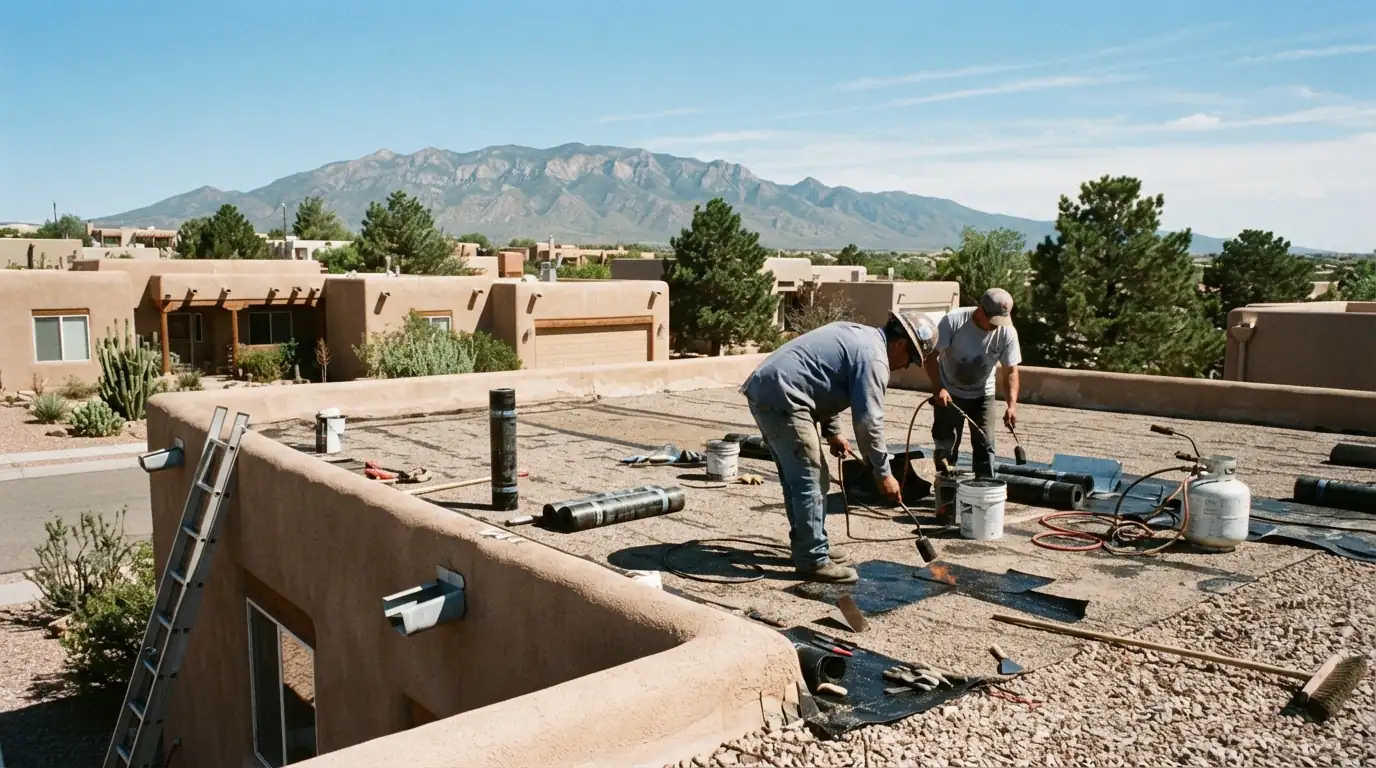
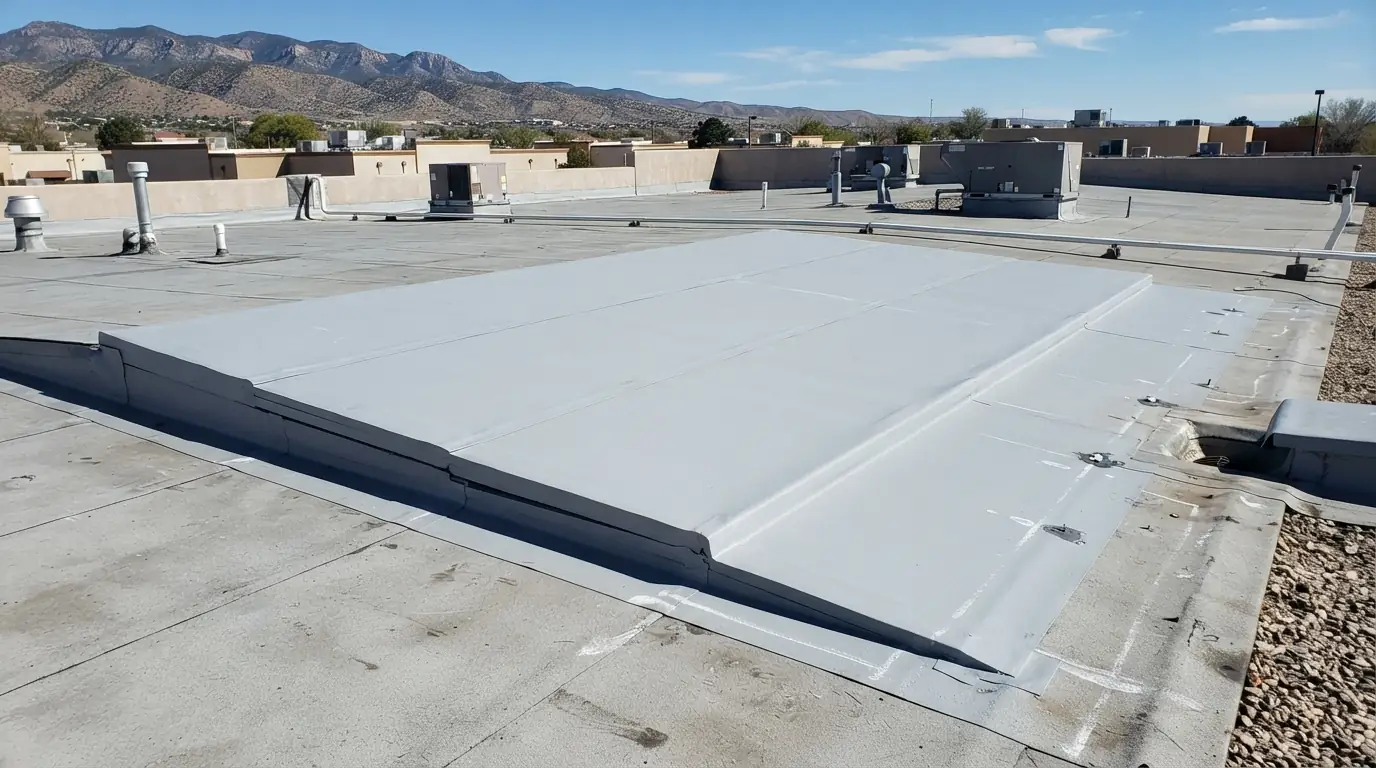
Blisters form when moisture or air trapped under the membrane expands in the heat and lifts it. Splits open where the roof flexes at a joint in the deck, or where an old membrane has shrunk and cracked. A blister is cut open, dried, re-adhered and patched. A split is cleaned back to sound material and covered with a reinforced patch of the same system. If blisters keep appearing across the roof, moisture is trapped under a wide area, and patching will not keep up with it.
Seam Resealing
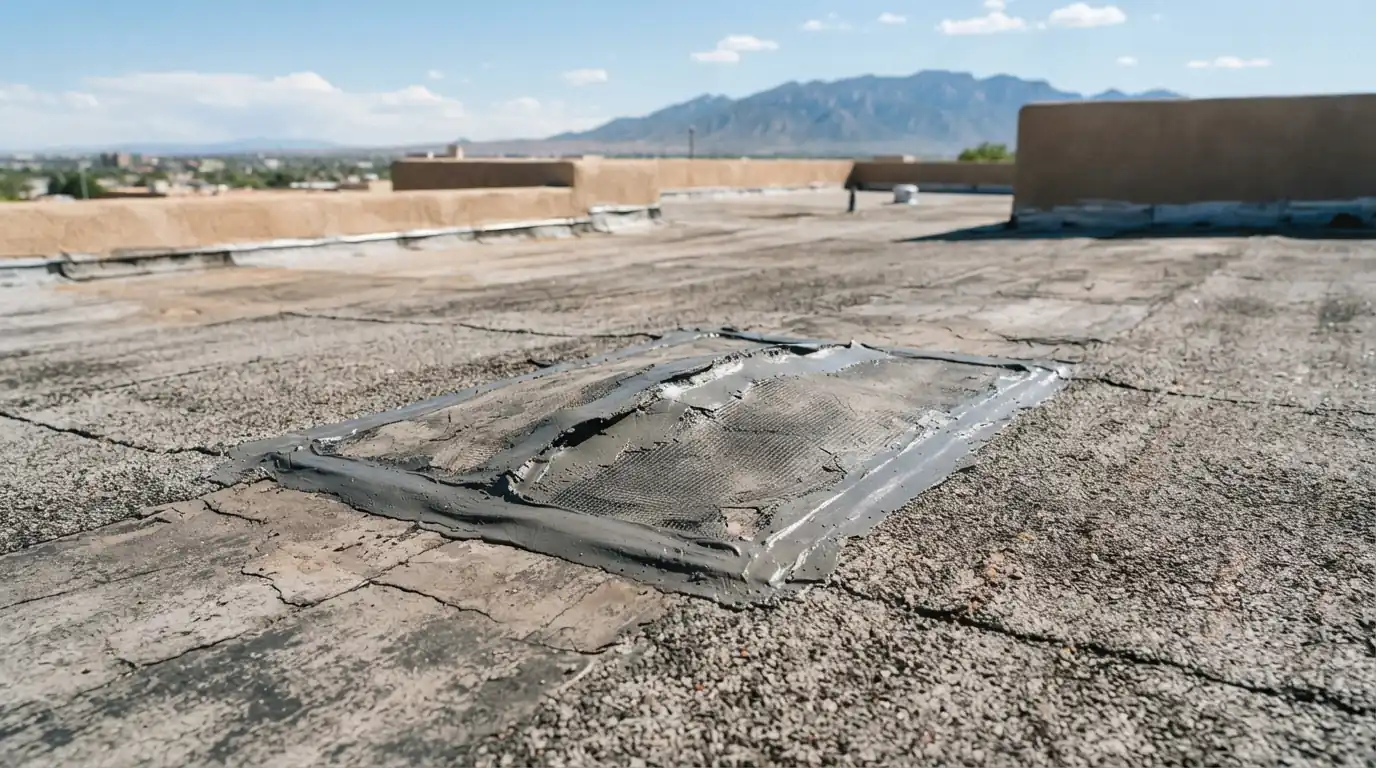
Seams are where two sheets overlap, and they are the most common leak point on any flat roof. On TPO we probe the seam, clean it, and re-weld it or cover it with a welded strip. On mod-bit we reheat and re-bond the lap or strip it in with new sheet. On older built-up roofs we clean back the area and install a reinforced patch. Sealant smeared on top of a failed seam is not a repair, because it lets go again within a season.
Ponding Fixes With Tapered Insulation
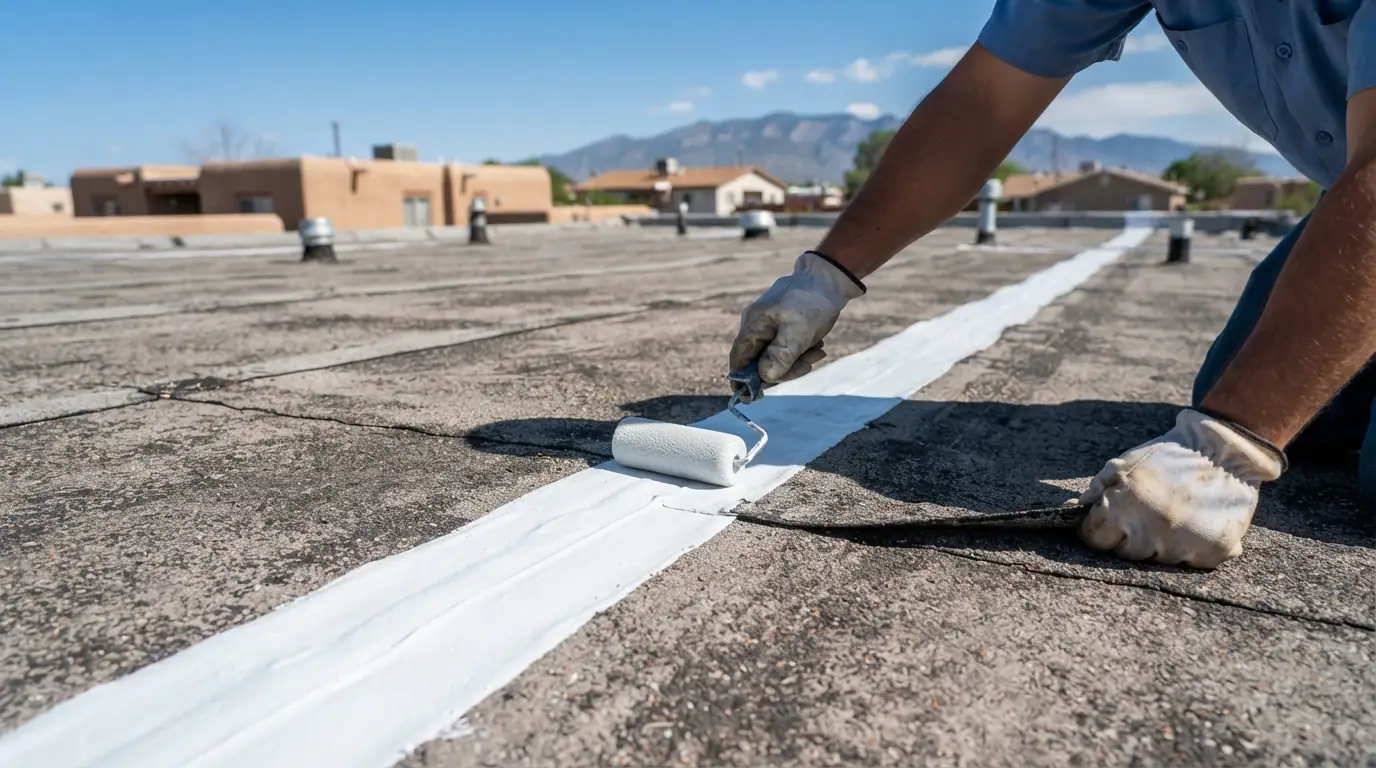
A spot that holds water for days after a storm will keep leaking, however well it is patched. Where the ponding is local, we open the area, add tapered insulation or a small cricket to push water toward the outlet, and rebuild the membrane over it. Where a drain or canale sits higher than the roof around it, we lower the outlet or build a sump. Fixing the slope is what turns a leak that returns every monsoon into one that stays fixed.
Patching Tar and Gravel Roofs
Tar and gravel roofs can be patched, but it takes more work than on a single-ply roof. We scrape the gravel back from the damaged area, cut out the failed felt, rebuild the layers with compatible hot or cold materials, and bed fresh gravel into the top. That buys time on a roof that is mostly sound. When patches start to cover a large share of the surface, the money is better spent on a new roof, and we will show you that point in photos.
Albuquerque conditions
What this job looks like on Albuquerque roofs
In this city a flat roof is the norm rather than the exception. Pueblo Revival and Territorial styles favor low-slope designs, so older adobe homes in the South Valley and North Valley sit alongside newer builds carrying the same kind of roof. Many of those older roofs are still tar and gravel, long the most common flat covering in New Mexico, and they leak in their own way: gravel migrates, the felt beneath dries out, and water finds the bare spots. That is why we repair built-up roofs with compatible materials instead of forcing a membrane patch onto them.
Water coming through a flat roof? We can tarp it tonight.
Call (505) 636-9496Cost factors
What changes the price of this job
- Roof system TPO, mod-bit, foam and tar and gravel each need their own materials.
- Size of the damage A single split costs far less than a wide area of blisters.
- Wet insulation Soaked board under the repair area has to be replaced.
- Ponding correction Tapered board or a cricket adds material and time.
- Emergency visit Tarping during a storm is its own step before the repair.
Most flat roof repairs are priced once we find the entry point, because a resealed seam and a rebuilt ponding area are very different jobs.
FAQ
Flat roof repair questions
Water runs along the deck and through insulation before dripping, so the opening can be several feet away.
We can tarp it and seal it temporarily. A lasting repair needs a dry surface, so it follows once the storm passes.
A proper repair lasts as long as the roof around it. On an old roof, the next leak often shows up somewhere else.
Patch when the damage is in one area. Replace when leaks, blisters or wet insulation are spread across the roof.
Yes. Damaged foam is cut out, refilled and recoated to match.
As a stopgap, sometimes. It rarely bonds to a dirty, weathered roof for long and can hide the real opening.