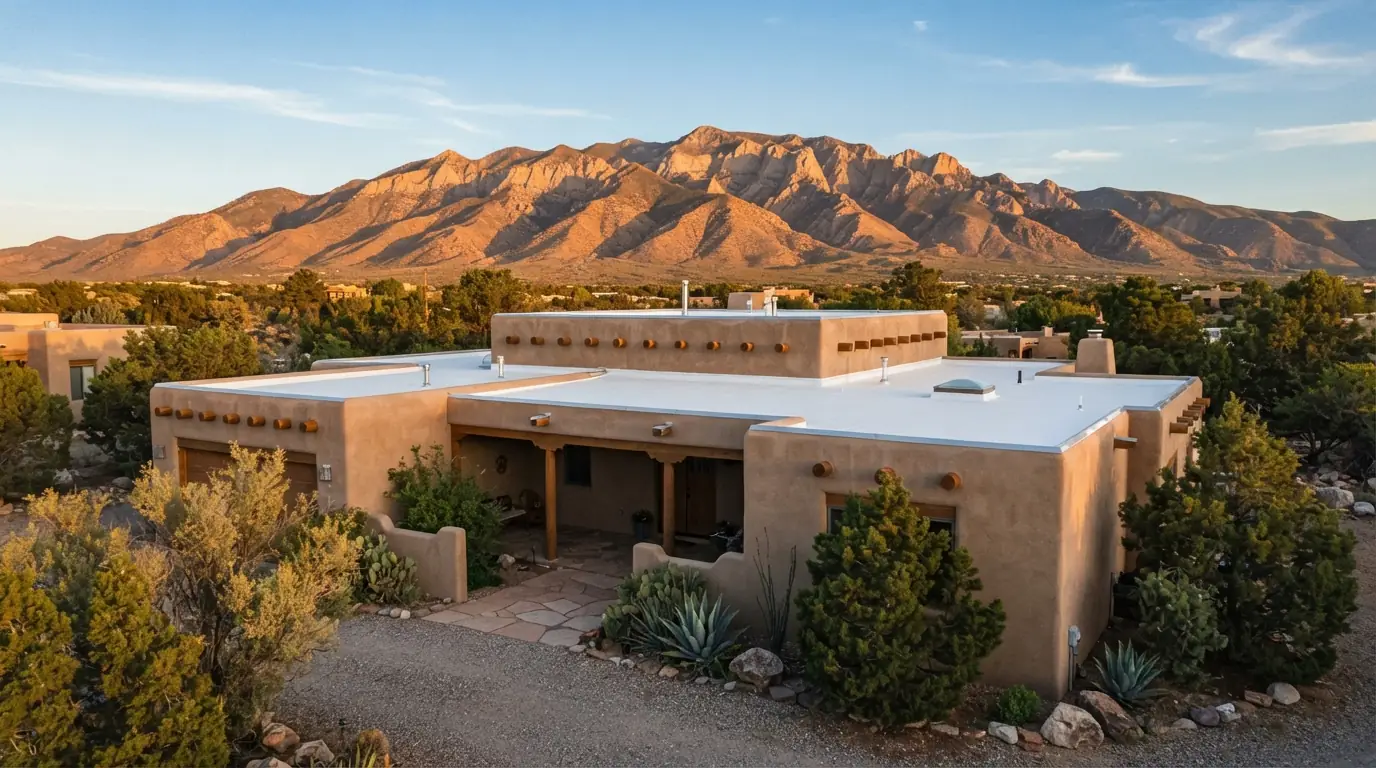
Quick answer: Removing a swamp cooler in Albuquerque properly means taking off the cooler, its curb or platform and any roof jack, then patching the deck and rebuilding the roof membrane or shingles over the opening. Done that way, the old cooler spot becomes ordinary roof. Leaving an abandoned curb or a quick sheet-metal cap usually becomes the next leak.
Cooler removal
What is left behind when a cooler comes off
Updated September 2026
A swamp cooler sits on a curb or platform, pushes air down through a duct cut into the roof, and carries water for months at a time. After years in service the curb is often soft, the deck around it stained, and the flashing tired. Removing the cooler without dealing with those is how old cooler spots turn into leaks.
Many homes keep the cooler for dry months after adding refrigerated air. If yours is staying, rebuilding the curb flashing may be the better job.
Cost factors
What changes the price of this job
- Cooler size and location Large units and hard-to-reach spots take more handling.
- Curb condition Rotted curbs and platforms mean more deck work.
- Roof system TPO, mod-bit, foam and shingle each need their own patch.
- Extra penetrations Water lines and old feeds each need closing.
- Haul-away The cooler and old curb removed from the property.
Cooler removal and patching are priced after we see the curb and the deck around it, since hidden rot is the main thing that changes the job.
What's included
What a cooler removal and roof patch includes
- Cooler lifted off and hauled away
- Curb or platform removed to the deck
- Roof jack and duct opening closed
- Water line and feed penetrations closed
- Surrounding deck checked for rot
- Soft decking replaced
- New roofing tied into the existing roof
- Flashing where the patch meets the field
- Before and after photos
The work, piece by piece
Cooler and Curb Removal
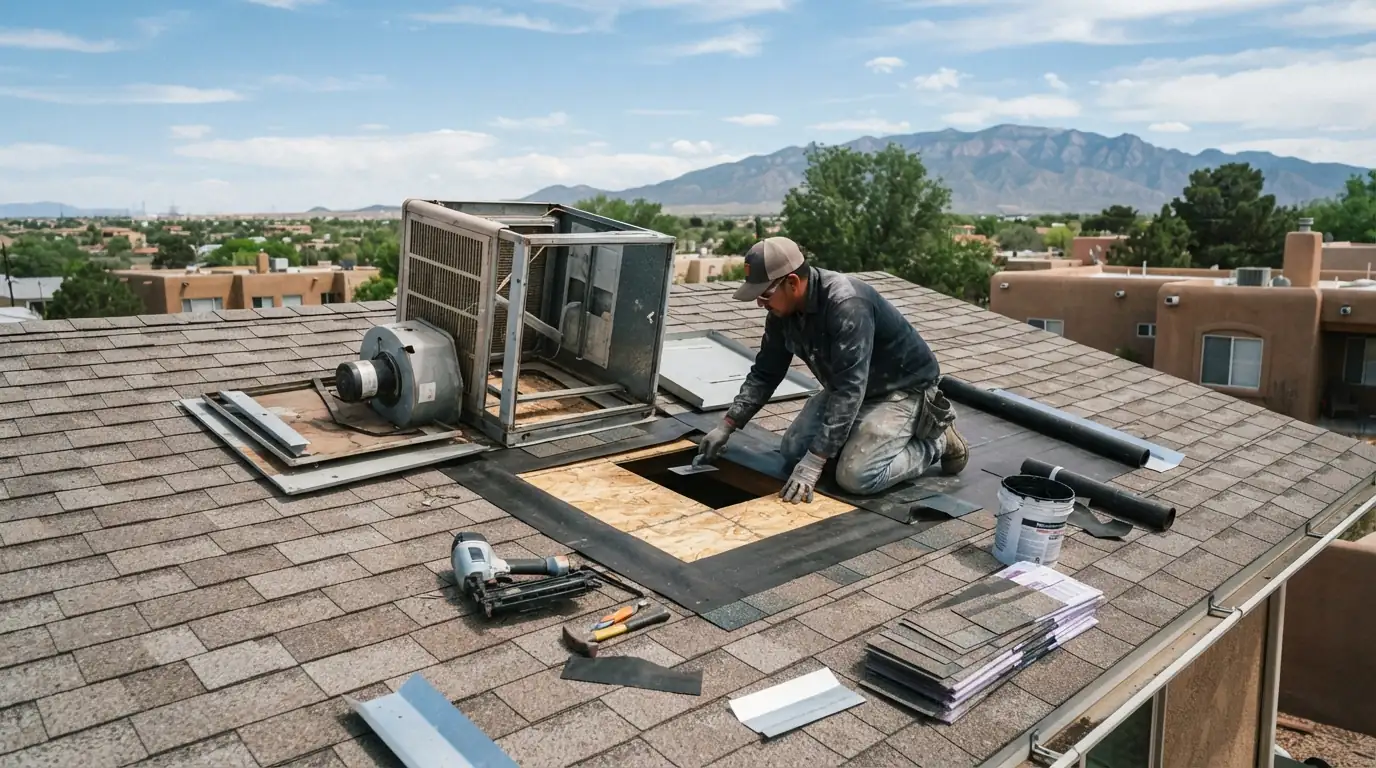
The cooler is drained, disconnected from its water line and power by whoever handles your HVAC work, and lifted off the roof. Then the part most people forget comes out too: the curb or platform it sat on, the roof jack around the duct, and any water line penetrations. Old curbs are often rotted from years of drips and overflow, and leaving one in place means leaving a box of wet wood on the roof. We remove everything down to the deck so the patch starts on sound material.
Deck and Opening Patch
With the curb gone, the opening where the duct passed through is framed and decked to match the roof around it. We check the surrounding deck for rot, since years of cooler water often soften a wider area than the curb itself, and replace any soft sections. The new decking is fastened to the framing, not just to the old deck, so it will carry foot traffic like the rest of the roof. The goal is a patch nobody could find from the attic.
Membrane or Shingle Tie-In
The roofing over the patch has to match the roof around it. On a TPO roof we weld in new membrane over the patched area; on mod-bit we strip in matching plies; on foam we fill, spray and recoat; on shingles we reweave new courses into the existing ones. Where the old roof is near the end of its life, we tell you, because this can be a sensible moment to look at the whole roof rather than patching one more spot on it.
Duct and Roof Jack Closure
Below the roof, the duct that fed the cooler still opens into the house. We close the roof side completely and coordinate with your HVAC contractor on sealing or removing the duct drop inside, so there is no cold air leak in winter and no path for dust. Any other small penetrations left from the cooler, such as water supply lines or old electrical feeds, are closed and flashed at the same time rather than left for later. The finished patch is photographed from above and below.
Albuquerque conditions
What this job looks like on Albuquerque roofs
Albuquerque is one of the last large metro areas where swamp cooling is still widespread, and more homeowners here are converting to refrigerated air every season. That means a steady supply of retired coolers sitting on roofs. The city's hard water adds to the damage: mineral scale clogs pads and water lines, lines leak or overflow, and the water ends up on the roof around the curb. By the time a cooler comes off, the curb and the deck beneath it have often taken years of wetting.
DIY or call
What owners do themselves, and where to stop
Reasonable
Shutting off and draining the cooler at the end of the season, from a safe position.
Stop here
Cutting the cooler loose, lifting it, or opening the roof. A cooler is heavy and awkward on a roof edge.
Avoid
Leaving an empty curb with a loose lid on it. It collects water and rots the deck under it.
How the job runs
How a cooler removal is done
- 1
Coordinate the disconnect
Water and power disconnected by your HVAC or electrical contractor.
- 2
Remove the cooler
Unit drained and lifted off the roof.
- 3
Strip the curb
Curb, roof jack and stray penetrations removed to the deck.
- 4
Repair the deck
Opening framed and decked; soft surrounding deck replaced.
- 5
Roof over the patch
Membrane, plies, foam or shingles tied into the existing roof.
- 6
Photo record
Before and after photos of the finished spot.
FAQ
Swamp cooler removal questions
Only if you will not use it. Many owners keep it for dry months; if it stays, its curb flashing should be checked.
It can, but caps and abandoned curbs are common leak points. A proper patch makes it ordinary roof.
Your HVAC or electrical contractor handles the disconnect; we handle the roof.
It is built from the same system, though older roofs may show a color difference.
If the roof is near the end of its life, yes; removing a cooler is a natural break point.
We close the roof side and coordinate with your HVAC contractor on the interior duct.