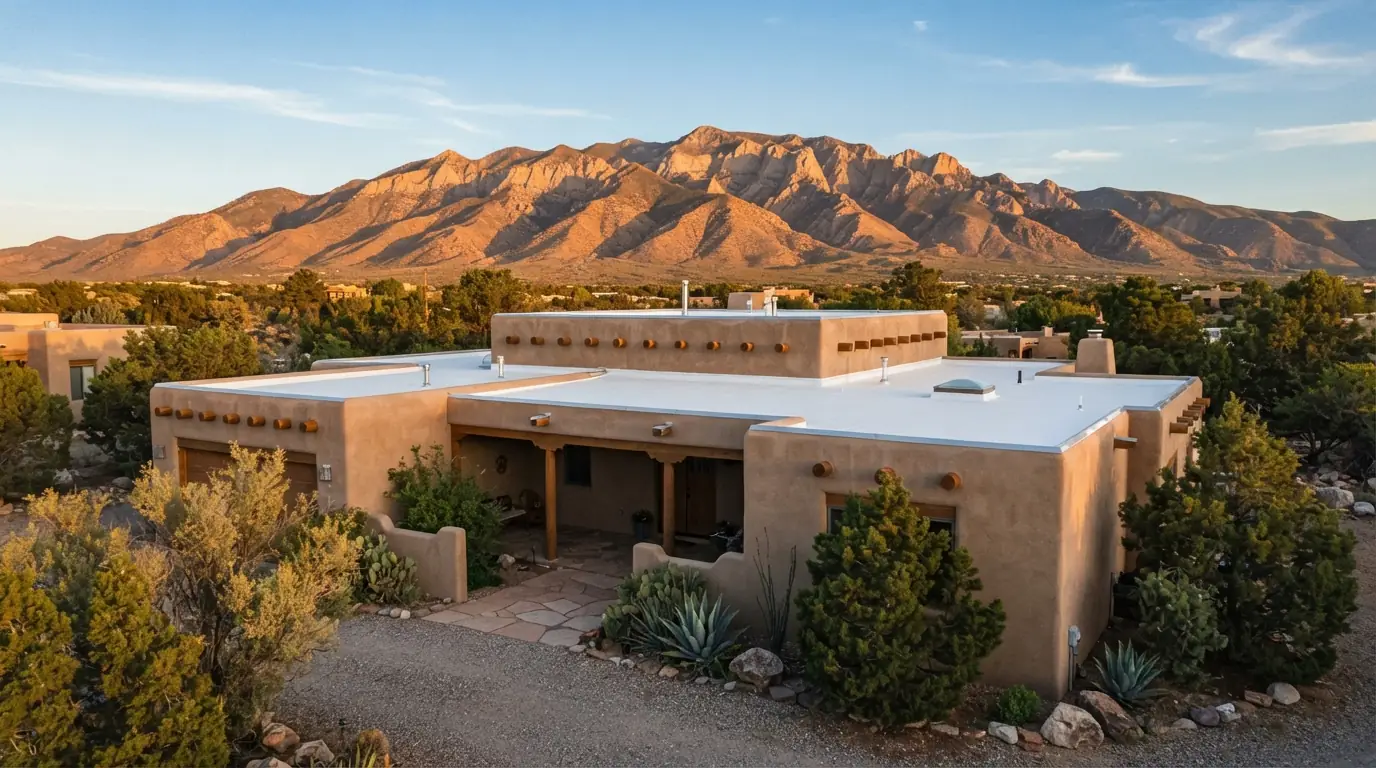
Quick answer: Installing a tile roof in Albuquerque starts with confirming the framing can carry it, because clay and concrete tile weigh several times more than asphalt shingle. Once that is settled, we lay a heavy-duty underlayment, set battens or a direct-deck system, and fasten every tile and ridge for the wind this city gets.
Tile roofing
A roof for decades, if what is under it is right
Updated September 2026
Tile's appeal here is obvious: it matches Pueblo Revival and Spanish-style homes, ignores UV, and handles heat better than most roofing. Its weak points are weight, brittleness underfoot, and the underlayment beneath it.
So a good tile install is mostly about those three things. Where the framing will not take tile, standing seam metal gives a long life at a fraction of the weight.
Cost factors
What changes the price of this job
- Clay or concrete Clay typically costs noticeably more than concrete.
- Profile S-shaped and barrel profiles take more labor and trim pieces than flat tile.
- Framing work Any reinforcement needed for the weight is priced as its own line.
- Tear-off Removing and hauling an old roof, especially old tile, adds cost.
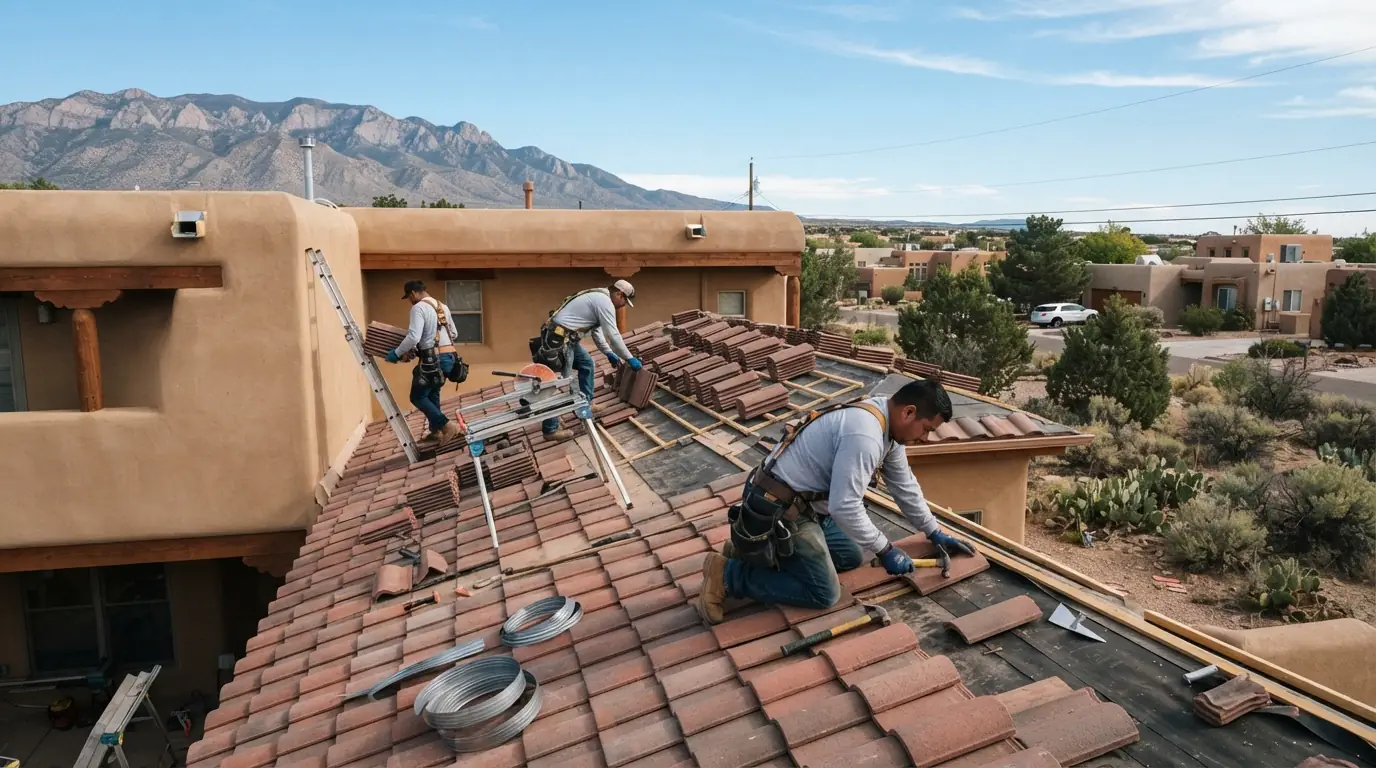
- Roof shape Hips, valleys and dormers mean more cutting and more trim tile.
We price tile from a measured roof, the chosen profile and the framing findings, and the scope shows clay and concrete side by side while you are deciding.
Your options
Clay and concrete tile side by side
| Factor | Concrete tile | Clay tile |
|---|---|---|
| Color | Often a surface finish that can fade | Fired through, holds its color |
| Weight | Heavier in most profiles | Lighter in most profiles |
| Cost | Lower | Higher |
| Look | Wide range, can imitate clay | Traditional Spanish and mission |
The work, piece by piece
Concrete Tile Roofs
Concrete tile is the more common and more affordable of the two. It comes in flat, low-profile and S-shaped profiles and a wide range of colors, including finishes made to look like clay. It is heavier than clay in most profiles, and its color is often a surface coating that can fade after years of strong sun, which matters if you want a deep terracotta. Laid over good underlayment and fastened properly, it is a solid roof that lasts for a very long time.
Clay Tile Roofs
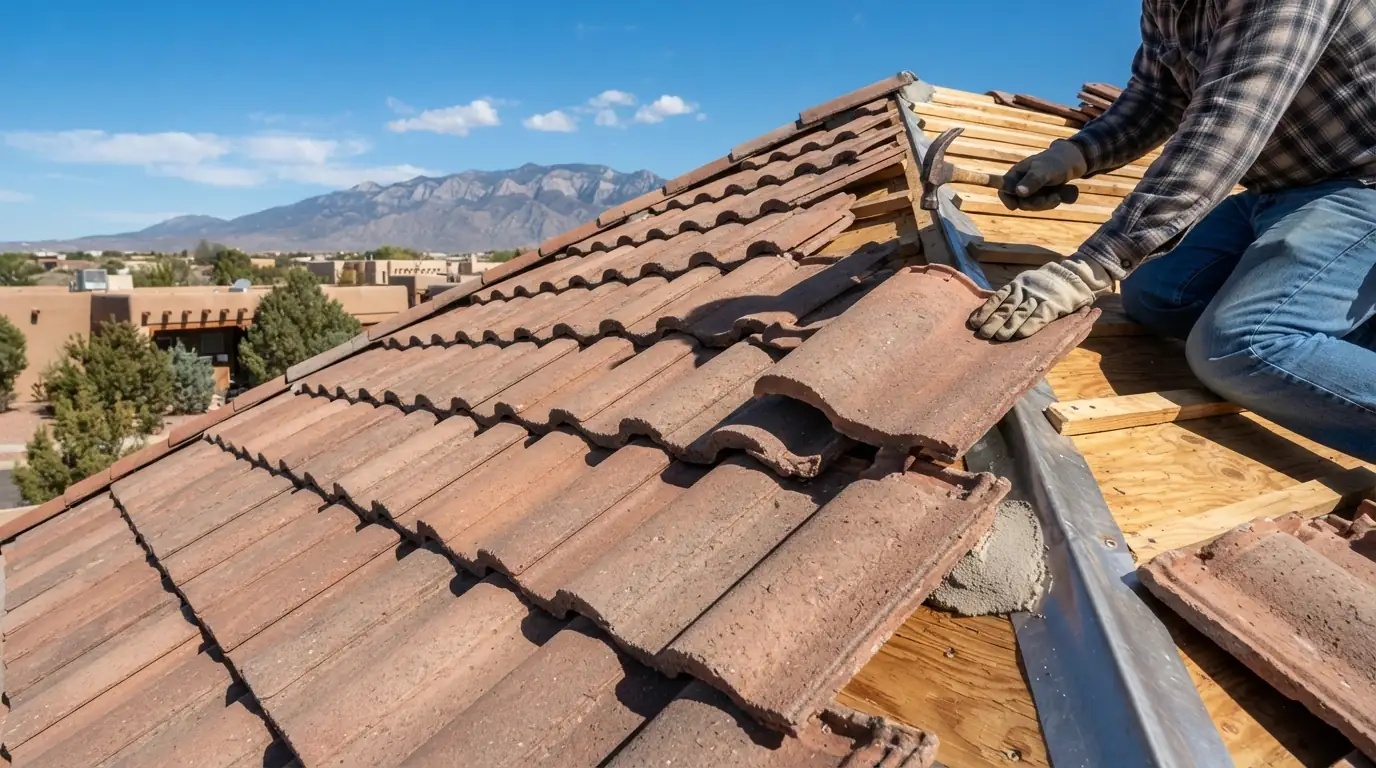
Clay tile is kiln-fired, so its color runs all the way through and does not fade. It is lighter than most concrete profiles, keeps its looks for a very long time, and suits Spanish and mission styles best. The trade-offs are cost, since clay usually costs noticeably more, and brittleness, since clay chips more easily if walked on carelessly. On a home where appearance matters for the long run, clay is often worth the premium, and we price both so you can compare.
Underlayment and Batten Systems
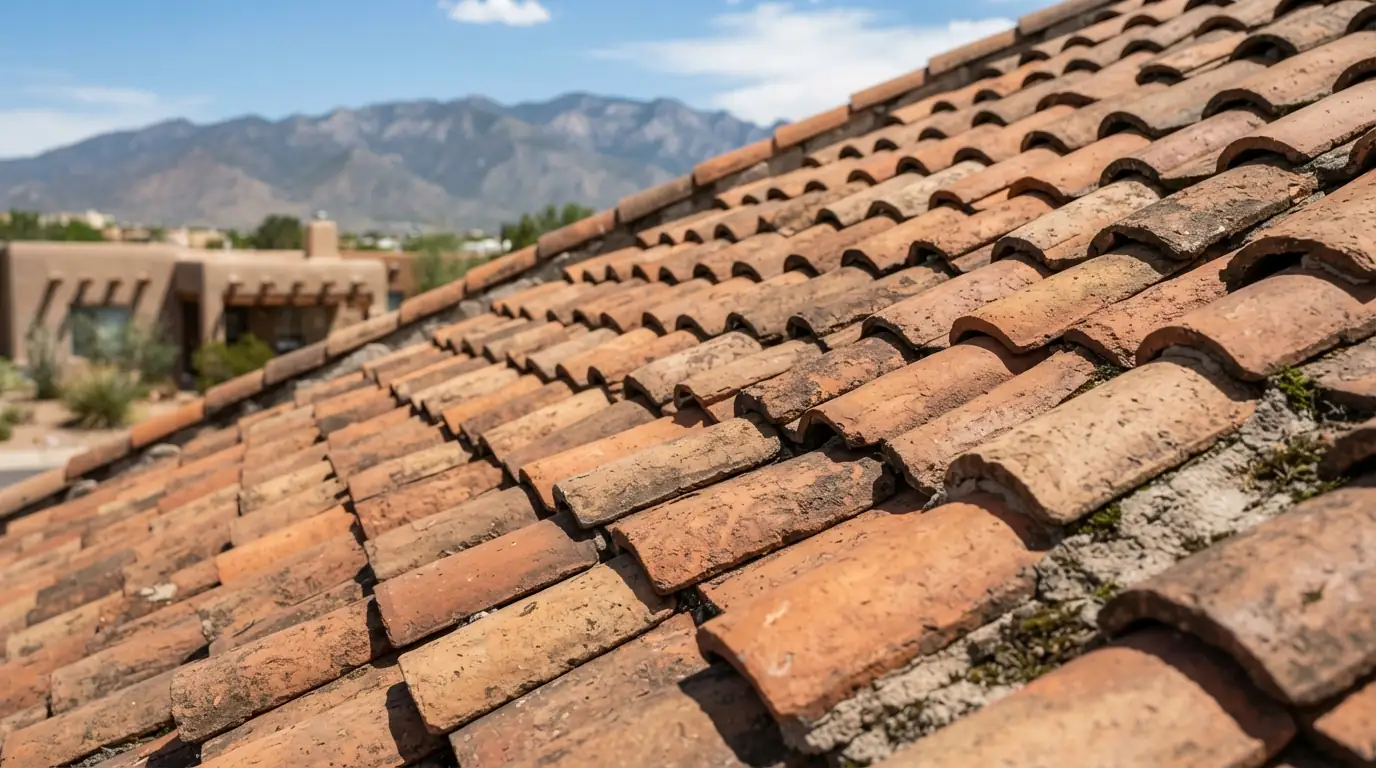
The underlayment is the real waterproof layer on a tile roof, so it is not where we save money. We use a heavy-duty synthetic or modified-bitumen underlayment rated for tile, with extra membrane in the valleys and at every wall and penetration. Tiles then hang on battens or fasten straight to the deck, depending on profile and pitch. Battens lift the tile slightly, which lets any water that gets underneath drain away instead of sitting against the underlayment for days.
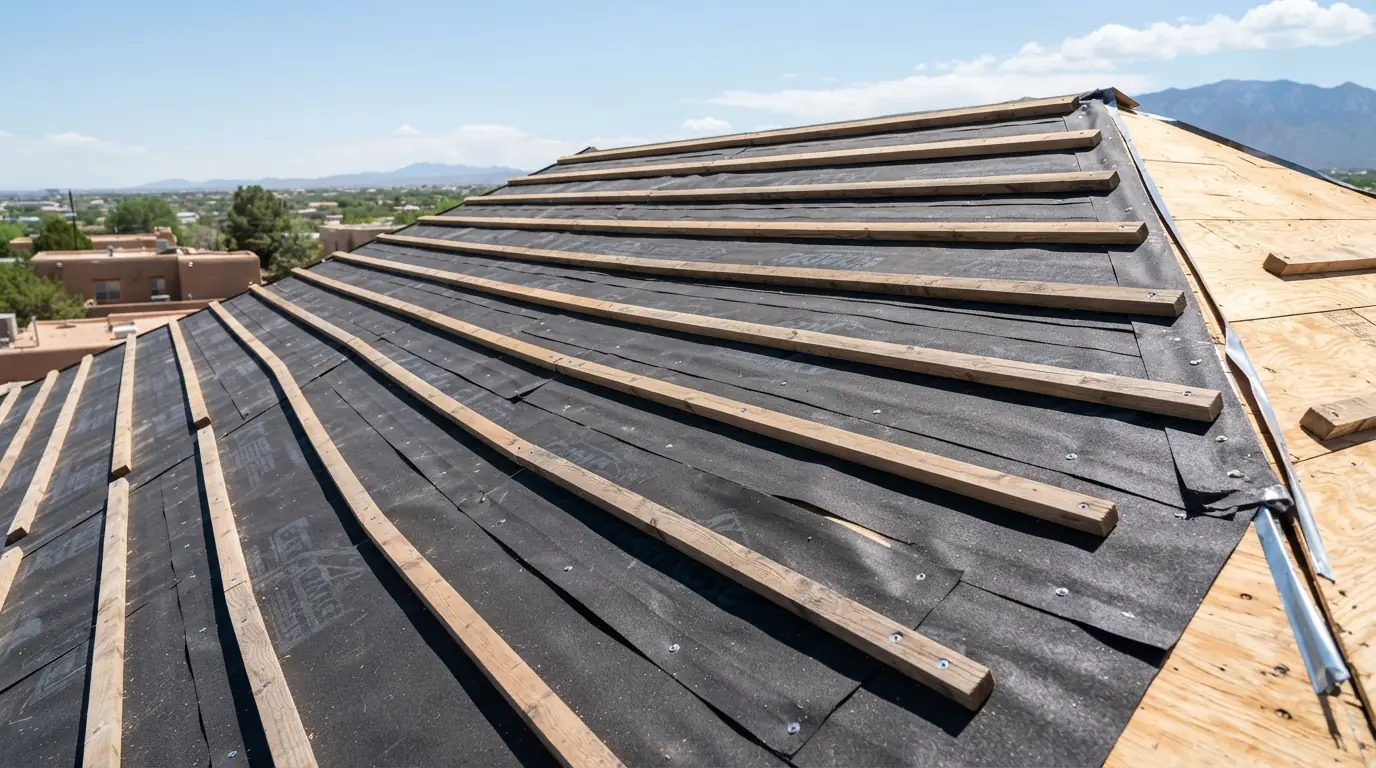
Structural Load Check Before Tile
Moving from shingle to tile adds a lot of weight to the rafters. Before quoting a conversion, we measure rafter size, spacing and span in the attic and compare them with what the tile manufacturer requires. If the framing falls short, the options are reinforcing it, choosing a lighter profile, or switching the plan to metal. When the original framing drawings are not available, that attic check is the only way to know, so it happens before any price is final.
Albuquerque conditions
What this job looks like on Albuquerque roofs
The City of Albuquerque keeps house plans on file only for homes built after August 1, 2012, so for most homes here the framing has to be checked in the attic rather than looked up. That matters because a roof framed for shingle is not automatically framed for tile. The climate is the other reason tile does well in this city: daily temperature swings of 30 to 40 degrees and intense UV break down many roofing materials early, while fired clay and concrete barely notice them.
How the job runs
How a tile roof gets built
- 1
Attic and framing check
Rafters, spacing and span measured against the tile requirements.
- 2
Choose tile and profile
Samples and a price for each option that fits the framing.
- 3
Tear off and prepare
The old roof comes off; decking is repaired and edges prepped.
- 4
Underlayment and battens
Heavy-duty underlayment and valley membrane, then battens where used.
- 5
Set and fasten tile
Field tile first, then hips and ridges, fastened against uplift.
- 6
Final walk
Every line and flashing checked, with photos of the finished roof.
FAQ
Tile roof installation questions
Yes, where the framing can carry it. Tile handles UV and heat very well and suits the local architecture; its weak points are weight and the underlayment.
It depends on the framing, which we check in the attic before quoting. If reinforcement is needed, it is priced separately, alongside lighter options.
Concrete costs less and comes in many colors. Clay holds its color, is lighter in most profiles and costs more. Both last over good underlayment.
Tile resists sun and heat far better than impact. Large hail can crack it, and cracked pieces need replacing so the underlayment stays covered.
Only carefully, on the support points. If rooftop equipment needs regular service, tell us before installation so we can plan a safe route.
Commonly Westlake Royal, Eagle Roofing and Ludowici, chosen by profile, color and availability. The scope names the product so you can look it up.