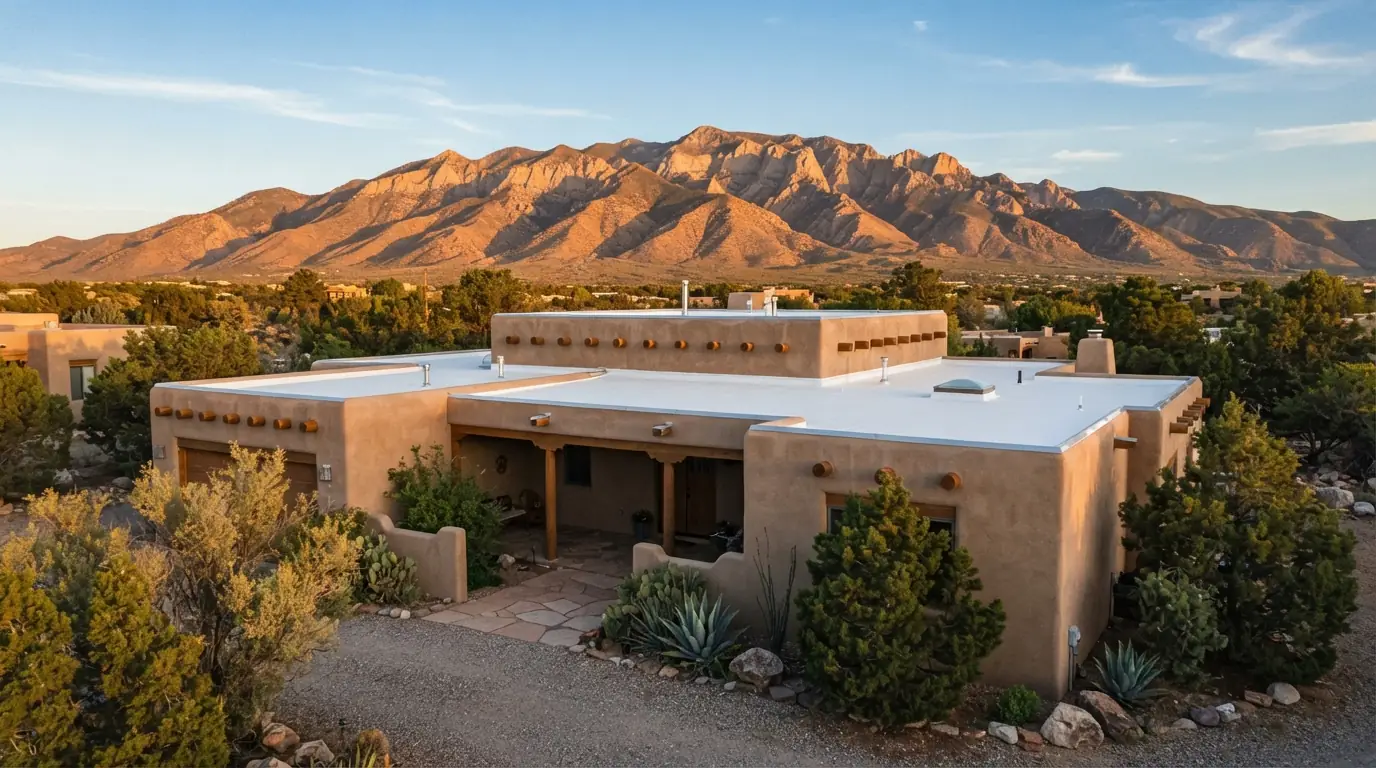
Quick answer: A roof coating in Albuquerque is a liquid membrane, usually silicone or acrylic, rolled or sprayed over a sound flat roof to seal it and reflect the sun. It only works over dry insulation, so we probe or core the roof first. Where the roof is dry, a recoat usually costs far less than replacement and adds years of service.
Liquid-applied roofing
What a coating can fix, and what it cannot
Updated September 2026
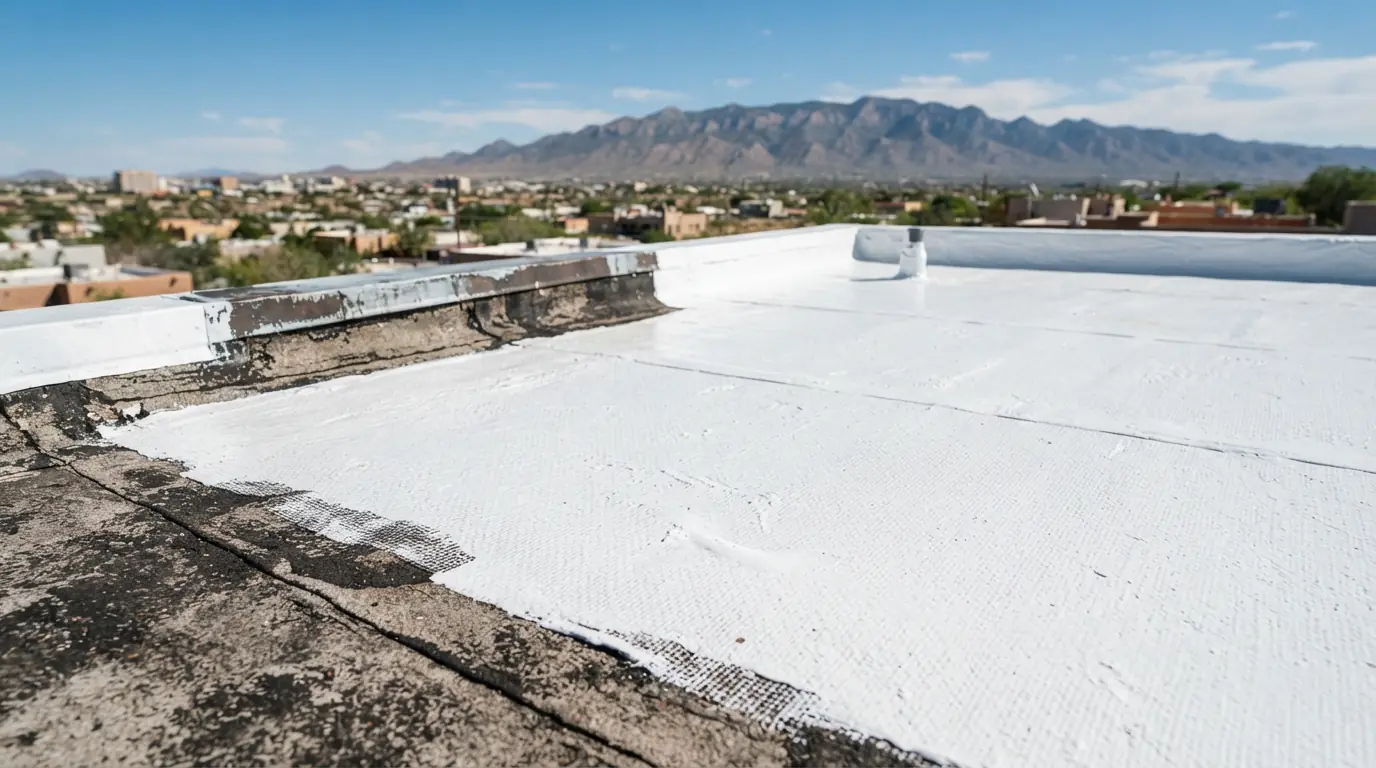
Coatings suit a roof that is aging from the top down: chalking, crazing, small splits, exposed foam or a dark surface baking in the sun. Cleaned, primed where needed and coated at the right thickness, that roof gets a new weathering surface.
They are the wrong call when water is already inside. Wet insulation under a coating keeps rotting the deck, which is why a failing roof gets a replacement instead.
Cost factors
What changes the price of this job
- Roof condition Cracks, blisters and open seams are repaired before coating.
- Moisture found Wet areas are cut out and replaced first, or the roof is not a candidate.
- Coating type Silicone usually costs more than acrylic per gallon.
- Thickness More mils means more material and a longer recoat interval.
- Details Curbs, canales and parapets need fabric-reinforced detailing.
Published Albuquerque commercial data puts silicone coating around $5 per sq ft at the midpoint. Home roofs vary widely with prep and size, so we price from the roof itself.
The work, piece by piece
Silicone Roof Coatings
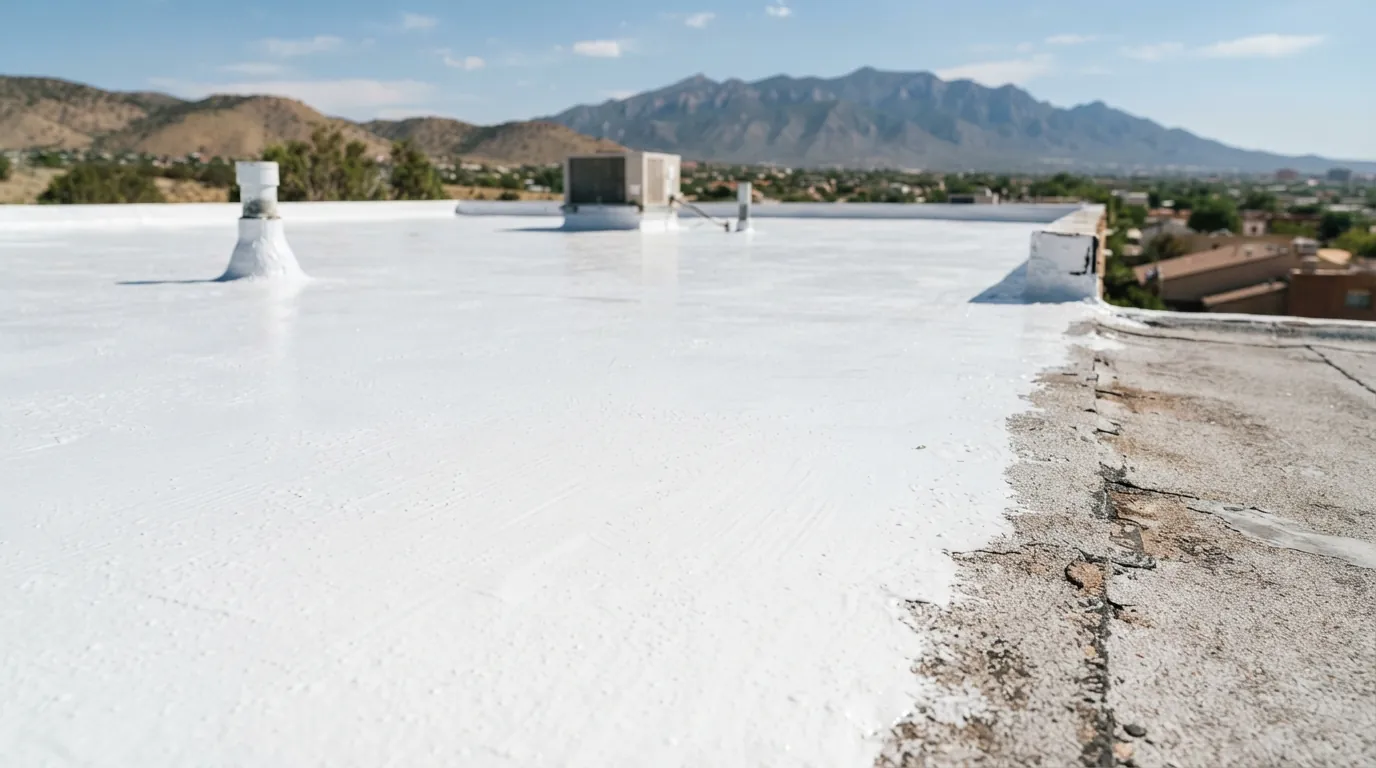
Silicone is our usual choice for Albuquerque flat roofs that hold any water at all. It resists ponding without breaking down, stays flexible through big temperature swings, and keeps its white finish well under strong UV. The trade-offs are real: it collects dust, it is slippery when wet, and once a roof is siliconed, only silicone will bond to it later. That last point shapes every future recoat on the roof, so we explain it plainly before you choose a product.
Acrylic Elastomeric Coatings
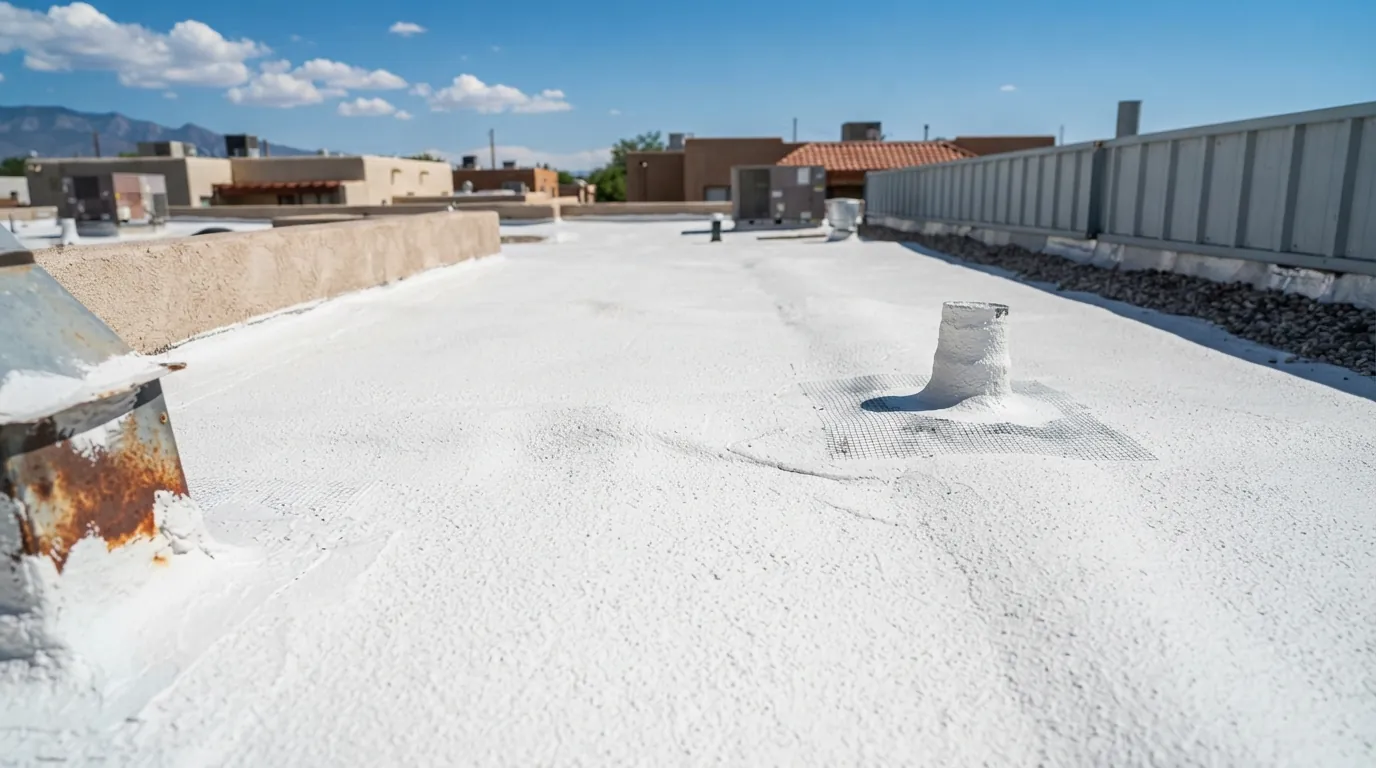
Acrylic coatings are water-based, easy to apply, bright white and usually less expensive than silicone. They perform well on roofs that drain properly, and they are a common topcoat over spray foam. Their weakness is standing water: acrylic softens and wears where water sits for days, so on a roof with ponding areas we either fix the slope first or use silicone in those spots. Acrylic can be recoated with more acrylic years later, which keeps future maintenance simple and affordable.
Coating Over TPO or Modified Bitumen
A TPO or mod-bit roof that is weathered but dry can take a coating, but each needs its own prep. Weathered TPO needs a thorough clean and usually a primer, or the coating peels off in sheets. Granulated mod-bit needs loose granules removed and open seams repaired before anything goes on. We test adhesion on a small patch before coating the whole roof, because a coating that does not bond properly is worse than no coating at all on that roof.
Recoat Schedule and Prep Work
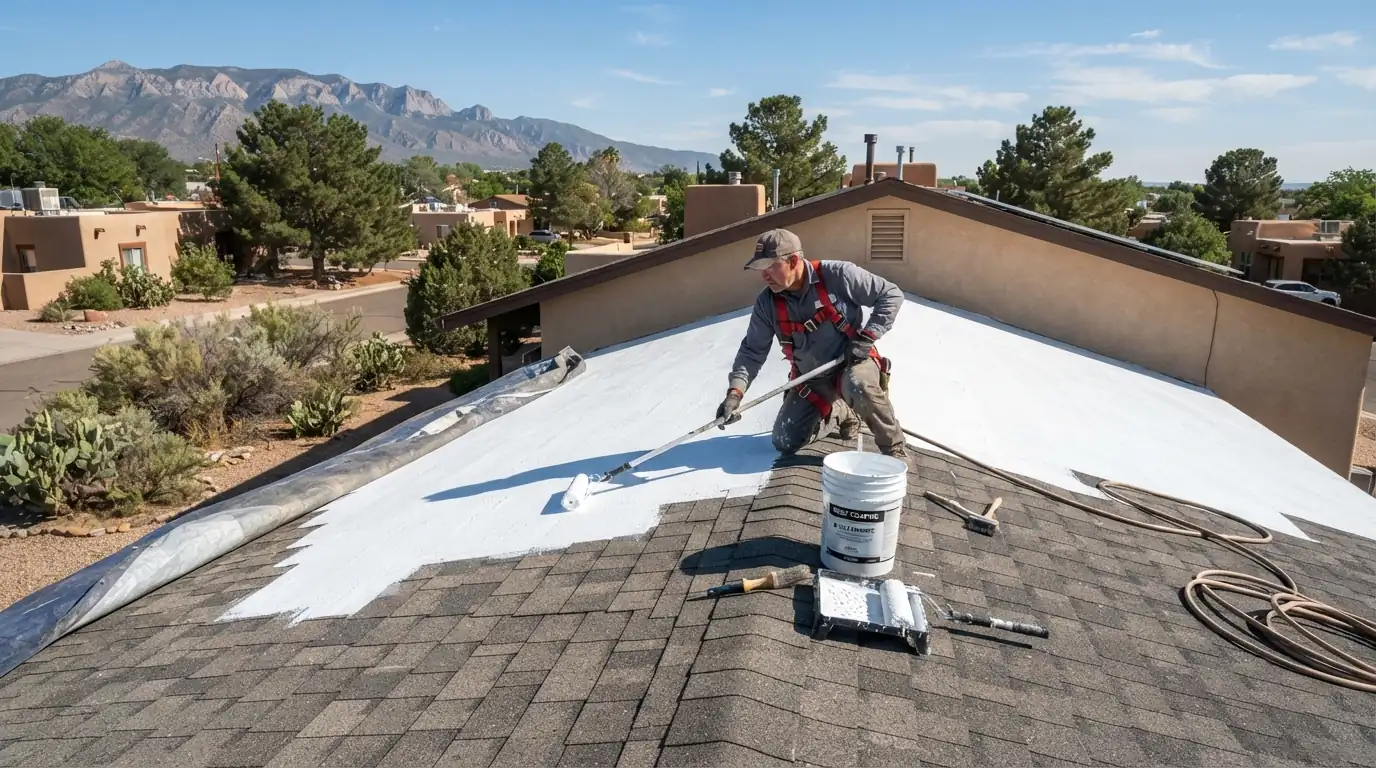
Every coating wears thinner each summer, and a recoat before it fails costs much less than a repair after. How long that takes depends on the product, the thickness applied and the roof's exposure, so the scope states the thickness we apply and when to look again. Prep is most of the job: pressure washing, repairing cracks and seams, reinforcing flashing and curbs with fabric, and letting everything dry fully before the first coat goes on, even if that means waiting a day.
Albuquerque conditions
What this job looks like on Albuquerque roofs
Local cost data lists flat and low-slope foam roofs as common in Albuquerque and names UV as the main thing wearing them out, which is exactly the damage a coating repairs. Heat is the other half. An unshaded flat roof here can reach 180 degrees on a summer afternoon, and a dark or chalked surface keeps the rooms below hotter than they need to be. A fresh white coat brings that surface temperature down sharply, so we aim to finish coating work in spring, before the hottest months and the monsoon.
DIY or call
Store-bought coating or a professional recoat
Where DIY goes wrong
Coating over dirt, damp spots or open seams looks fine for a season, then peels and traps water.
Where DIY can work
A small, sound, clean section on a low one-story roof with safe access, using the coating type already on it.
Why thickness matters
Coatings are sold by coverage rate. Applied too thin, the roof wears through years early.
How the job runs
How we coat a flat roof
- 1
Moisture check
Probes or core cuts confirm the insulation is dry.
- 2
Wash
The roof is pressure washed and left to dry completely.
- 3
Repair
Cracks, seams and blisters fixed; wet spots replaced.
- 4
Reinforce details
Fabric and base coat on flashing, curbs and seams.
- 5
Apply the coating
Rolled or sprayed to the specified thickness, measured as we go.
- 6
Final check
Thickness spot-checked, photos taken, recoat interval written down.
FAQ
Roof coating questions
If the leak is a crack, seam or open flashing on an otherwise dry roof, yes, once that spot is repaired. It will not fix wet insulation.
Silicone for roofs that hold water anywhere; acrylic for roofs that drain well or as a foam topcoat. Only silicone bonds to silicone later.
Rarely well. The gravel and uneven surface make a poor base, and most tar and gravel roofs at that stage are better replaced.
The surface must be dry to coat and the coating needs time to cure, so we schedule around the forecast, especially in monsoon season.
It lowers the roof surface temperature a great deal, which cuts the heat reaching rooms under a flat roof. How much you feel depends on insulation.
Products from GACO, Henry and GAF are common on our jobs, chosen by roof type. The scope names the product and thickness.