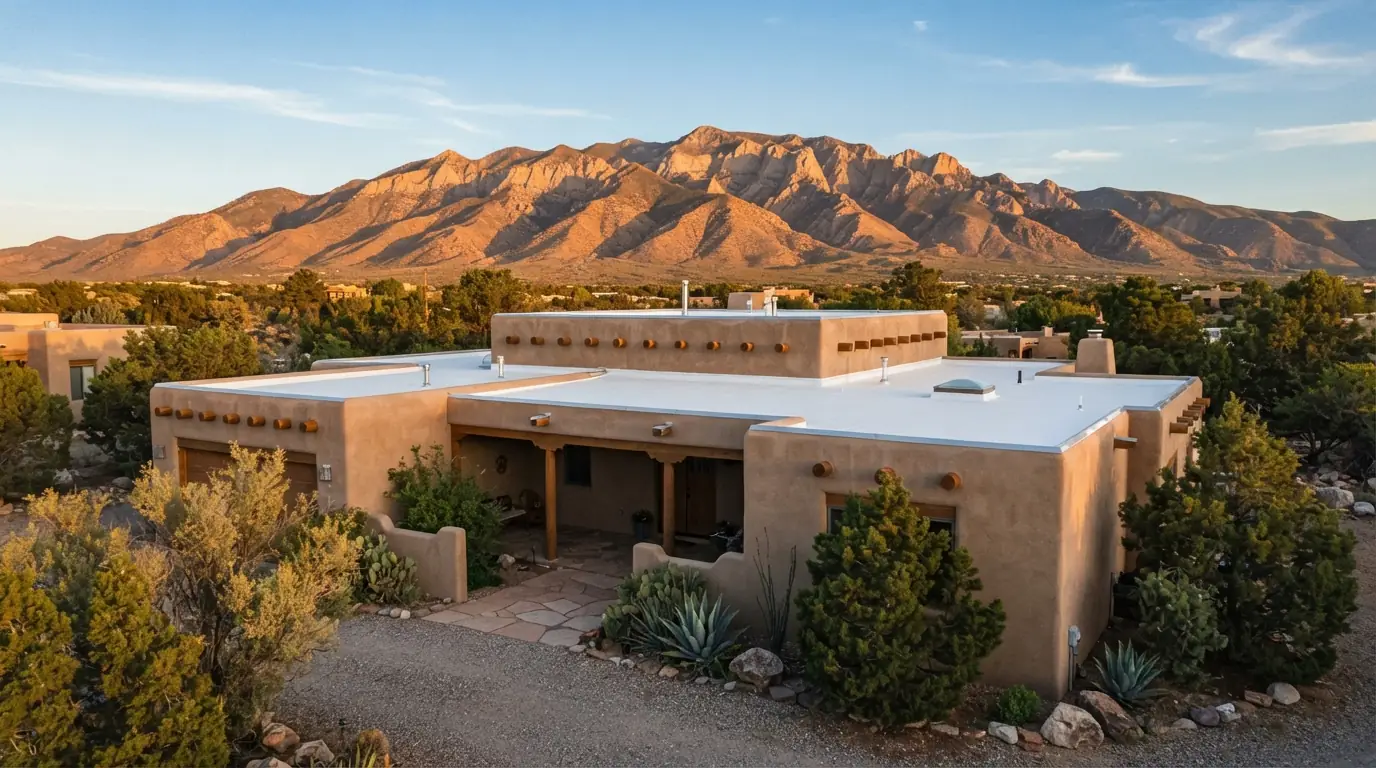
Quick answer: A roof inspection in Albuquerque covers the roof surface, flashing, penetrations, outlets, parapets and the attic where accessible, and ends with a written report of photos, findings and recommended repairs. Book one before monsoon season, before buying or selling a home, or after any hail or high-wind storm.
Roof inspections
An inspection you can actually use
Updated September 2026
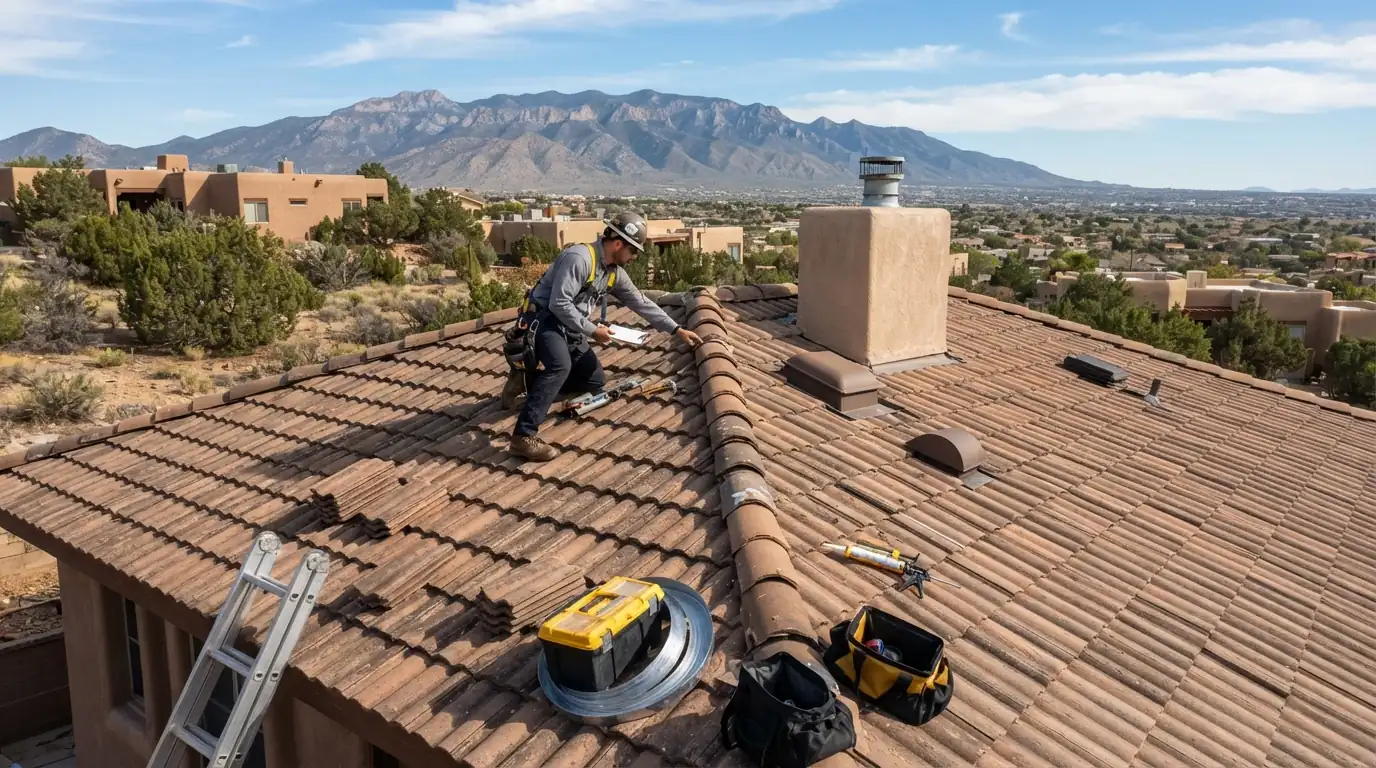
A quick look from the ladder tells you little. We walk every roof surface we can safely access, check each penetration and outlet, look at the attic from below where possible, and write up what we found with a photo of each item.
Inspection is different from upkeep. If you want hands-on work done at the same time, roof maintenance includes clearing and resealing.
What's included
What every roof inspection covers
- Roof covering condition on every slope
- Flashing at walls, chimneys and skylights
- Pipe boots, vents and curbs
- Canales, scuppers, drains and gutters
- Parapet caps and coping
- Signs of ponding on flat sections
- Attic decking and stains where accessible
- Ventilation at eaves and ridge
- Estimate of remaining service life
The work, piece by piece
Pre-Monsoon Inspection
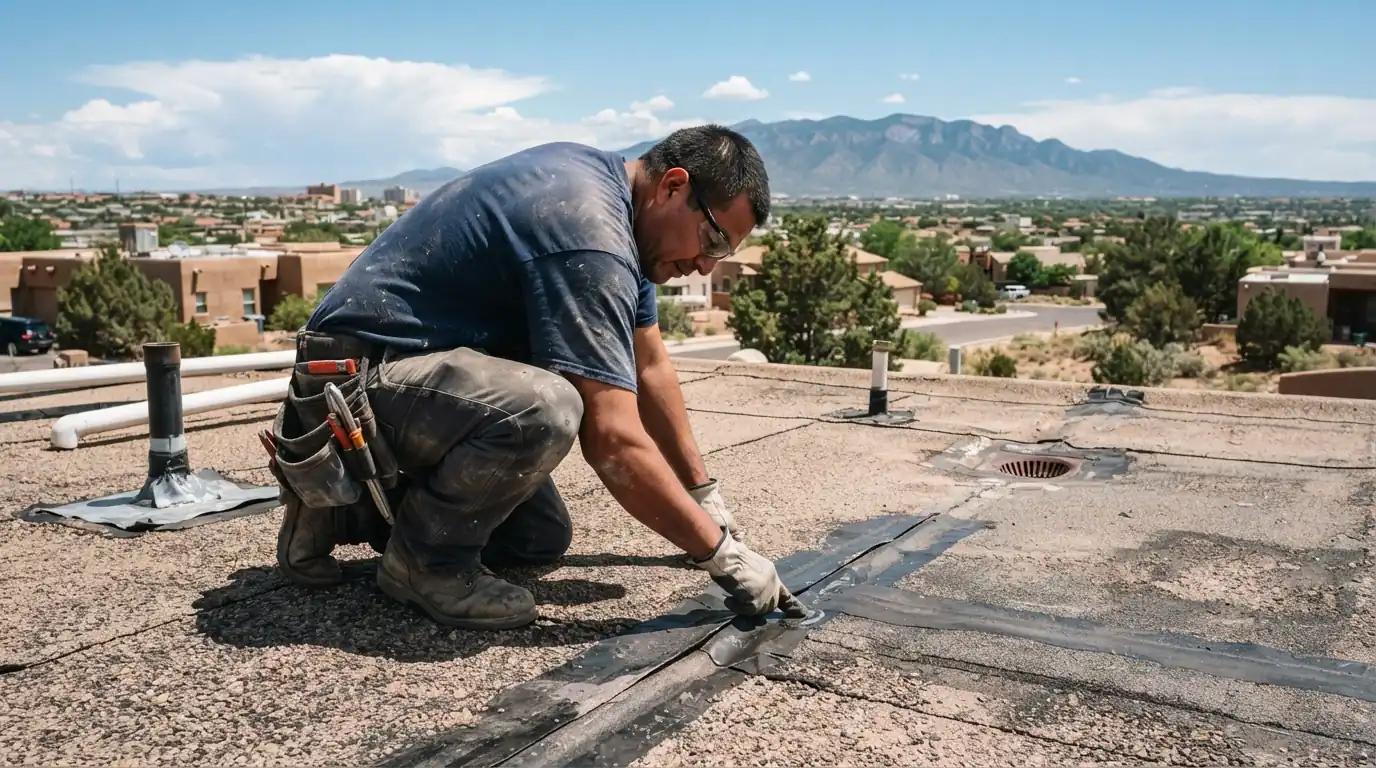
A spring inspection finds the problems that the first July storm would otherwise find for you. We check the outlets that will have to carry monsoon bursts, the seams and flashing that dried out over the winter, and the coating on flat roofs that thinned last summer. Anything urgent is flagged at the top of the report with a recommendation, and smaller items are listed so you can plan them. Booking early in spring leaves time to fix what we find before the season starts.
Real Estate and Pre-Purchase Inspection
A general home inspector looks at the roof among many other things; a roofing inspection looks only at the roof, in more depth. For buyers, we document the roof type, apparent age, visible condition, active or past leaks, and the likely cost direction of any repairs, so you can negotiate with facts. For sellers, an inspection before listing lets you fix problems on your own schedule instead of at the last minute. Either way, the report is written to be shared with agents and lenders.
Post-Hail Inspection
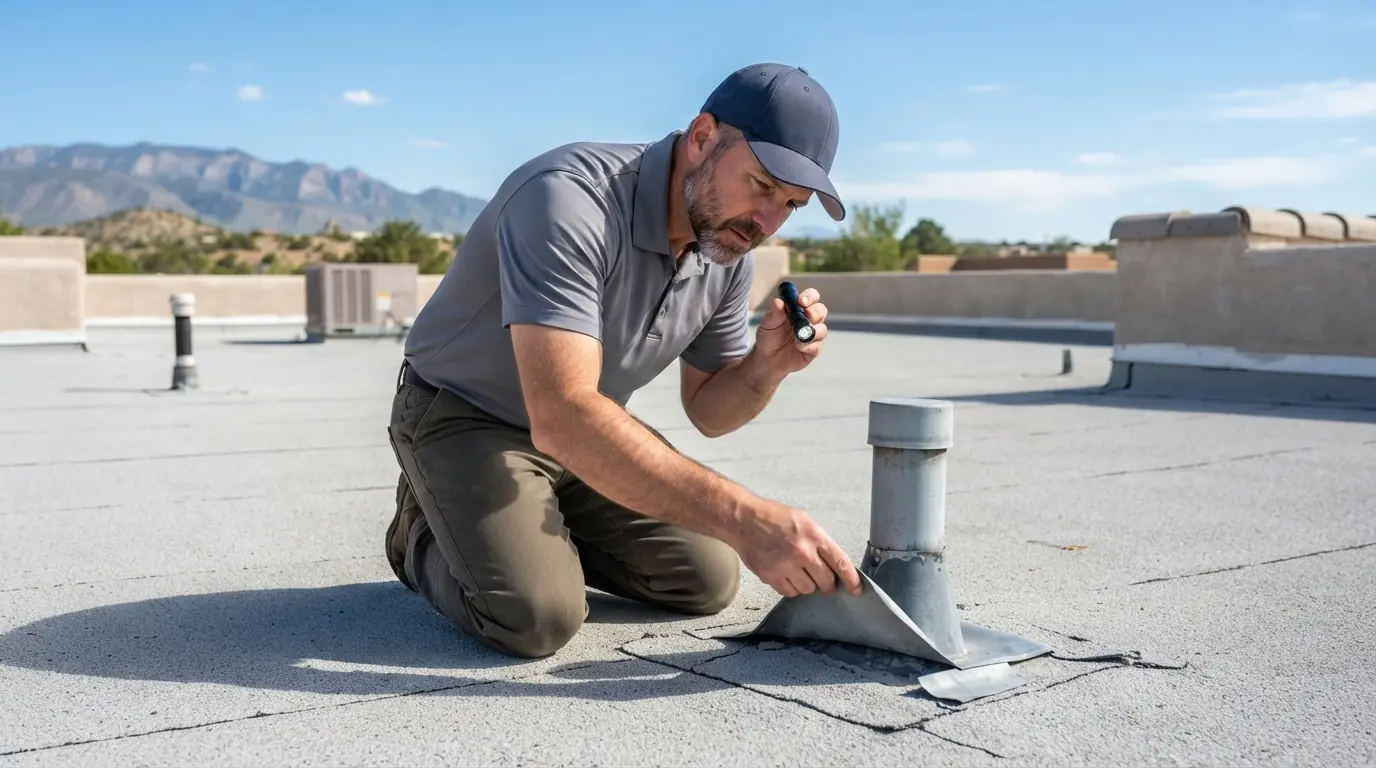
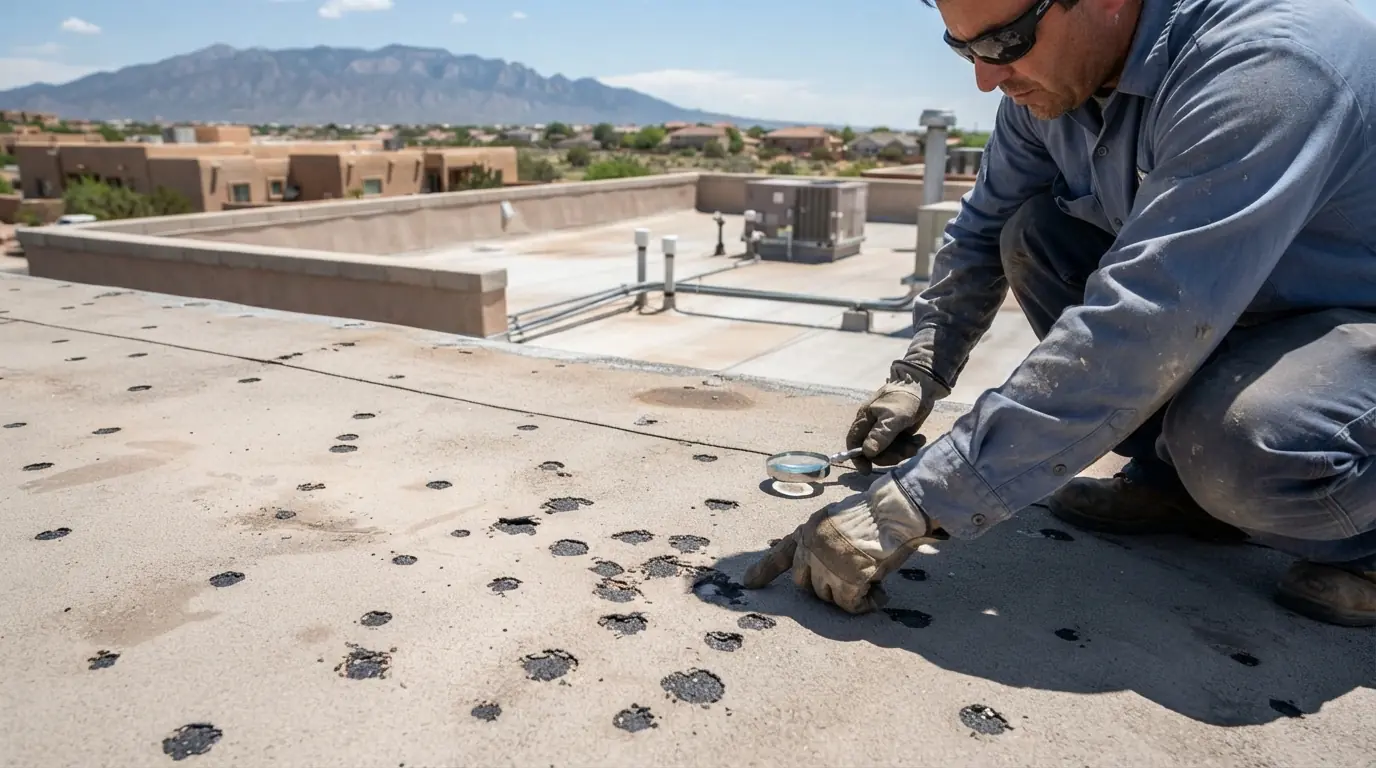
After a hail storm, damage can be hard to see from the ground, and some of it only turns into leaks months later. We check shingles for bruises and fractures, tile for cracks, flat roof coatings and membranes for punctures, and soft metals for dents that show hail size. The report separates real storm damage from normal wear, which matters if you plan to file an insurance claim. If the roof came through the storm fine, the report says so plainly.
The Written Report
Every inspection ends with the same kind of report: an overview of the roof type and condition, then each finding with a photo, its location on the roof, what it means, and what we recommend. Items are ranked from urgent to monitor, and the report includes our honest view of the roof's remaining life. It is written in plain language rather than jargon, so it is useful to a homeowner, a buyer, an agent or an insurer without us in the room to explain it.
Albuquerque conditions
What this job looks like on Albuquerque roofs
Inspection requests come from both ends of the I-25 corridor, and we cover them from two offices: the Academy Parkway service office for the Albuquerque metro, and the head office in southern Santa Fe County for homes nearer Santa Fe. For pre-purchase inspections inside Albuquerque, one useful question is whether past re-roofs were permitted, since the City lists re-roofing among the projects that require a building permit. An unpermitted re-roof is not always a bad roof, but it is worth knowing about before closing.
How the job runs
How an inspection visit runs
- 1
Book the visit
We ask why you need it, so the report answers the right question.
- 2
Exterior walk
Every accessible slope, outlet, penetration and edge checked.
- 3
Attic check
Decking, stains and ventilation viewed from below where accessible.
- 4
Photograph findings
Each item documented with its location.
- 5
Write the report
Findings ranked from urgent to monitor, in plain language.
- 6
Walk you through it
We answer questions on the report by phone.
Cost factors
What changes the price of this job
- Roof size Larger and more complex roofs take longer to walk.
- Access Steep, tile and two-story roofs need extra care and time.
- Attic access Checking from below adds time but finds more.
- Report type Pre-purchase and insurance reports are more detailed.
- Timing Rush inspections for a closing date may affect scheduling.
Inspections are priced by roof size, access and report type; a pre-purchase report with a remaining-life estimate takes longer than a spring check.
Your options
Which inspection fits your situation
| Inspection | When to book | Focus | Report goes to |
|---|---|---|---|
| Pre-monsoon | Spring | Outlets, seams, coatings | You |
| Pre-purchase | Before closing | Condition, age, repair cost direction | You, your agent, lender |
| Post-hail | Within days of a storm | Impact damage versus normal wear | You and your adjuster |
| Commercial | Twice a year | Drains, curbs, remaining life | Owner or manager |
FAQ
Roof inspection questions
Once a year in spring for most homes, plus after major hail or wind, and before buying or selling.
Yes. A roofing inspection covers only the roof, in more depth, and is written by a roofer.
Yes. We walk tile on its support points and inspect some areas from ladders or edges.
It documents storm damage separately from normal wear, which is what adjusters look for.
Yes. Commercial reports include drains, curbs and a remaining-life estimate.
Only if we need attic access. The report is sent to you afterward.