Quick answer: Fascia and soffit damage in Albuquerque usually starts where water runs off the roof edge without drip edge, or behind gutters that overflow in monsoon storms. The wood rots, gutters pull loose, and gaps open for birds and pests. The repair is to replace rotted boards, rebuild soffits and install drip edge so water clears the wood.
Roof edges
Where roof water meets wood
Updated September 2026
Fascia is the board along the roof edge that carries the gutter; the soffit closes the underside of the overhang. Both are wood on many homes, and both suffer when water is allowed to run onto them instead of past them.
If the gutters themselves are the problem, see gutter installation and repair; for water getting in at the roof, roof leak repair.
Cost factors
What changes the price of this job
- Length of rot Priced by the run of fascia or soffit replaced.
- Rafter damage Rotted rafter tails add framing work.
- Material Wood, aluminum and vinyl trim differ in cost.
- Gutter work Removing and rehanging gutters to reach the fascia.
- Paint Priming and painting new wood to match.
Edge repairs are priced by the length of fascia, soffit and trim involved and by any rafter damage found once the rotted boards come off.
The work, piece by piece
Fascia Board Replacement
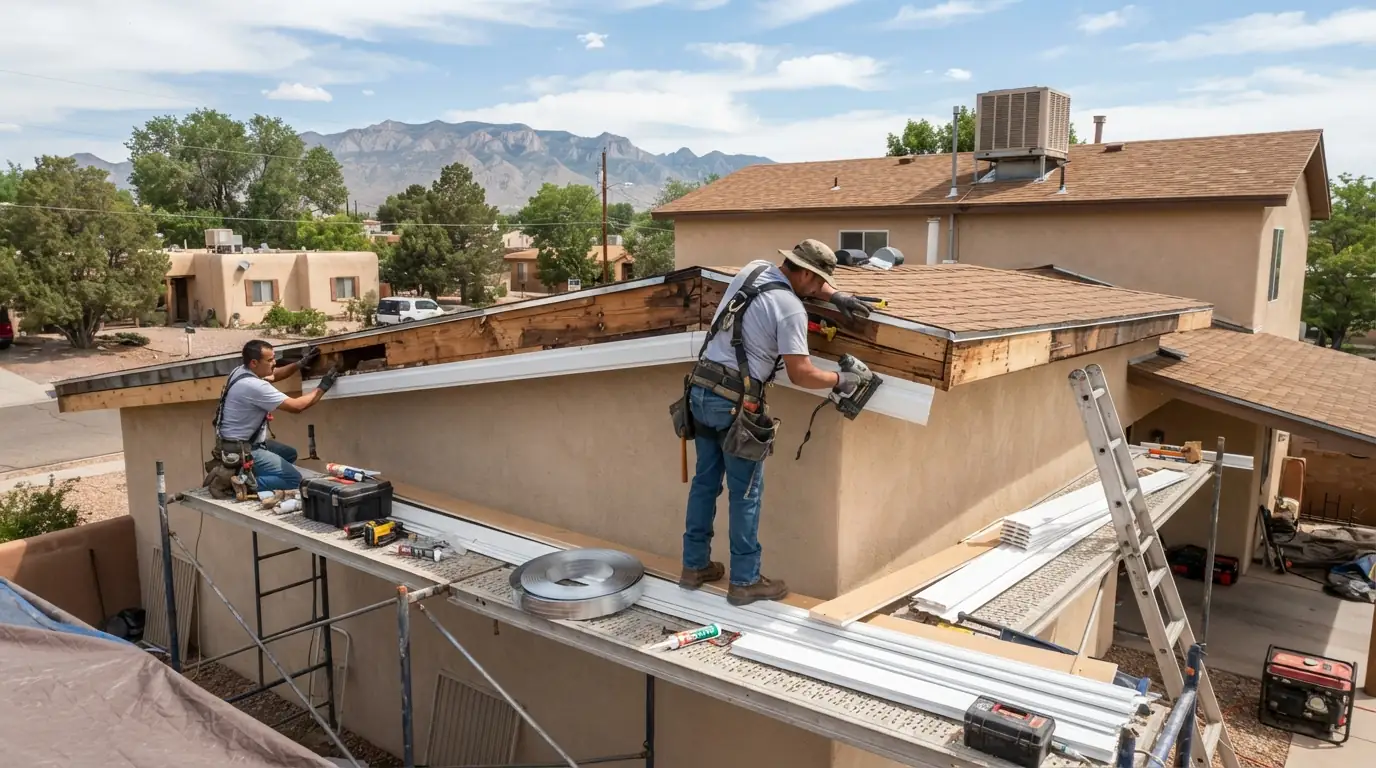
Rotted fascia shows up as soft, dark or crumbling wood behind the gutter or along the rake, often with paint peeling in strips. We remove the gutter where needed, cut out the rotted run back to sound wood, and install new fascia fastened into the rafter tails. Where the rot has reached the rafter ends, they are repaired too, because new fascia nailed to soft rafters will not hold a gutter. The new board is primed on all sides before it goes up, so it does not wick water from behind.
Soffit Repair
Soffits sag, crack and open up where water has soaked them from above or where animals have pushed through. We replace damaged panels with wood or vented aluminum or vinyl to match, restore the intake vents the attic relies on, and close any gaps that birds, bats or bees have been using. Before closing anything, we check that no animals are nesting inside, because sealing them in creates a much bigger problem than the one being fixed, and a wasp nest is not something to discover with a pry bar.
Drip Edge Installation
Drip edge is the small metal flashing at the roof's edge that directs water off the roof and away from the fascia. Many older roofs never had it, so water curls back under the shingles or membrane and soaks the wood below. Retrofitting drip edge on an existing shingle roof means carefully lifting the first course, sliding the metal under the shingles and over the gutter, and resealing. On a new roof it is installed from the start at every eave and rake.
Rake and Eave Trim
The sloped rake edges and level eaves take the most wind, and loose trim there lets rain behind the roofing and the fascia. We refasten or replace rake boards and trim, add metal trim where wood is repeatedly exposed, and seal the joints where roofing, trim and fascia meet, since those joints open first after a few summers of sun. On flat roofs with parapets, the equivalent is the edge metal and coping, which we cover separately as parapet and coping repair when that is where the trouble is.
Albuquerque conditions
What this job looks like on Albuquerque roofs
Roof edges in this city spend most of the year dry and a few weeks a year soaked. Long stretches of sun dry out paint and open joints in wood trim, and then monsoon storms put more water over the edge in an hour than gutters and fascia see the rest of the season. Where there is no drip edge, or a gutter overflows, that water runs straight onto wood that has already lost its protection. That cycle is why fascia rot here usually sits right where water leaves the roof.
DIY or call
What you can do, and what to leave to us
Worth doing
Keeping gutters clear so they do not overflow onto the fascia.
Leave to us
Cutting out rot, rehanging gutters and working from ladders at the roof edge.
Avoid
Caulking or painting over soft wood. It hides rot that keeps spreading.
How the job runs
How an edge repair is done
- 1
Find the water source
Why the edge got wet, so the repair fixes the cause.
- 2
Remove gutters where needed
Gutters taken down to reach the fascia.
- 3
Cut out rot
Damaged fascia, soffit and rafter ends removed to sound wood.
- 4
Rebuild the edge
New boards primed on all sides and fastened.
- 5
Add drip edge
Metal set under the roofing and over the gutter.
- 6
Rehang and finish
Gutters rehung, trim sealed, photos taken.
Warning signs
Signs your roof edge needs repair
Paint lifting in strips behind the gutter.
Gutters pulling away from the edge.
Fascia or soffit that gives when pressed.
Water marks on soffits or walls below.
Nests or traffic in gaps under the roof edge.
FAQ
Fascia and soffit questions
Water running onto it, usually from a missing drip edge or overflowing gutters.
No. Paint seals rot in. The soft wood has to be replaced.
Gaps from rot or damage give them a way in. They are closed after checking for nests.
Yes. It keeps water off the fascia and is required on new roofs under current code.
Usually closely in profile; paint is matched as nearly as the old finish allows.
Metal wrap protects wood well where it is repeatedly exposed, once the wood under it is sound.