
Quick answer: Attic ventilation in Albuquerque works when air comes in low at the eaves and leaves high at the ridge, in balance. Many older roofs have too little exhaust, blocked soffits, or a mix of vent types that work against each other. Fixing it usually means adding a ridge vent or matched exhaust and clearing the intakes, often without replacing the roof.
Ventilation
Why attic airflow matters under this sun
Updated September 2026
On a pitched roof, the attic sits between a hot deck and the ceiling of your living space. Without airflow, the attic heats up through the day, bakes the underside of the shingles, and radiates heat down into the rooms long after sunset.
Ventilation does not replace insulation, and it is not a fix for flat roofs, which have no attic space to vent. It is the right fix for pitched roofs that trap heat, which shingle roofing depends on to last.
The work, piece by piece
Ridge Vent Retrofits
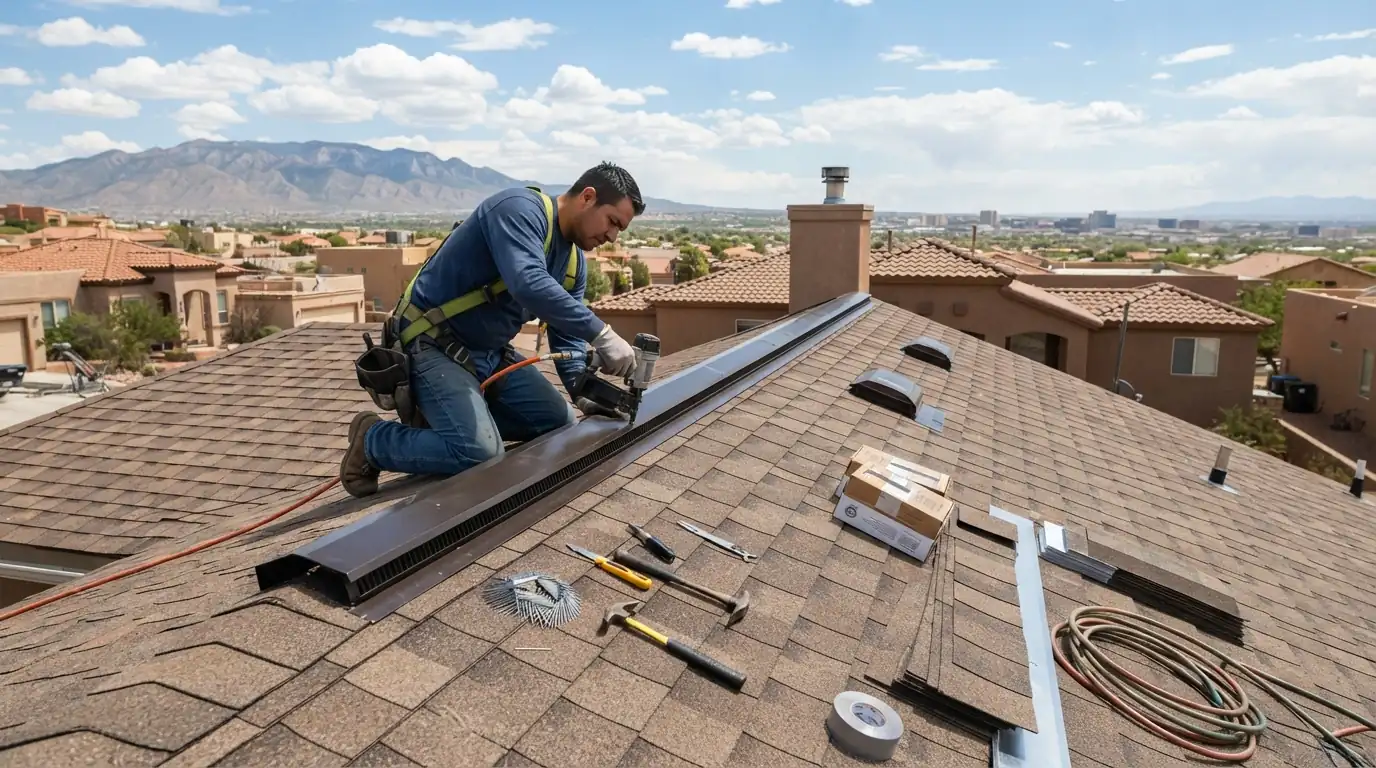
A continuous ridge vent is usually the most effective exhaust for a pitched roof. The ridge cap is removed, a slot is cut along the peak of the deck, and a baffled vent is installed and covered with new cap shingles, so hot air leaves along the whole length of the ridge without letting rain or dust in. It can be added to an existing roof in good condition without replacing anything else. The slot stops short of the ends and any walls, so the vent works without weakening the roof.
Soffit Intake Clearing
Exhaust only works if air can come in. Many attics have soffit vents that are painted over, blocked by insulation pushed against the eaves, or missing entirely. We open and clear existing intakes, install baffles between the rafters so insulation cannot block the airflow, and add intake vents where the eaves have none. Without that intake, even a good ridge vent pulls air from the house or from other vents instead of through the attic, which defeats the purpose of adding it.
Static and Turbine Vents
Where a ridge vent is not practical, such as hip roofs with short ridges, static box vents or wind turbines near the top of the roof provide exhaust instead. They need to be sized for the attic and placed high, and they should not be mixed with a ridge vent, because mixed exhaust types can short-circuit each other and pull air from the wrong place. Old vents with cracked flashing are a common leak point, so they are reflashed or replaced as part of the work.
Solar Attic Fans
A solar attic fan uses a small panel to power an exhaust fan, moving more air on the sunniest, hottest days without adding to the electric bill or needing wiring. It suits attics where passive exhaust cannot keep up. Placement matters: the fan should pull through the attic from the soffits, not from other roof vents, and it must be flashed into the roof like any other penetration. We look at the attic as a whole before recommending one, since a fan fighting a ridge vent helps nobody.
Albuquerque conditions
What this job looks like on Albuquerque roofs
Strong sun and long, hot summer afternoons make attic heat a real factor here. A pitched roof absorbing sun all day turns an unvented attic into an oven, and that heat works on the shingles from below while it works on the house from above. Pitched homes with evaporative cooling have an extra reason to keep the attic moving air, because the cooler pushes air into the house that has to escape somewhere. Balanced attic ventilation is one of the cheaper ways to take heat off both the roof and the rooms.
How the job runs
How a ventilation upgrade is done
- 1
Check the attic
Temperature, moisture, insulation and existing vents looked at.
- 2
Balance the plan
Intake and exhaust matched for the attic.
- 3
Clear the intakes
Soffits opened and baffles installed.
- 4
Install exhaust
Ridge vent, static vents or a solar fan.
- 5
Remove conflicts
Mixed or redundant vents closed and patched.
- 6
Flash and check
Every new opening flashed and photographed.
Cost factors
What changes the price of this job
- Exhaust type Ridge vent, static vents, turbines or a solar fan.
- Ridge length Ridge vents are priced by the length of the peak.
- Intake work Clearing, baffles and new soffit vents.
- Old vents Removing and patching vents that no longer fit the plan.
- Access Attic access and roof pitch affect time.
Ventilation work is priced by the vents added and the intake work needed, and a check of the attic comes before any recommendation.
Warning signs
Signs your attic is not venting
Air in the attic far hotter than outdoors on a summer afternoon.
Blistering or curling ahead of the roof's age.
Rooms that stay warm long after sunset.
Painted-over or missing vents at the eaves.
Moisture on nails or decking in winter.
FAQ
Attic ventilation questions
A very hot attic, shingles aging fastest on one side, or upstairs rooms that stay hot at night are common signs.
Yes. Ridge vents, soffit work and attic fans can all be added to a sound existing roof.
No. Balance between intake and exhaust matters more than adding vents.
Generally no. Mixed exhaust types can work against each other.
Most flat roofs here have no attic to vent; insulation and a reflective surface do that job.
It takes heat off the attic, which helps, though insulation plays the larger role.