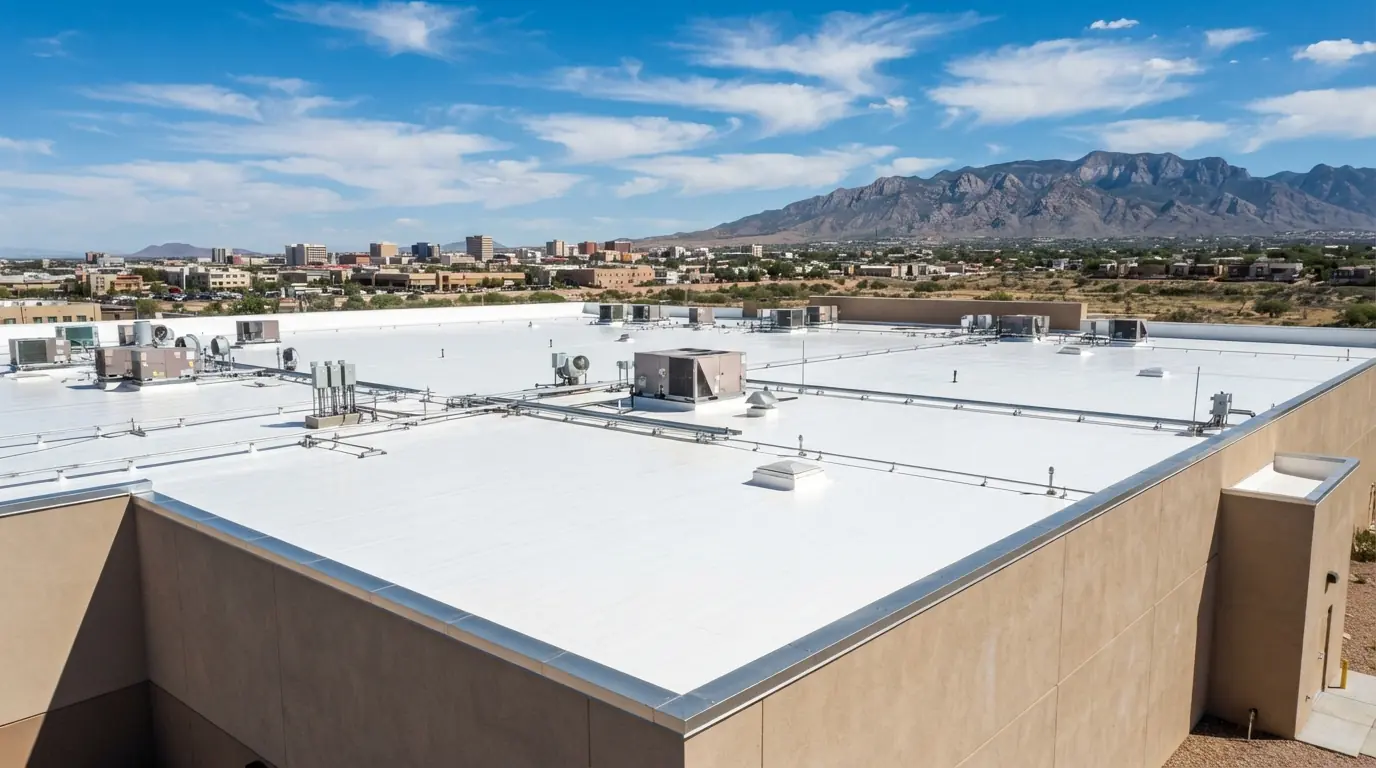
Quick answer: Commercial roof maintenance in Albuquerque works best on a semi-annual schedule: spring before the monsoon and fall after it. Each visit clears drains and scuppers, checks seams, curbs and flashing, reseals minor failures, and records the roof's condition in a photo report, so owners can budget repairs and replacement years ahead instead of reacting to leaks.
Commercial maintenance
Why a planned program costs less than reacting
Updated September 2026
Most commercial leaks start with something small: a clogged drain, a condensate line dripping on the membrane, a curb flashing opened by a service tech. Found on a scheduled visit, each is a small fix. Found by a tenant, it is a ceiling, a claim and a complaint.
When a visit turns up damage beyond a touch-up, we scope it as a commercial roof repair with photos, so decisions are made on facts.
What's included
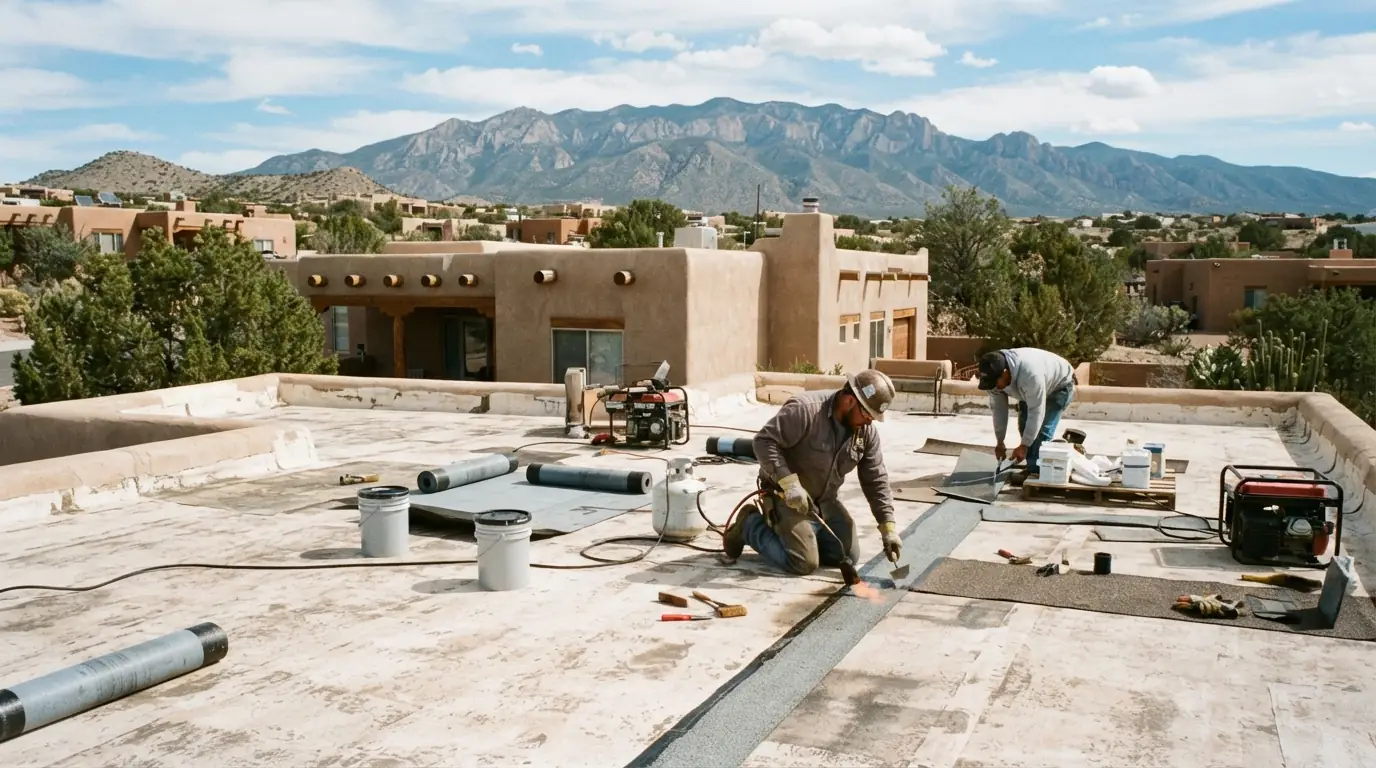
What each maintenance visit covers
- Every drain, scupper and gutter cleared
- Strainers and clamping rings checked
- Field seams walked and probed
- Curbs, pipes and penetrations inspected
- Condensate lines checked for roof discharge
- Parapets, coping and edge metal checked
- Coating wear and thinning noted
- Minor sealant failures repaired
- Dated photo report sent to the owner
The work, piece by piece
The Semi-Annual Inspection Program
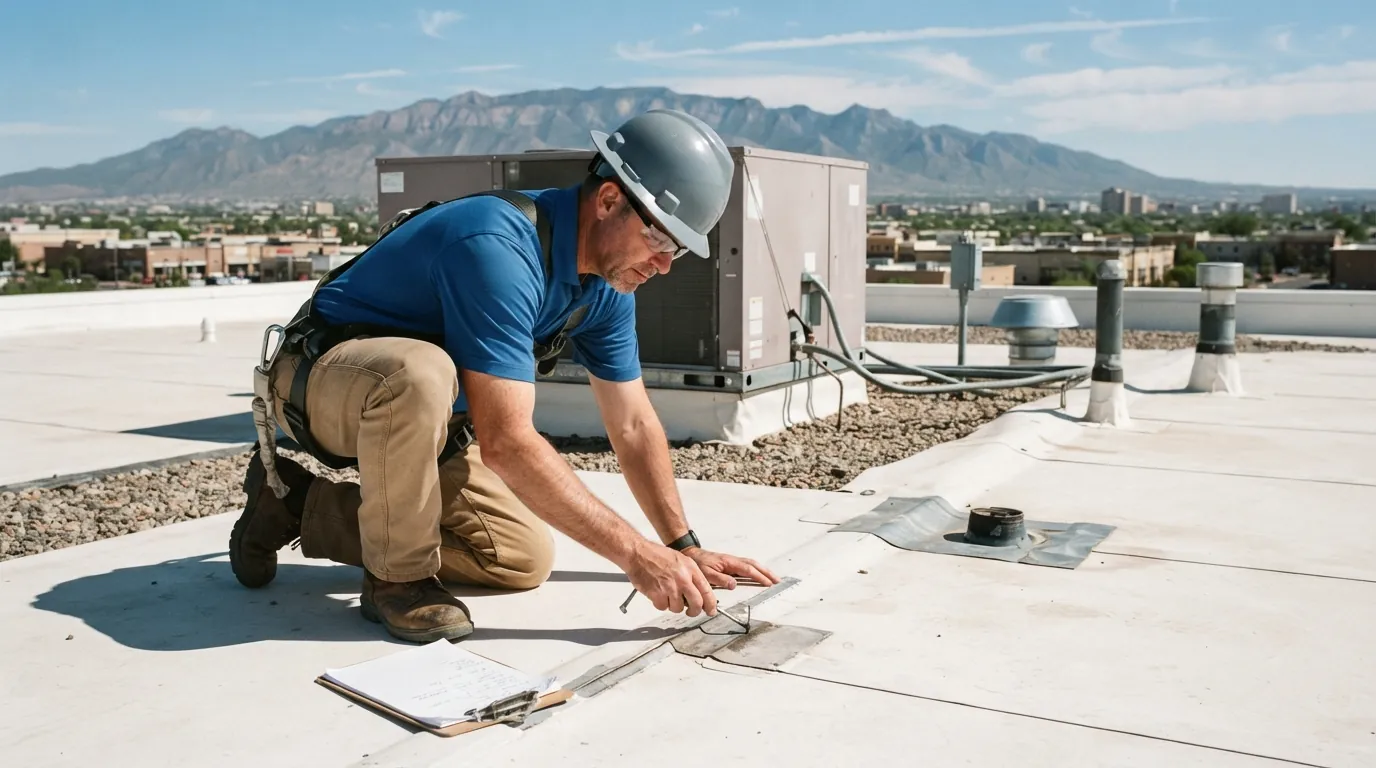
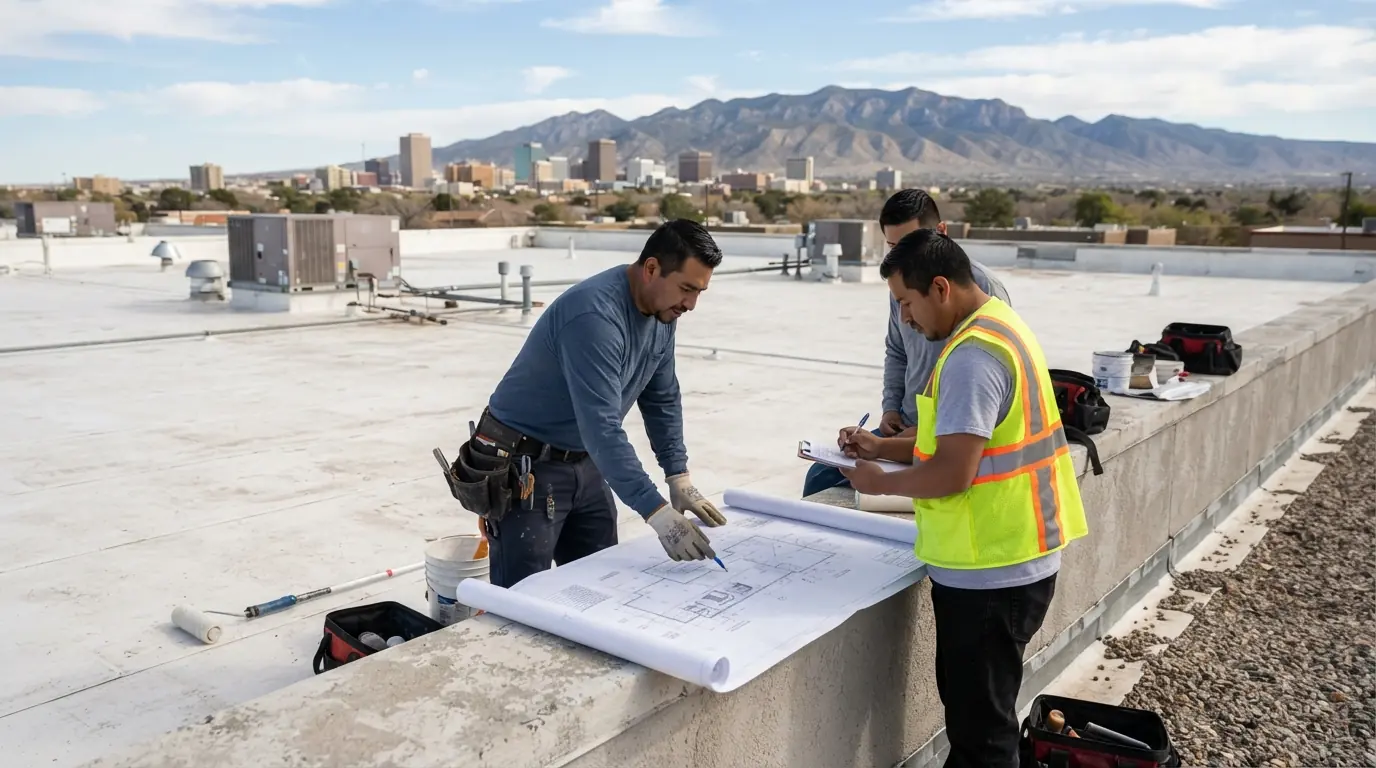
Twice a year, the same checklist: every drain and scupper, every curb and penetration, the field seams, the perimeter edge and the parapets. Spring visits prepare the roof for the monsoon; fall visits catch storm damage and debris before winter. Keeping the same route and the same photo angles each time means changes are easy to see, and it gives the building file a consistent record that owners, lenders and insurers can use when questions about the roof come up.
Drain and Debris Service
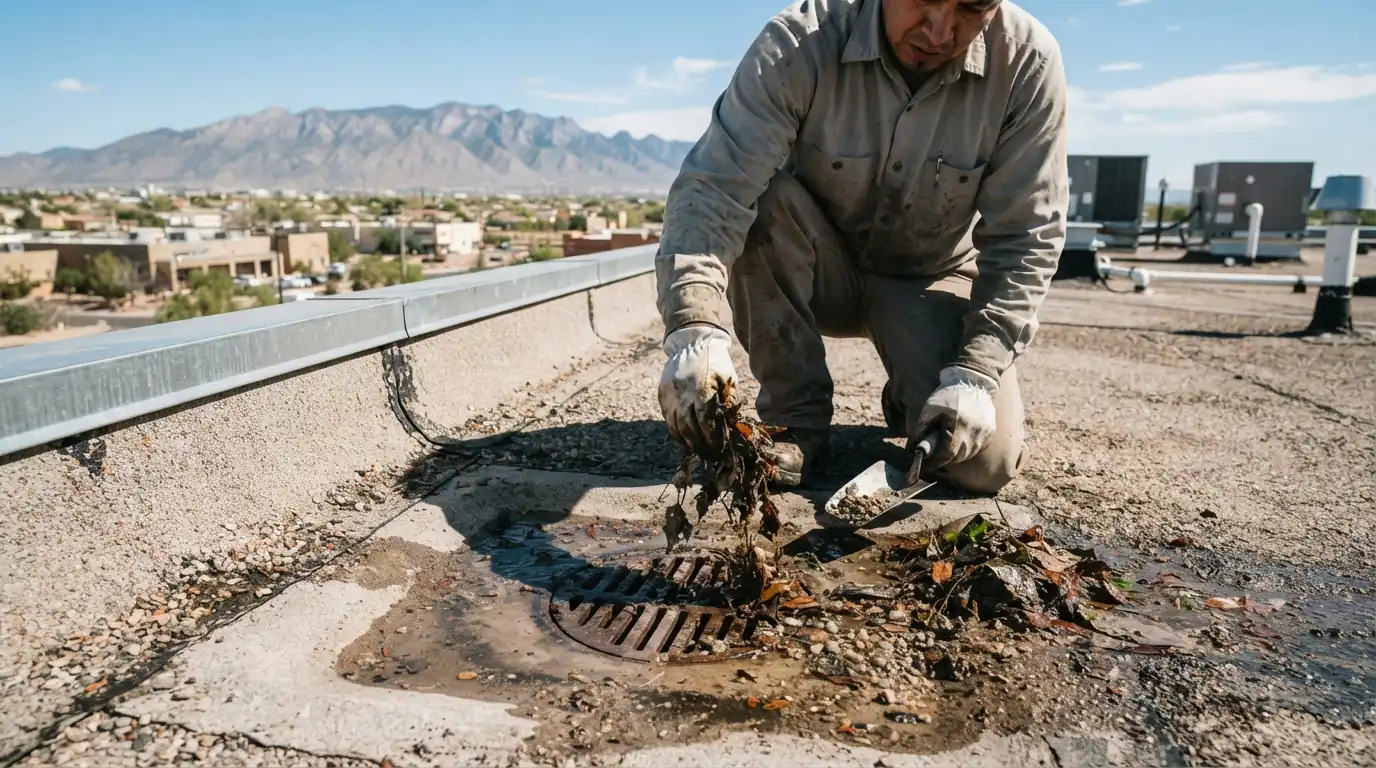
Drains, scuppers and gutters on commercial roofs collect leaves, gravel, dust and whatever blows onto the roof, plus the occasional nest. A single blocked drain during a monsoon burst can put inches of water on the deck. Each visit we clear strainers, check that clamping rings are tight, replace missing domes, and remove loose debris from the field. Where one drain is chronically slow, we note whether the cause is debris, a sagging deck or a slope problem, since each needs a different fix.
Coating Recoat Planning
Coated roofs, whether foam, TPO or mod-bit under silicone or acrylic, lose coating thickness a little every summer. Each visit we check the high-wear areas, seams and walk paths for thinning, chalking and bare spots, and log what we find. That record lets us forecast when a recoat is due, so the owner can budget it in the right year rather than discovering the need once foam or membrane is already exposed. A recoat done on time costs far less than repairs after.
The Roof Asset Report
After each visit the owner or manager gets a written report: dated photos of each area, the repairs done that day, items that need attention with a priority and a rough budget range, and our estimate of the roof's remaining service life. Over several years those reports become the roof's history, which helps with capital planning, sale due diligence and insurance questions. For portfolios, we keep the same format across buildings so they can be compared side by side each year.
Albuquerque conditions
What this job looks like on Albuquerque roofs
Two forces set the pace of commercial roof maintenance here. UV is the steady one: local cost data names it as the primary wear on Albuquerque's flat and foam roofs, and it thins coatings and dries out sealants every summer whether or not it rains. Storms are the sudden one. On September 28, 2025, more than two inches of rain fell in a single hour at a weather station in Kirtland AFB housing, the kind of burst that turns one blocked drain into standing water across a whole roof section.
How the job runs
How a maintenance program is set up
- 1
Baseline survey
A full first inspection with photos sets the starting point.
- 2
Agree the schedule
Visit months and access arranged with the manager.
- 3
Scheduled visits
The same route and checklist every time.
- 4
Touch-up repairs
Minor sealant and flashing fixes done on the day.
- 5
Report
Dated photos, priorities and budget ranges sent after each visit.
- 6
Annual review
Remaining life and capital planning discussed once a year.
Cost factors
What changes the price of this job
- Roof area Larger roofs take longer to walk and document.
- Drains and outlets Each drain, scupper and gutter adds service time.
- Penetrations Buildings with many rooftop units need more flashing checks.
- Visit frequency Semi-annual is standard; some buildings need more.
- Repairs found Anything beyond a touch-up is quoted separately.
Maintenance programs are priced per building by roof size, number of drains and penetrations, and visit frequency; repairs found during a visit are quoted separately.
Put your roofs on a schedule, not a leak list.
Call (505) 636-9496FAQ
Commercial roof maintenance questions
Twice a year for most buildings, spring and fall, plus after any major storm.
Many manufacturer warranties expect documented regular maintenance, and our reports provide that record.
Yes. The report format stays the same across a portfolio so buildings can be compared.
Minor items like sealant, drain clearing and small flashing fixes, yes. Larger work is quoted.
Call any hour. Program buildings get the same 24/7 response as any emergency.
Yes. Many roof problems start at mechanical curbs and condensate lines.