Quick answer: Emergency roof repair in Albuquerque starts with stopping the water, not with a full repair: we tarp, seal or patch the opening so no more water gets in, day or night. Once the storm passes and the roof is dry, we come back to find the real cause and make the permanent repair.
How the job runs
From your call to a dry house
- 1
You call
A person answers and asks where water is showing and how bad it is.
- 2
We prioritize
Open roofs and active leaks into living space go first.
- 3
Stop the water
Tarp, temporary seal or cleared drain, whichever the roof needs.
- 4
Protect inside
We help find where water collects so it can be caught.
- 5
Return in daylight
Once dry, we inspect and find the real cause.
- 6
Permanent repair
Repair or replacement scoped with photos before we start.
Emergency service
What we do in the first hours
Updated September 2026
An emergency visit has one goal: no more water in the house. That usually means a tarp secured over the damaged area, a temporary seal at a failed flashing, or clearing a blocked drain that has turned a flat roof into a pond.
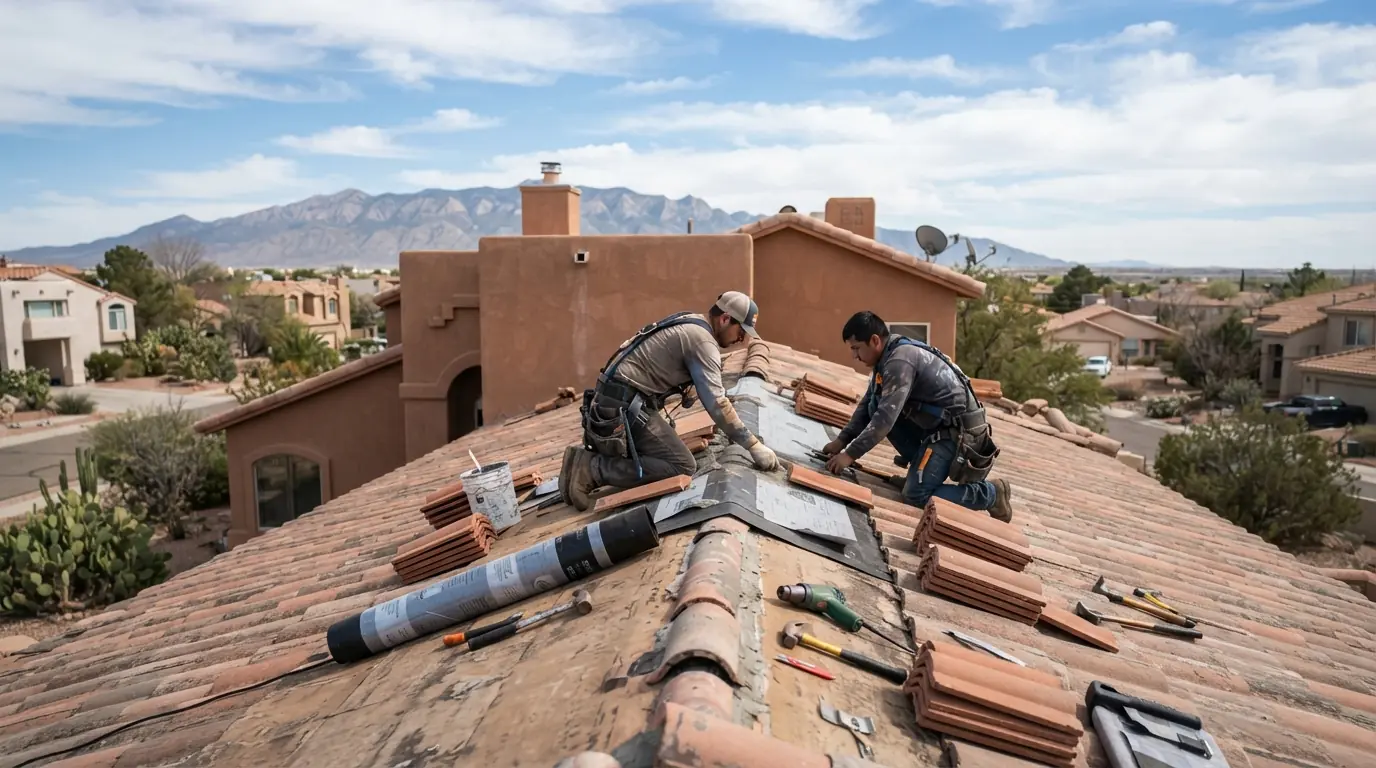
The permanent fix comes after, once we can see the roof in daylight. Depending on what failed, that is a leak repair, storm damage repair or a larger project.
The work, piece by piece
Emergency Roof Tarping
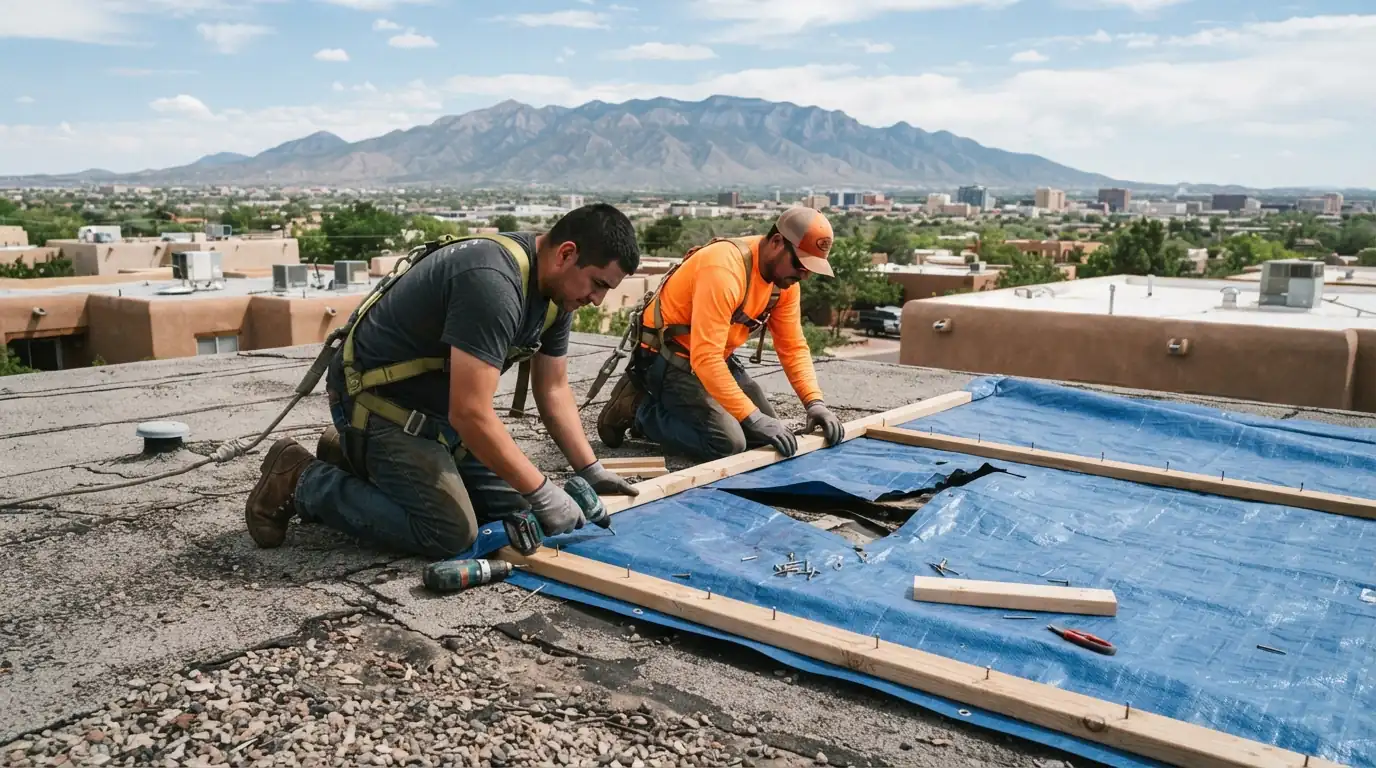
A proper tarp is more than plastic weighed down with bricks. We size the tarp to extend well past the damage, run it over the ridge on a pitched roof so water cannot get under the top edge, and fasten it through wood battens so wind cannot tear it free. On flat roofs we seal and weight the edges so the tarp does not trap water or act like a sail. A well-set tarp can hold for days while materials are ordered and the weather clears.
After-Hours Leak Stop
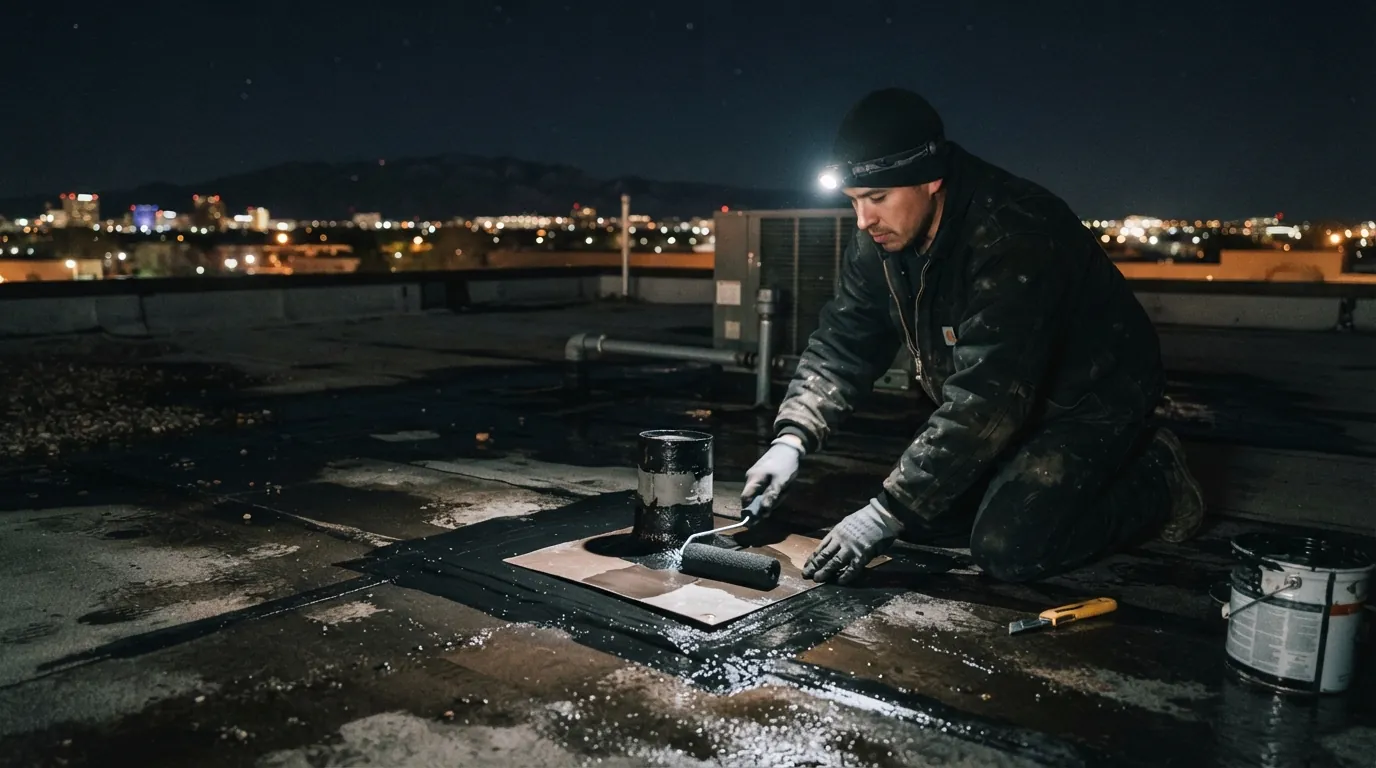
Not every emergency needs a tarp. Many night-time leaks come from one clogged drain, one open seam or one failed pipe boot, and they can be stopped with a targeted temporary repair once we find them. We check the likely sources above the leak, clear what is blocked, and seal what is open with a material that will hold until the permanent repair. Inside, we help you find where the water is collecting so it can be caught and the ceiling protected.
Monsoon Storm Leak Response
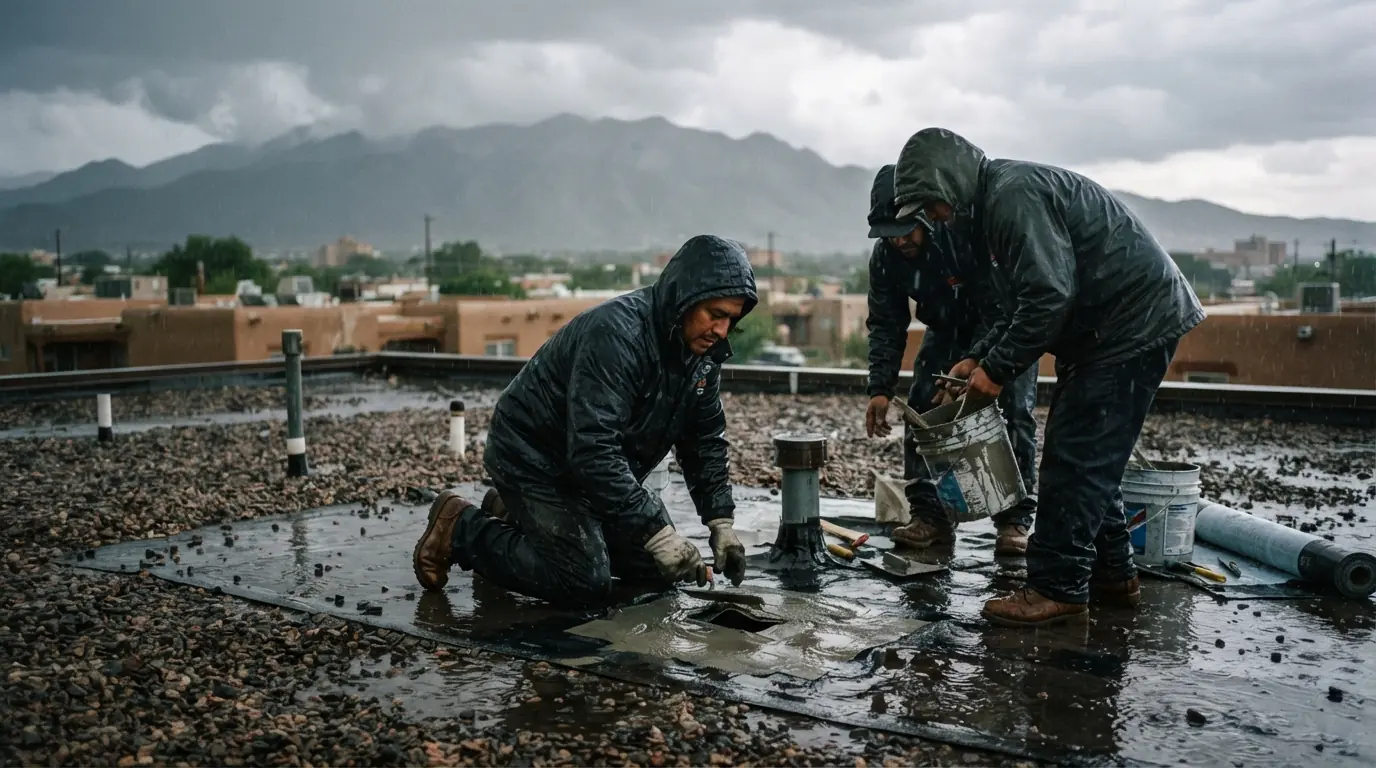
Monsoon storms bring the busiest nights of the year for roofers here, because many roofs are hit at once and the water arrives fast. We work the calls by urgency: open roofs and active leaks into living spaces first, then roofs with staining but no active drip. While you wait, the most useful things are catching the water, moving valuables and electronics away from it, and taking photos. We only go up in lightning when it is safe, which sometimes means waiting for the cell to pass.
DIY or call
What to do while you wait for us
Do this
Put buckets under drips, move valuables and electronics away, and photograph the damage for insurance.
If the ceiling bulges
Keep clear of it and away from light fixtures near it, and tell us on the phone so we come prepared.
Do not do this
Climb onto a wet roof in the dark or in lightning. A fall costs far more than any leak.
Albuquerque conditions
What this job looks like on Albuquerque roofs
Emergency calls here cluster in the monsoon. Normal rainfall at the Sunport from mid June through September is about 4.48 inches, and it tends to arrive in a handful of hard storms rather than steady rain, so calls come in waves on storm afternoons and evenings. Albuquerque jobs are dispatched from the Academy Parkway service office, while the head office in southern Santa Fe County covers the north end of the I-25 corridor toward Santa Fe. One phone number reaches both.
Water coming in right now? Call and we will stop it.
Call (505) 636-9496Cost factors
What changes the price of this job
- Access at night Working after dark needs lights and extra safety setup.
- Size of the opening Larger damage needs larger tarps and more fastening.
- Roof type and pitch Steep, tile and two-story roofs take more setup.
- Debris removal Branches or debris on the roof must come off first.
- Permanent repair Priced once the roof is dry and the cause is known.
Emergency tarping and temporary repairs are priced separately from the permanent repair, and we explain both before any work beyond stopping the water.
FAQ
Emergency roof repair questions
Yes. The phone is answered 24/7, and we respond to open roofs and active leaks as fast as safe access allows.
Rarely. A lasting repair needs a dry roof and daylight, so the first visit is about stopping the water.
Many policies cover reasonable steps to prevent further damage. Keep the invoice and photos for your claim.
A properly fastened tarp can hold for days to a few weeks, but it is a temporary measure.
Keep people away from it, catch the water, and tell us when you call so we treat it as urgent.
Yes, both. Flat roof emergencies are often blocked drains, which can be cleared quickly.