By Lawrence Reinholt, Roofing Guides Editor
Updated September 2026
Quick answer: Ponding on an Albuquerque flat roof means water sitting more than a day or two after rain, usually because the roof was built too level, the deck has sagged, or an outlet sits higher than the roof around it. Standing water ages the membrane and finds weak seams. The lasting fix is to create slope with tapered insulation, crickets or sumps, not just to patch the leak it causes.
Part 1 of 5
What counts as ponding
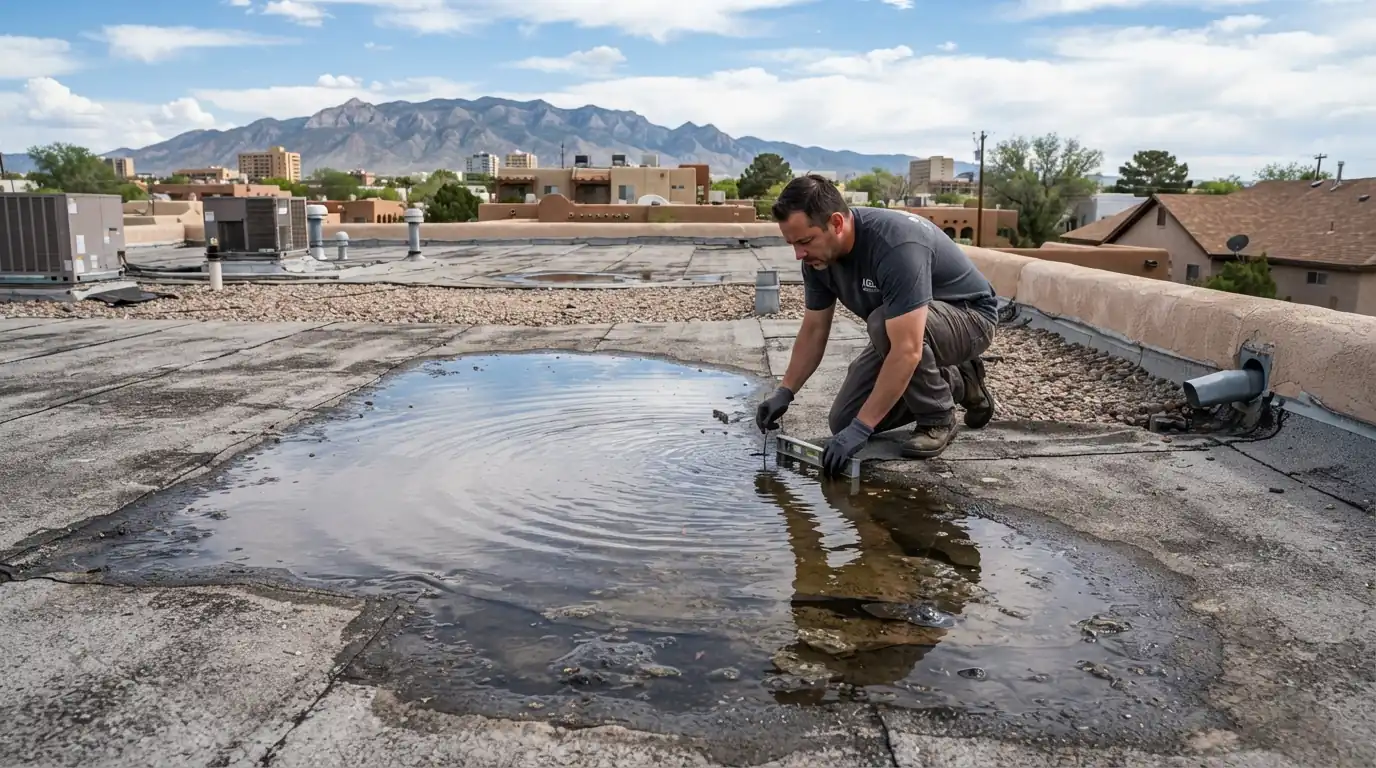
Some water after a storm is normal. Water still standing a day or two later is ponding. Look from a window or a safe ladder the morning after rain, and note where it collects.
Part 2 of 5
Why water sits
Many older flat roofs were built nearly level. Decks sag over time between supports. Outlets such as canales, scuppers and drains can sit higher than the roof around them, and debris dams the path. Each leaves a low spot where water collects.
Part 3 of 5
What ponding does
Standing water ages membranes and coatings faster, collects dirt that holds more water, and eventually finds a seam, blister or flashing edge. On a monsoon roof that sees heavy bursts, the ponds refill with every storm. See how long a flat roof lasts for the bigger picture.
Questions about your own roof? Call and talk to a roofer.
Call (505) 636-9496Part 4 of 5
Fixes that last
Local ponding near an outlet can be fixed with a small cricket or sump that funnels water in. Wider ponding needs tapered insulation, boards cut to build slope toward the outlets, which is best done during a flat roof replacement. Clearing and lowering outlets helps where they are the cause. See canale and drain repair.
Part 5 of 5
What does not fix it
Patching the leak under a pond without changing the slope usually means the leak returns with the next heavy storm. Coatings tolerate some ponding, silicone better than acrylic, but they do not remove the water.
FAQ
Common questions on this topic
More than a day or two after rain counts as ponding.
Not yet, but it shortens roof life and leads to leaks.
It can tolerate some, but it does not remove the water.
Boards cut to build slope toward the roof outlets.
Local ponding often can, with a cricket or sump.
The outlet may sit higher than the roof around it.
Yes, which is another reason to correct it.