
By Lawrence Reinholt, Roofing Guides Editor
Updated September 2026
Quick answer: After hail in Albuquerque, check from the ground first: dented gutters and vents, shingle granules piling at downspouts, cracked tile, and new ceiling stains. Do not climb the roof. Have a roofer inspect within days, before the next storm, and document any damage with dated photos if you plan an insurance claim.
Part 1 of 6
What to look for from the ground
Soft metals tell the story first. Round dents in gutters, downspouts, vent caps and the tops of air conditioners show that hail was large enough to matter, and their size gives a sense of the stone size. Piles of dark granules at the bottom of downspouts mean shingles lost part of their protective surface.
On tile roofs, look for broken pieces on the roof or on the ground. Inside, check ceilings under the roof for new stains over the next few rains. None of this requires a ladder, and all of it is worth photographing.
Part 2 of 6
How hail damages each kind of roof
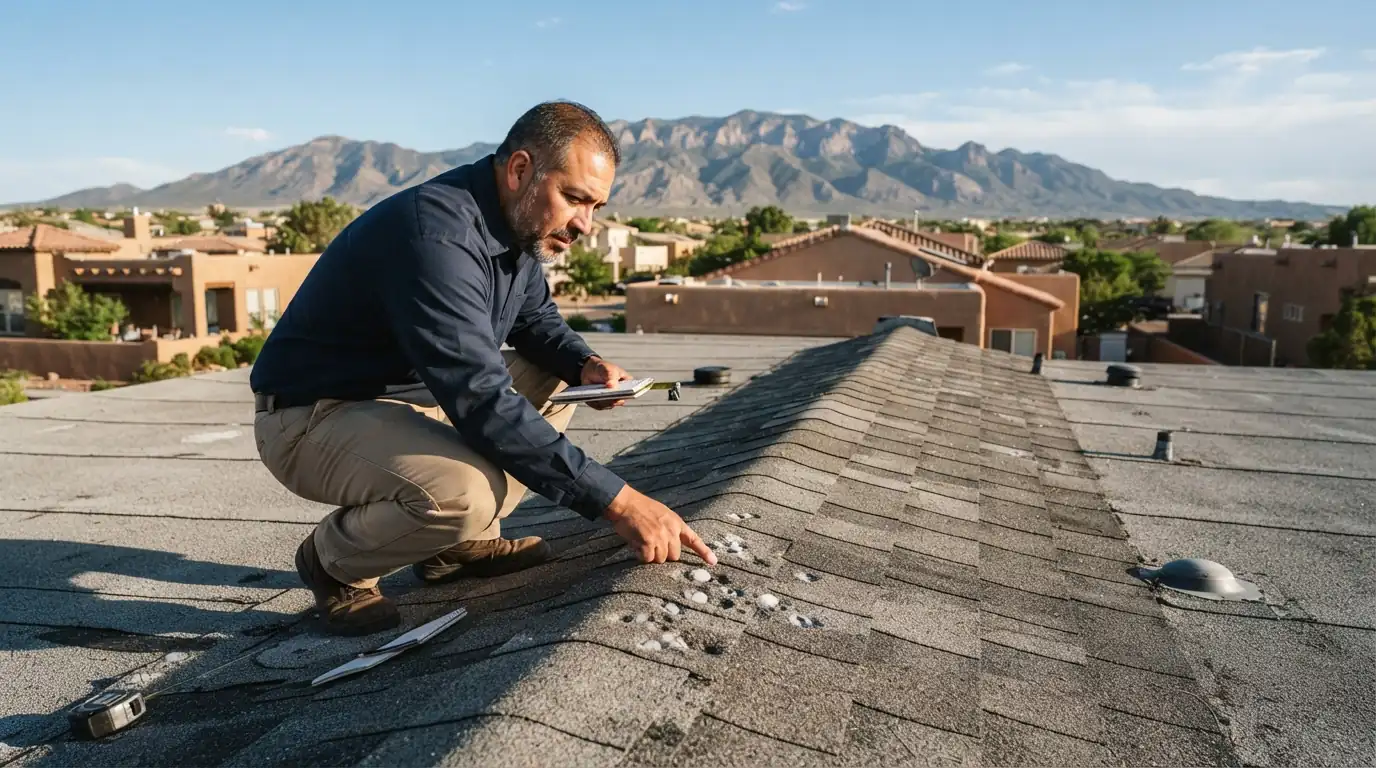
On asphalt shingles, hail bruises the mat, knocks granules loose and can fracture the shingle without an obvious hole. Those bruises let sun and water into the shingle, and the damage often shows up as leaks or bald spots months later.
Clay and concrete tile crack or chip, exposing the underlayment below to UV and rain. Flat roofs vary: coatings on foam and TPO can be punctured, while multi-ply modified bitumen resists punctures best. Metal can dent on thinner gauges without leaking at all.
Part 3 of 6
Why hail damage can hide for months
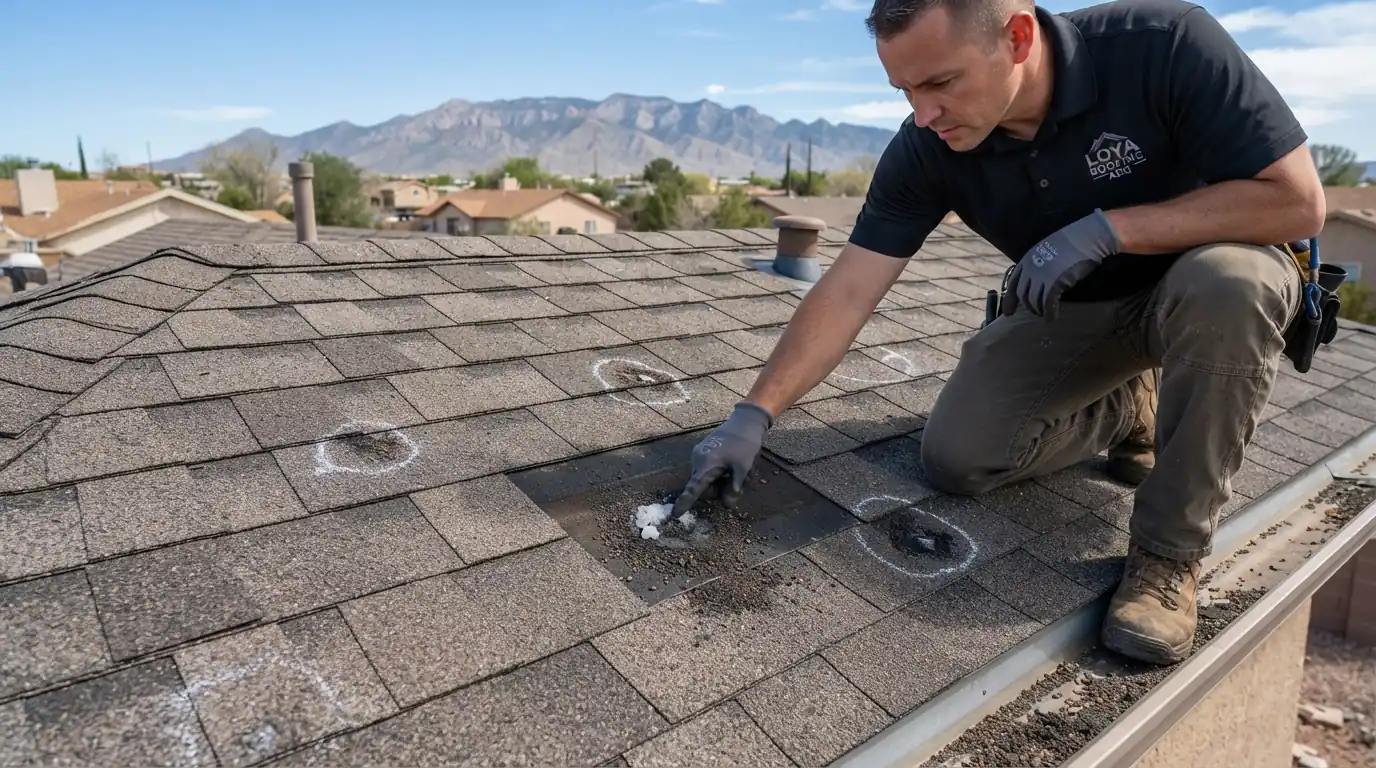
A bruised shingle often looks normal from the street. A punctured coating on a foam roof may be the size of a pencil point. Neither leaks in the first week, but both let water and UV in, and the leak appears with the next monsoon storm or the one after that.
That is why an inspection within days matters even when nothing is leaking yet. Monsoon hail tends to come from mid July through September, and storms land unevenly across the metro, so a neighbor's undamaged roof is no guide to yours.
Questions about your own roof? Call and talk to a roofer.
Call (505) 636-9496Part 4 of 6
Documenting damage for an insurance claim
Useful documentation includes dated photos of each slope, close-ups of damaged areas, dents on soft metals, the roof material and its approximate age, and a written scope of the repair the damage calls for. That is what a written roof inspection produces.
Claims usually have reporting time limits, so do not wait for a leak to start the process. What the policy covers is between you and your insurer; the roofer's job is to document what is actually there, including when the damage is minor.
Part 5 of 6
Repair or replace after hail
Scattered hits on an otherwise sound roof can be repaired: replaced shingles, patched coatings, swapped tiles. Damage across every slope, or on a roof already near the end of its life, usually points to replacement.
If you are replacing a shingle roof after hail, impact-rated Class 4 shingles are worth pricing; they resist bruising far better, and some insurers offer a discount for them. For the repair side, see storm and hail damage repair, and for monsoon leaks, what to do first when the roof leaks.
Part 6 of 6
A quick after-storm routine
Walk around the house the morning after any hail storm. Photograph gutters, vents, windows and siding, look at the ground near downspouts, and note the date. If you see dents or granules, book an inspection before the next storm.
If nothing shows, keep an eye on ceilings through the rest of the season. The cost of a quick look is small compared with finding hail damage the hard way in August.
FAQ
Hail damage questions
Often only indirectly, through dents on soft metal and granules at downspouts. Shingle bruises usually need a close look.
No. Hail-damaged roofs can be slick and brittle, and tile breaks underfoot.
Within days, before the next storm and within your policy's reporting window.
No. Small hail often leaves no damage. Dents on soft metals are a good sign that it was large enough to matter.
Thinner gauges can dent, usually cosmetically. Heavier gauges and impact-rated panels resist it better.
That depends on the policy and the damage. Good documentation helps whatever the decision.
Shingles that pass the highest level of the UL 2218 impact test. They resist hail damage far better than standard shingles.