By Lawrence Reinholt, Roofing Guides Editor
Updated September 2026
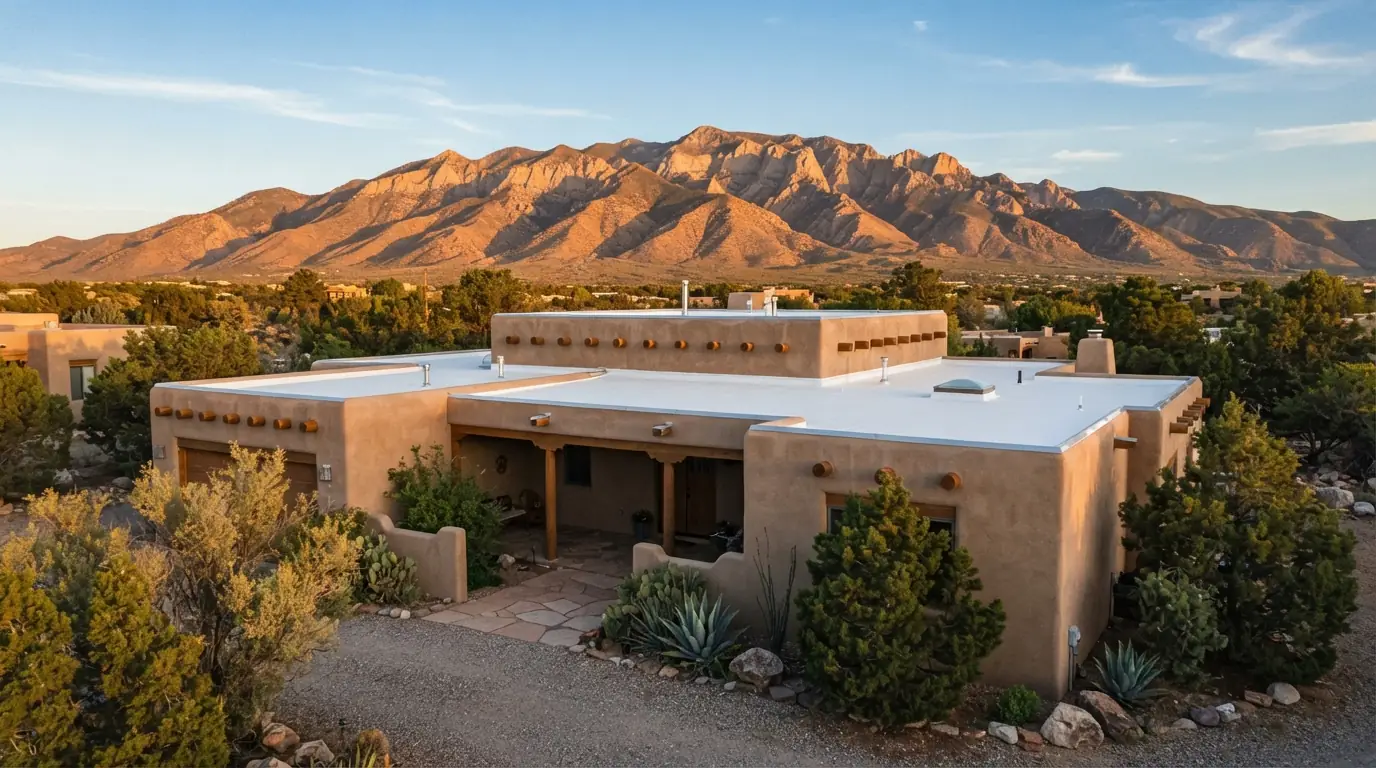
Quick answer: Flat roofs in Albuquerque age mostly from UV and heat rather than rain. At about 5,300 feet the sun is stronger than at sea level, and unshaded flat roofs can reach 180 degrees in summer. Local installers report 20 to 30 years for well-installed TPO; coatings, foam and older built-up roofs depend heavily on upkeep and drainage.
Part 1 of 6
What wears a flat roof out here
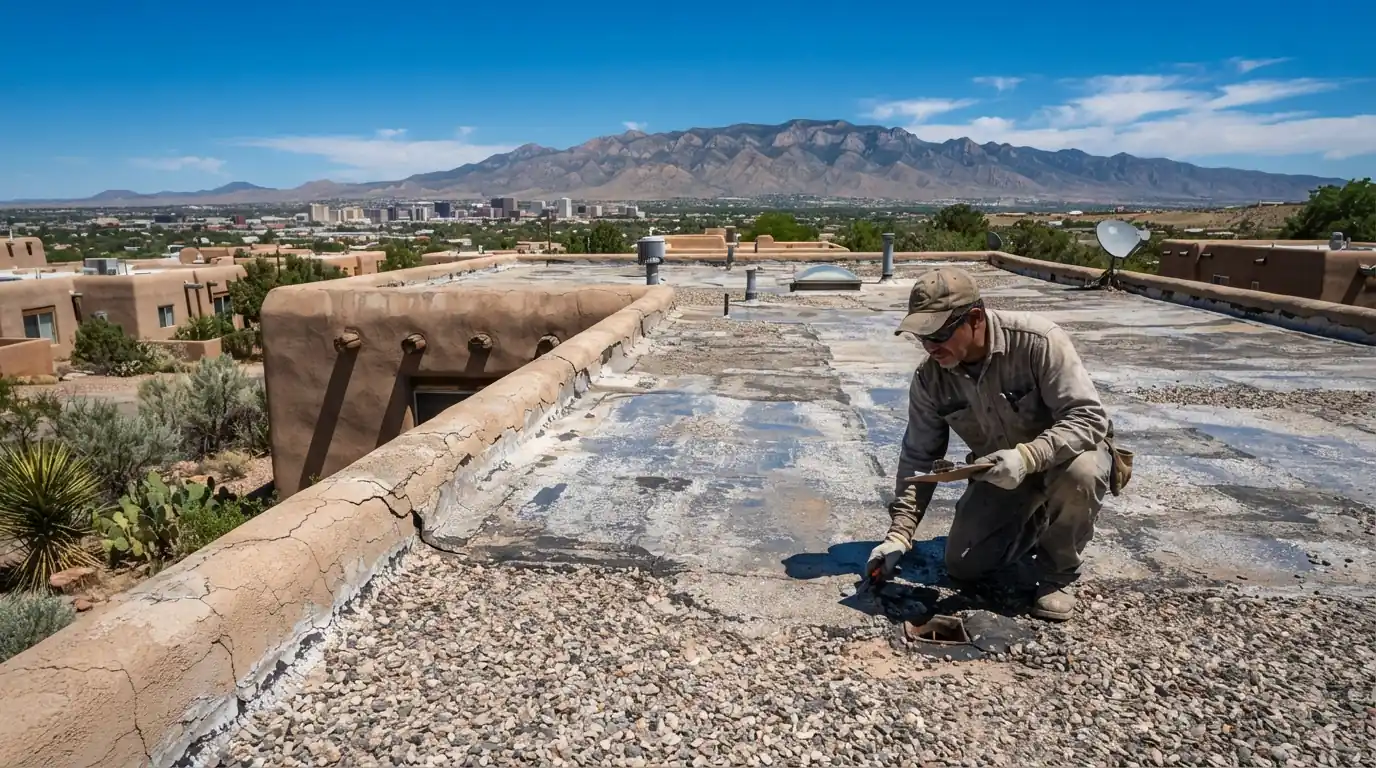
UV breaks down the surface of every roofing material, and Albuquerque gets a lot of it: about 310 sunny days a year at roughly 5,300 feet. Heat adds to it. An unshaded flat roof can reach 180 degrees on a summer afternoon, and daily temperature swings of 30 to 40 degrees make seams and flashing expand and contract constantly.
Rain is less frequent but concentrated. The monsoon puts a lot of water on a roof in short bursts, and wherever the surface has cracked or a seam has opened, that is when it gets in.
Part 2 of 6
TPO
Local installers report 20 to 30 years from a quality TPO installation. Where a given roof lands in that range depends on seam quality, membrane thickness and foot traffic. Thicker 60 mil membrane has more material to lose before the reinforcing scrim is exposed.
White TPO also protects itself: by reflecting most of the sun, it keeps its own surface far cooler than a dark roof, which slows the aging of everything underneath. See TPO roofing for thickness and installation options.
Part 3 of 6
Modified bitumen and built-up roofs
Multi-ply asphalt roofs are tough, but dark surfaces age quickly in this sun. Granules wash off, the asphalt dries and cracks, and laps open where the sheets were never fully bonded. A reflective cap or coating slows that process considerably.
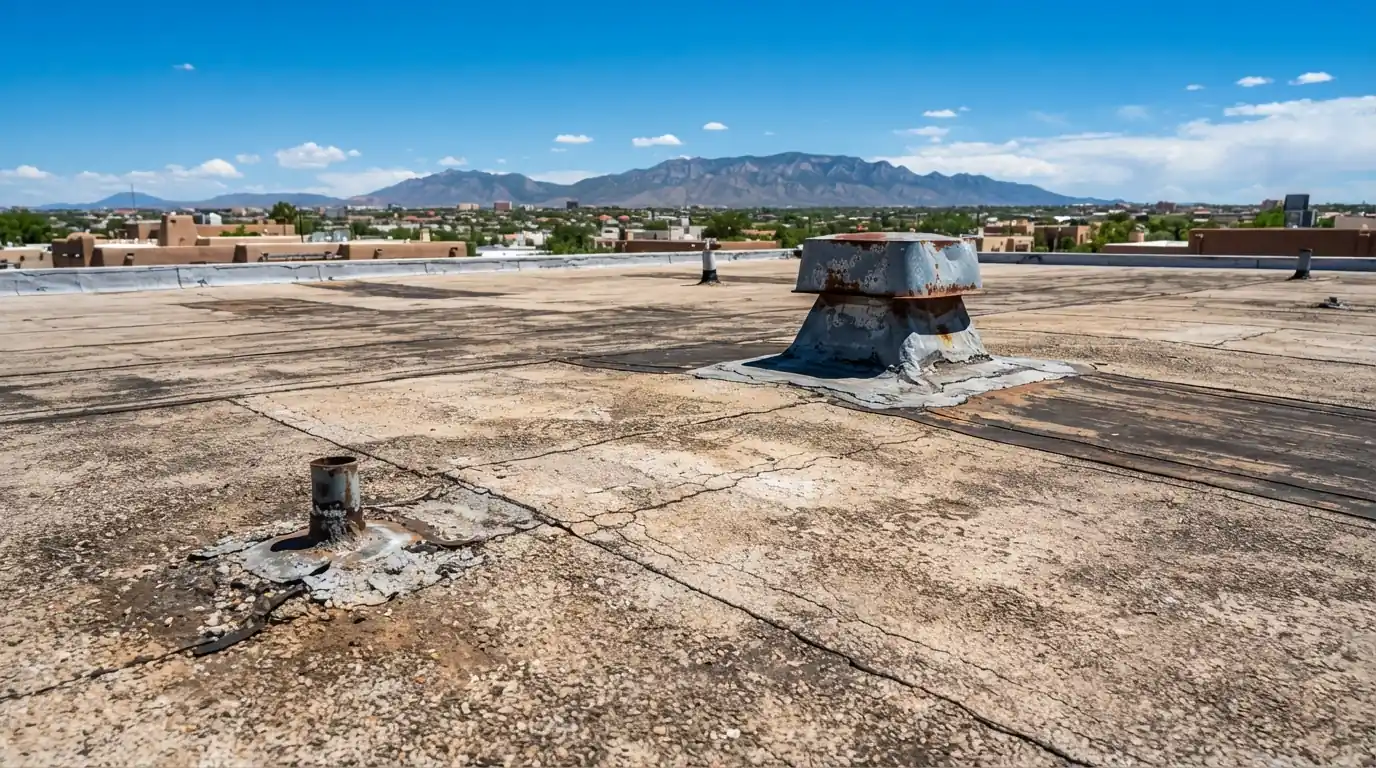
Tar and gravel has long been the most common flat covering in New Mexico, and many of those roofs are now past their useful life. Signs of the end are covered in when a tar and gravel roof is done.
Questions about your own roof? Call and talk to a roofer.
Call (505) 636-9496Part 4 of 6
Spray foam and coatings
Foam is unusual: the foam itself can last for decades, but only while its coating is intact. Local cost data names UV as the primary wear on foam roofs here, and a coating that wears through lets the sun break down the foam surface.
Coatings are a maintenance layer rather than a roof. They wear thinner every summer and need renewing on a schedule set by the product and the thickness applied. Kept up, they extend the life of the roof beneath them; neglected, they simply fail.
Part 5 of 6
What shortens any flat roof's life
Ponding is the biggest factor. Water that sits for days ages the membrane under it and eventually finds a seam, which is why drainage deserves as much attention as the material. Foot traffic around swamp coolers and rooftop units wears paths into roofs, and every penetration is a flashing detail that can fail early.
Neglected outlets matter too. A clogged canale or drain turns an ordinary storm into standing water across the roof.
Part 6 of 6
How to get more years from your flat roof
A yearly spring check before the monsoon catches dried sealant, clogged outlets and thin coatings while they are cheap to fix; that is what roof maintenance covers. Walkway pads on service routes, a reflective finish on dark roofs, and prompt recoating on foam all add years.
When replacement does come, fixing the drainage with tapered insulation is the best single investment in the next roof's lifespan.
FAQ
Flat roof lifespan questions
Local installers report 20 to 30 years with a quality installation.
Strong UV at altitude, summer surface heat and large daily temperature swings.
Generally yes. A reflective surface runs much cooler, which slows aging.
The foam can last decades if its coating is renewed on schedule.
Yes. Standing water ages the membrane beneath it and finds any weak seam.
Yes. Clear outlets, sound sealant and a maintained coating prevent most early failures.
When leaks and blisters are widespread or insulation is wet across large areas.