
By Lawrence Reinholt, Roofing Guides Editor
Updated September 2026
Quick answer: Before the Albuquerque monsoon, clear every canale, scupper, gutter and drain, check seams and flashing around penetrations, look for thin or chalky coating on flat roofs, and inspect the attic for old stains. Normal monsoon rainfall at the Sunport is about 4.48 inches from mid June through September, and it arrives in bursts that test every outlet.
Part 1 of 6
Why spring is the time to check
Normal monsoon rainfall at the Albuquerque Sunport is about 4.48 inches between mid June and the end of September, and it comes in short, intense storms. Outlets that cope with a light shower overflow in a burst, and sealant that dried out over winter lets go the first time water sits against it.
Anything found in April is a small fix. The same thing found in August is a ceiling. Storms also land unevenly across the metro, so a dry summer last year is no reason to skip the check this year.
Part 2 of 6
From the ground and the yard
Walk around the house and look up. On pitched roofs, look for lifted or missing shingles, cracked or slipped tile, and ridge caps out of line. Check gutters for sagging and debris, and make sure every downspout empties away from the foundation.
On flat roofs, look at the stucco under each canale and scupper for stains, and check the parapet caps you can see for cracks. None of this needs a ladder beyond a safe one-story reach.
Part 3 of 6
Outlets: the most important item
Canales, scuppers, gutters and roof drains are where monsoon water leaves the roof, and a partly blocked outlet is the most common cause of a summer leak on a flat roof. Clear them of leaves, dust and debris, and check that each one actually drains rather than holding water.
If you cannot reach them safely, this is the core of a spring roof maintenance visit. The guide on why flat roofs leak at canales and scuppers explains what goes wrong there.
Questions about your own roof? Call and talk to a roofer.
Call (505) 636-9496Part 4 of 6
Seams, flashing and penetrations
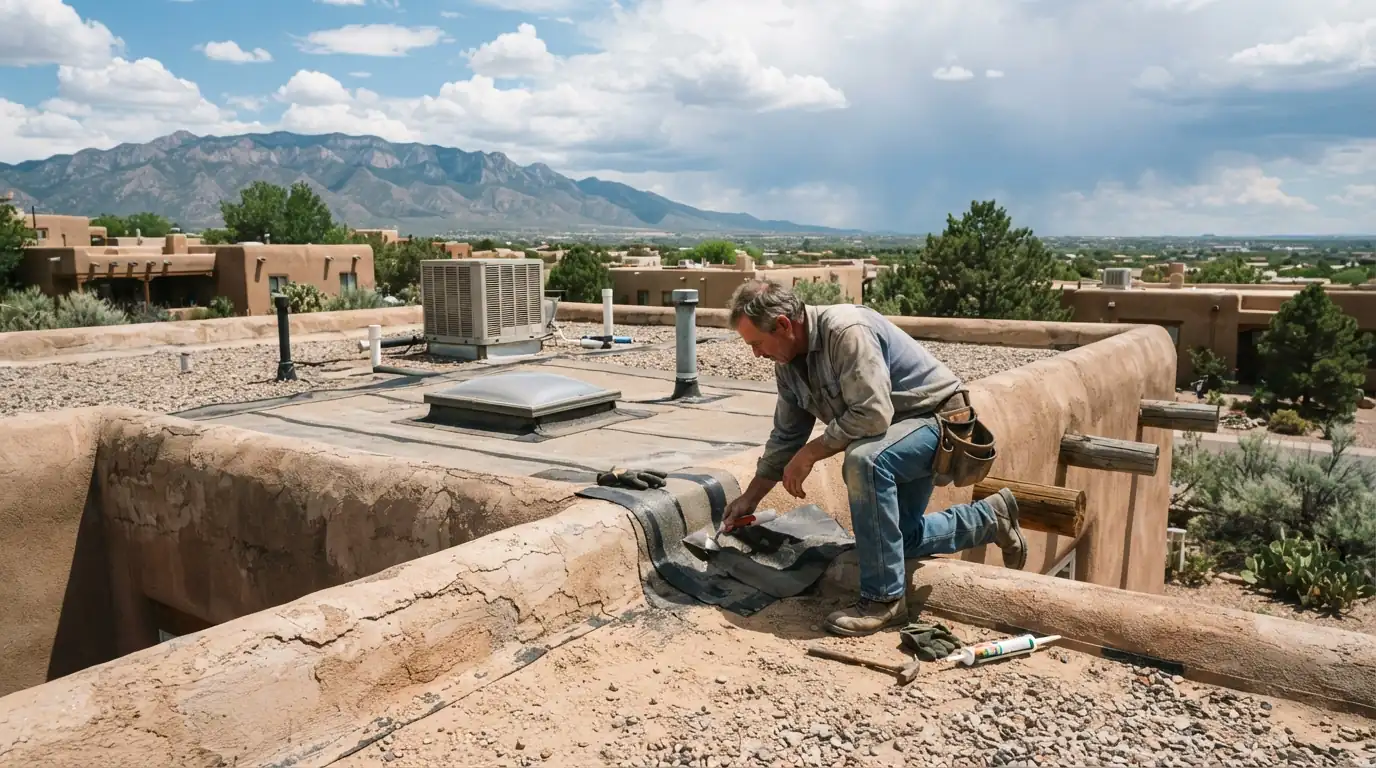
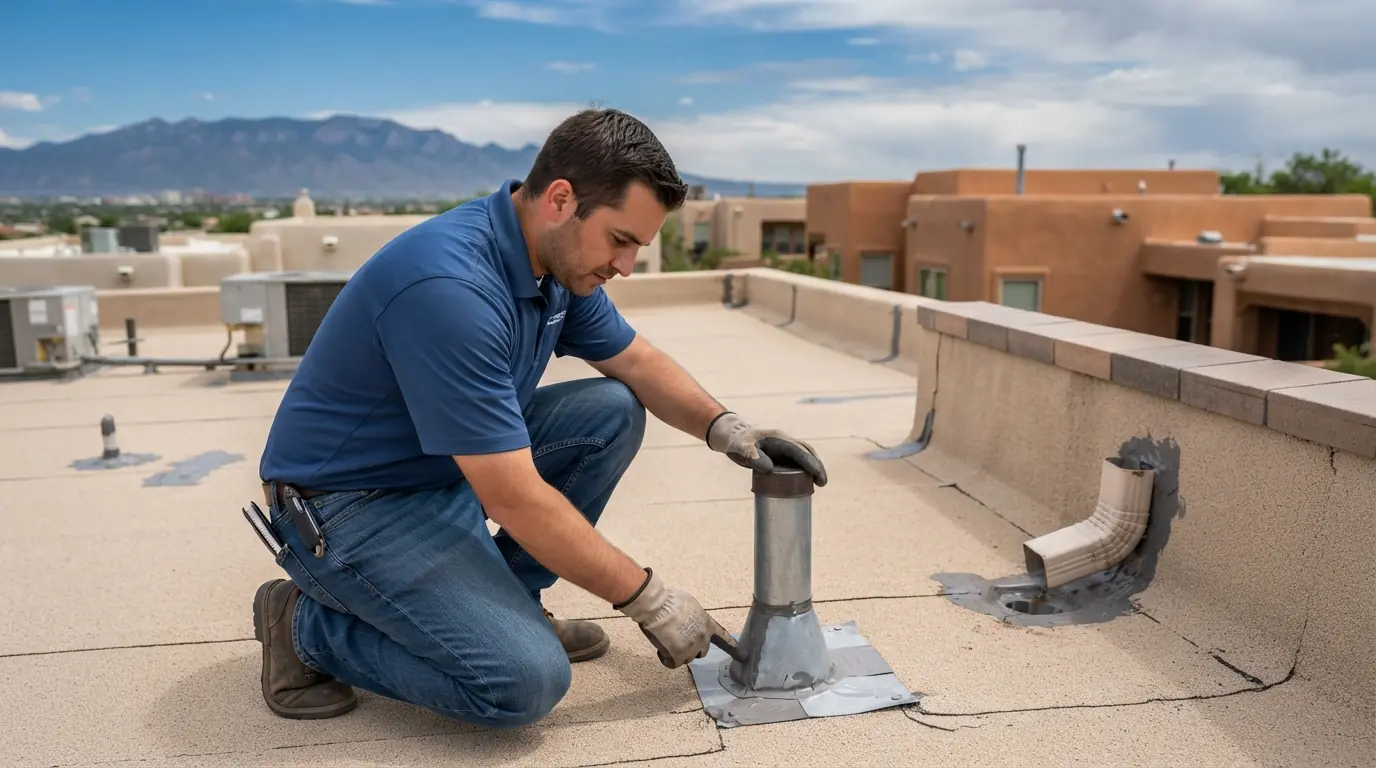
Sealant around pipe boots, vents, swamp cooler curbs and skylights dries and cracks in strong sun. Flashing at chimneys and walls pulls loose as the roof expands and contracts through daily swings of 30 to 40 degrees. These are roofer tasks on most homes: failed sealant should be cut out and replaced, not covered with more.
Swamp coolers deserve a specific look. Their curbs vibrate, their water lines can drip onto the roof for months, and their flashing loosens faster than any other penetration.
Part 5 of 6
Coatings on flat roofs
If your flat roof is coated or foam, look for chalking, thin spots, cracking, and foam showing through. A recoat on a dry roof before it fails costs far less than repairs after water gets in. See coating versus replacement for when a recoat is the right step.
Part 6 of 6
Inside the attic
If you can safely reach the attic, look at the underside of the roof deck with a flashlight after the first rain of spring. Dark rings, damp insulation or daylight through the boards all point to problems worth fixing before July. Note where they are relative to the rooms below so a roofer can find them from above.
FAQ
Pre-monsoon roof questions
April or May, leaving time to fix what is found before July.
From a safe ladder at a one-story canale, usually. Walking the roof is best left to a roofer.
A blocked or failed outlet on a flat roof, followed by flashing at penetrations.
Yes. Debris and dried sealant build up regardless, and storms land unevenly.
If the coating is thin and the roof is dry, spring is the ideal time.
Clearing outlets, resealing failed joints, checking flashing and coatings, and a photo report.
Call. A temporary repair can get you through the season, with the permanent fix in the fall.