By Lawrence Reinholt, Roofing Guides Editor
Updated September 2026
Quick answer: A roof coating makes sense in Albuquerque when the flat roof is dry underneath and aging from the top down: chalking, crazing, small splits or exposed foam. Replacement is the answer when the insulation is wet over a wide area, leaks keep moving, or the roof already carries two layers. A moisture check decides which one you are looking at.
Part 1 of 6
What a coating actually does
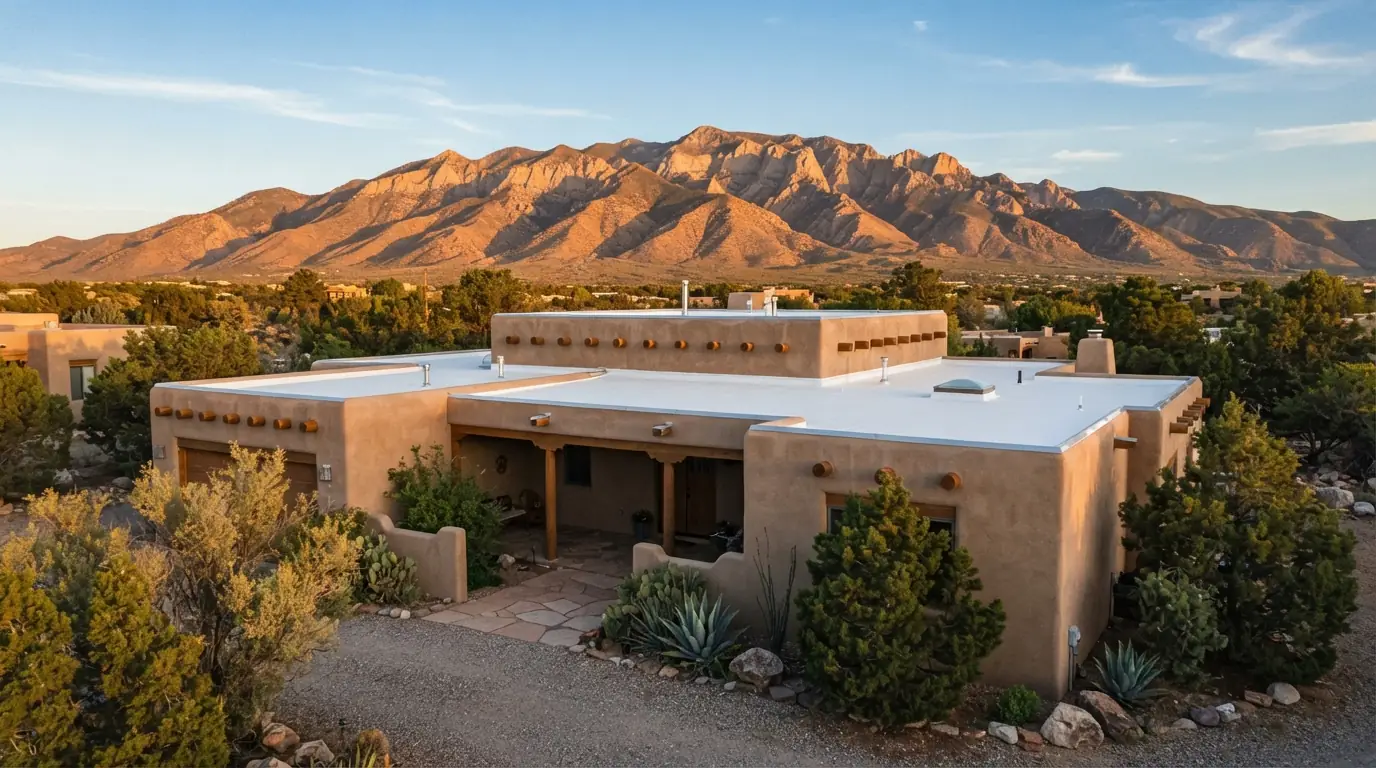
A roof coating is a liquid membrane, usually silicone or acrylic, rolled or sprayed over an existing flat roof. It seals hairline cracks and small splits, restores a white reflective surface, and gives the roof a new layer to weather instead of the old one.
What it does not do is fix what is underneath. It cannot dry wet insulation, rebuild a rotted deck or correct a roof that holds water in the middle. On a sound roof it is excellent value; on a failing one it is a cosmetic layer over a growing problem.
Part 2 of 6
When a coating is the right call
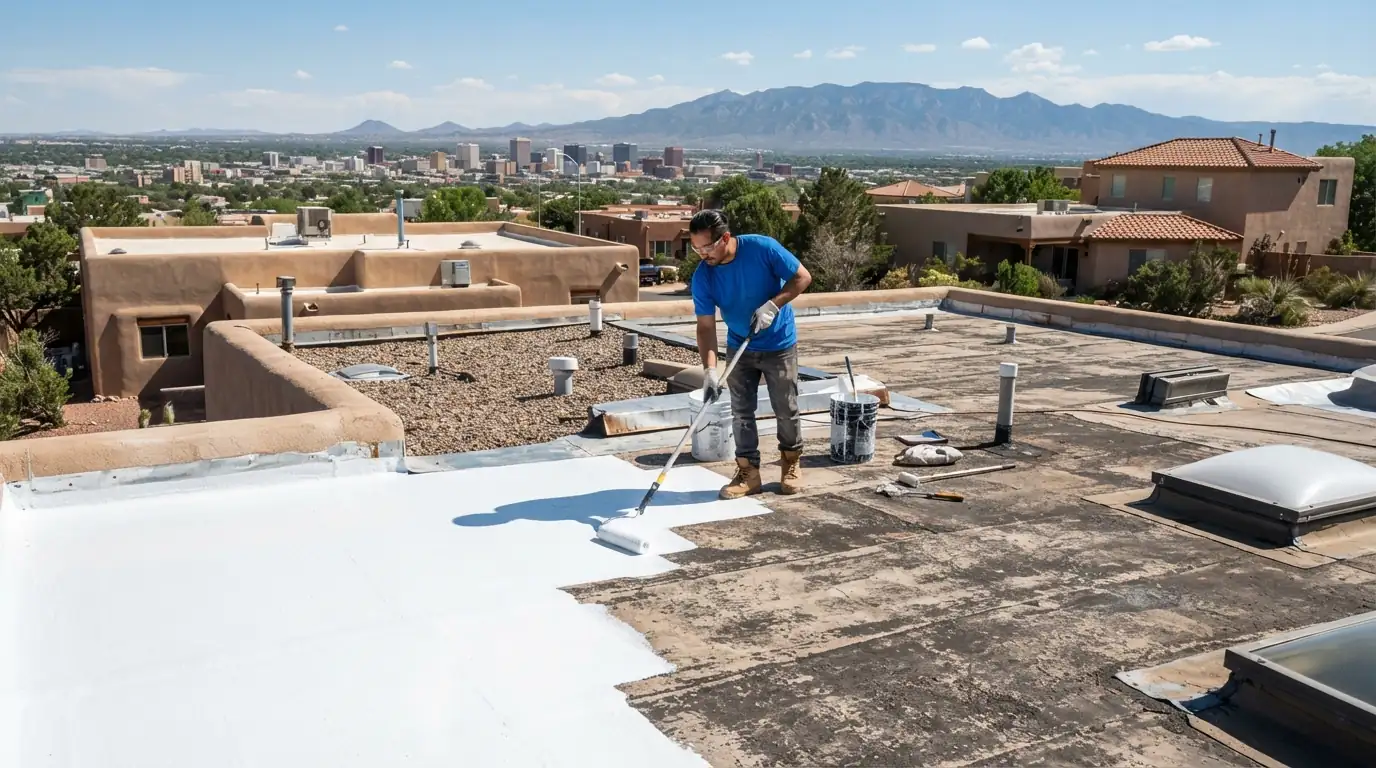
The best candidates are roofs that are dry and well attached but showing their age at the surface: a foam roof whose topcoat has chalked thin, a TPO or mod-bit roof that is weathered but sound, or a roof whose dark surface is baking the rooms below. An unshaded flat roof here can reach 180 degrees on a summer afternoon, and a fresh white coat brings that down sharply.
On those roofs a recoat can add years of service, and on foam it is simply the normal maintenance cycle. See roof coatings for silicone versus acrylic and the prep a coating needs to bond.
Part 3 of 6
When replacement is the honest answer
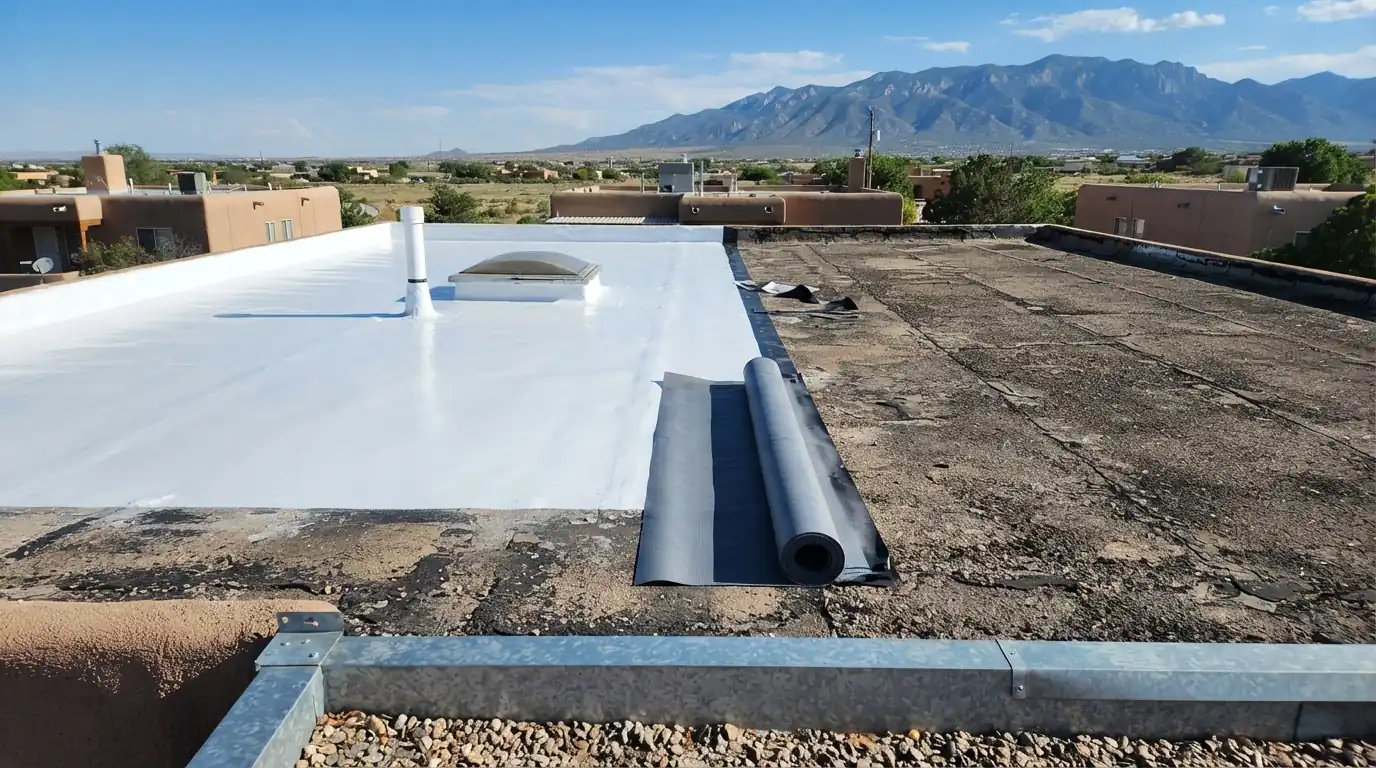
Wet insulation is the dividing line. Water that has soaked the board under the membrane keeps rotting the deck whether or not the surface looks new, and a coating over it seals the moisture in. Widespread blisters, leaks appearing in different places, soft spots underfoot and tar and gravel with bare felt showing are all signs the problem is below the surface.
Layer count matters too. A roof that already carries two layers cannot simply keep getting new ones. In those cases a flat roof replacement costs more today and less over the next twenty years.
Questions about your own roof? Call and talk to a roofer.
Call (505) 636-9496Part 4 of 6
The moisture check that decides it
Before any coating is recommended, the roof should be probed and cored in suspect areas. A core is a small cut through the roof that shows the layers and whether the insulation is dry. Wet readings in one small area can be cut out and replaced before coating; wet readings across the roof mean replacement.
A contractor who recommends a coating without checking for moisture is guessing. Ask to see the core samples or the photos.
Part 5 of 6
Cost, in honest terms
Published Albuquerque commercial data puts silicone coating around $5 per sq ft at the midpoint, against $7 to $14 per sq ft for installed TPO in the same data. Home roofs vary with size and prep, so treat those as a sense of scale rather than a price.
The better comparison is over time. A coating that buys eight dry years on a sound roof is money well spent. A coating over wet insulation buys a year or two and then the replacement costs more, because the deck has rotted in the meantime. For replacement figures, see what a flat roof replacement costs.
Part 6 of 6
If you choose to coat
Prep is most of the job: pressure washing, repairing seams and cracks, reinforcing flashing and curbs with fabric, and letting everything dry before the first coat. Ask what thickness will be applied and when the roof should be checked again.
Schedule the work for spring or fall. Coatings need a dry surface and time to cure, and monsoon afternoons in July and August make that harder.
FAQ
Coating versus replacement questions
It depends on the product, the thickness applied and the exposure. The scope should state the thickness and when to recheck.
Only a dry, well-attached one. Tar and gravel with loose gravel is a poor base.
If the leak is a crack or seam on a dry roof, once that spot is repaired first. Not if the insulation is wet.
Silicone handles ponding better; acrylic suits roofs that drain well and can be recoated with more acrylic later.
Probes and core samples during an inspection show it directly.
It is technically possible but rarely wise. Check for moisture between the layers first.
Spring or fall, when the surface stays dry long enough for the coating to cure.