
By Lawrence Reinholt, Roofing Guides Editor
Updated September 2026
Quick answer: After hail in New Mexico, protect the house first, then document the damage with dated photos and have the roof inspected within days, before the next storm and inside your policy's reporting window. The roofer documents what is actually there; the claim decision belongs to you and your insurer. Clear, honest records make the process faster.
Part 1 of 5
Step one: protect and photograph
If water is coming in, stop it first; an emergency tarp is usually treated as a reasonable step to prevent further damage. Then photograph hail on the ground with something for scale, dents on gutters and vents, and any interior stains, noting the date and time.
Part 2 of 5
Step two: get the roof inspected
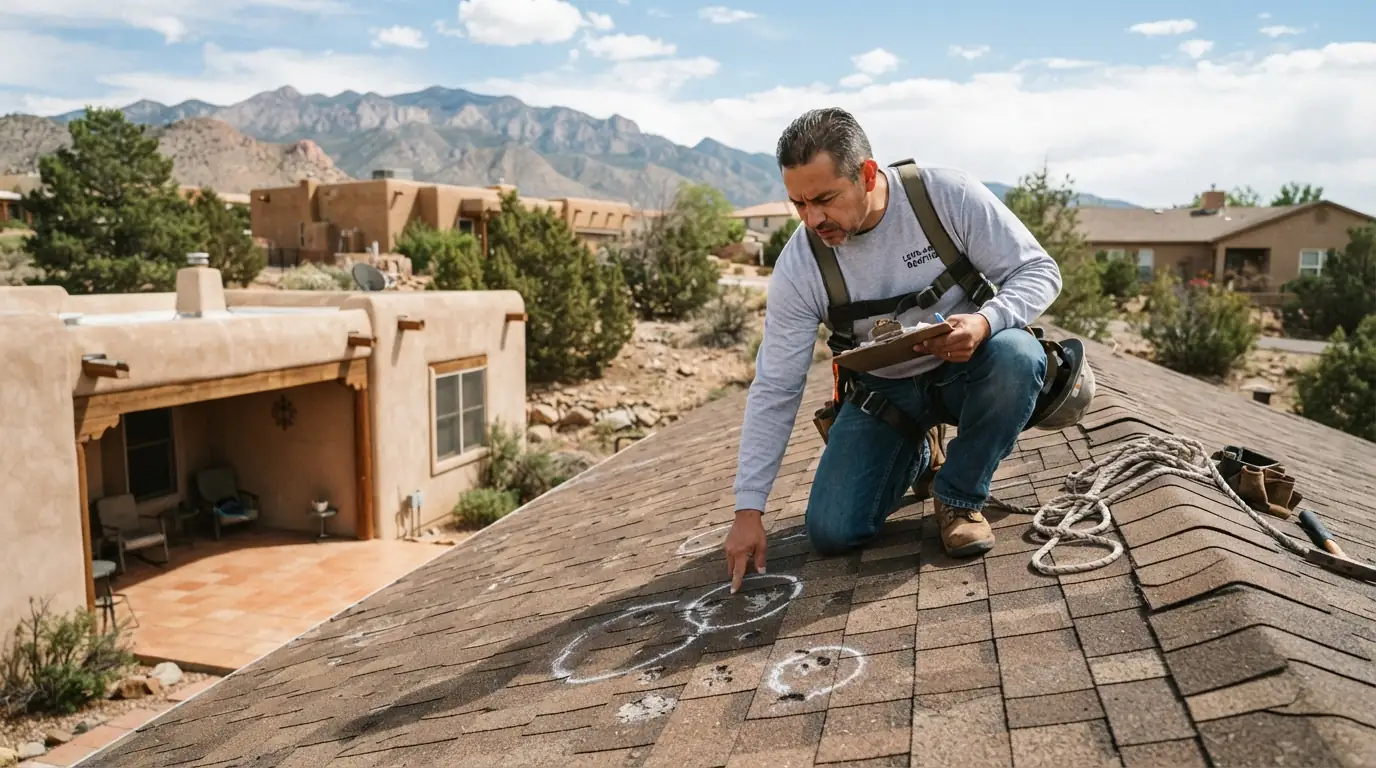
Hail damage is easy to miss from the ground. A roofing inspection looks for bruised shingles, cracked tile, punctured coatings and dented soft metals, and separates storm damage from normal wear. See our guide to checking a roof after hail and roof inspection page.
Part 3 of 5
Step three: file with the facts
File the claim with your photos and the inspection report in hand. Claims usually have reporting time limits, so waiting for a leak to appear can cost you. Keep receipts for emergency repairs and anything you buy to protect the house.
Questions about your own roof? Call and talk to a roofer.
Call (505) 636-9496Part 4 of 5
The adjuster visit
The adjuster inspects the roof and decides what the policy covers. A roofer can meet them on the roof and point out damage in the photos, but the decision is the insurer's. A report that also notes minor or pre-existing wear is more credible, not less.
Part 5 of 5
Keeping the process honest
Be wary of anyone who promises the insurer will pay for a new roof, or who offers to cover your deductible. Those practices can create problems for the homeowner. The goal is an accurate record of what the storm did, and a repair or replacement that matches it. See storm damage repair for the repair side.
FAQ
Common questions on this topic
As soon as it is documented; policies usually set reporting time limits.
An inspection first tells you whether there is damage worth claiming.
It depends on the policy and the damage the adjuster finds.
Yes, to point out damage; the decision stays with the insurer.
Many policies cover reasonable steps to prevent further damage.
An honest report says so, which protects you too.
Impact-rated shingles that resist hail better; some insurers discount for them.