By Lawrence Reinholt, Roofing Guides Editor
Updated September 2026
Quick answer: When a roof leaks during an Albuquerque monsoon storm, protect the inside first: catch the water, move valuables and electronics, and keep people away from any sagging ceiling. Stay off the roof until the storm passes. Then photograph everything and call a roofer to tarp or seal the opening; the permanent repair waits for a dry roof.
Part 1 of 6
The first ten minutes inside the house
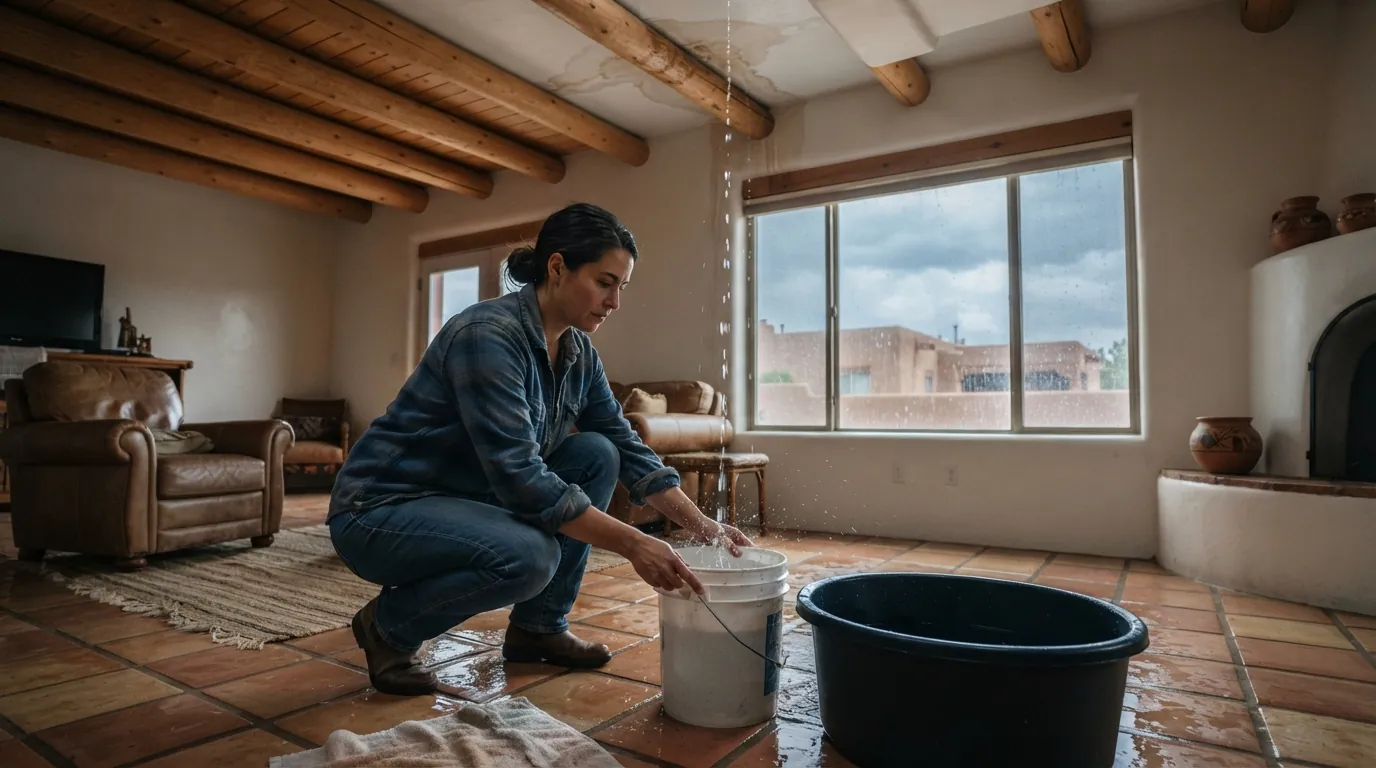
Put buckets, pots or towels under every drip, and move furniture, rugs and electronics out of the way. If water is running near a light fixture or outlet, switch that circuit off at the breaker if you can do so safely.
A ceiling that is bulging with water is the one real danger inside. Keep people and pets away from it, and mention it when you call so the visit is treated as urgent. Most leaks look worse than they are in the first few minutes; the goal is simply to limit how far the water spreads.
Part 2 of 6
Why you should stay off the roof
Monsoon storms bring lightning, gusts and slick surfaces all at once, and a wet roof in the dark is the most dangerous place on the property. Falls cost far more than any leak.
Most monsoon cells pass within an hour or so. Wait until the storm has moved on and there is daylight, or let a roofer handle it. A properly set tarp is fastened through battens and run over the ridge, which is not a job for a ladder in the rain.
Part 3 of 6
Where monsoon leaks usually start
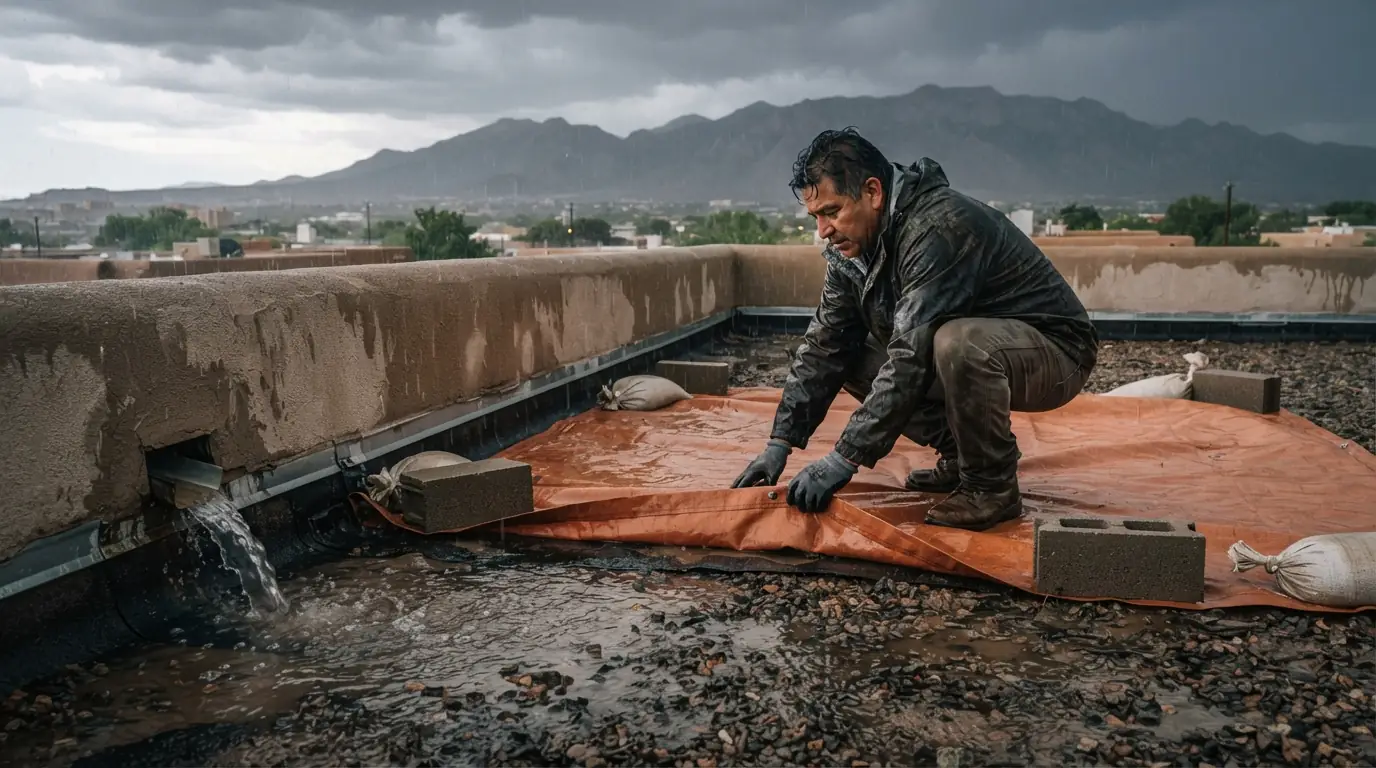
On flat roofs, the outlets fail first. Canales, scuppers and drains have to move a lot of water in minutes, and on September 28, 2025, a weather station in Kirtland AFB housing logged more than two inches in a single hour. A partly blocked outlet overflows in a burst like that, and water backs up under the membrane or runs down inside the parapet.
On pitched roofs, wind-driven rain gets under lifted shingles, behind loose flashing at chimneys and skylights, and into valleys packed with debris. Our guide to our guide to canale and scupper leaks goes deeper on the flat roof side.
Water coming in right now? Call any hour and we will get it covered.
Call (505) 636-9496Part 4 of 6
Photos and notes that help your insurer
Before anything is cleaned up, photograph the ceiling, the wet floor, damaged belongings, and the outside of the house from the ground. Note the date and time the leak started. If hail fell, photograph it next to something for scale.
Keep receipts for anything you buy to protect the house, and keep the invoice for any emergency tarping. Many policies cover reasonable steps to prevent further damage; the details are between you and your insurer, and good records make that conversation shorter.
Part 5 of 6
What an emergency visit does and does not fix
An emergency visit is about stopping water, not about finishing the repair. That means a tarp over the opening, a temporary seal at a failed flashing, or clearing a blocked drain that has turned a flat roof into a pond.
The lasting repair needs a dry roof and daylight, so it comes after. See emergency roof repair for what that first visit involves.
Part 6 of 6
After the storm: finding the real cause
Water rarely enters where it drips. It runs along the deck or through the insulation first, so the source can be several feet from the stain. Once the roof is dry, it is traced from inside and out and repaired at the opening; that process is covered on our roof leak repair page.
If the leak turns out to be one of several spread across the roof, it is worth asking whether repairs still make sense, or whether it is time to look at the whole roof.
FAQ
Monsoon leak questions
Yes. Call right away so you are in the queue, even though work on the roof waits until it is safe.
Only from the ground or a safe ladder position after the storm. Never climb onto a wet roof in lightning.
Usually not. Most monsoon leaks come from one outlet, seam or flashing and can be repaired.
Keep clear of it and tell us when you call. It is safer to let a professional deal with a heavy, water-filled ceiling.
Before the next storm if possible. A tarp buys days, not a whole season.
It depends on your policy and the cause. Photos and receipts help whatever the outcome.
Wind direction and rainfall rate change which openings get tested. Heavy bursts expose weak outlets and flashing.